name: A Philosophical History of Freedom goal: Discover the evolution of freedom through the ages, from ancient philosophers to modern challenges. objectives:
- Analyze the political philosophies of freedom and power.
- Trace the historical origins of freedom from Antiquity to the Middle Ages.
- Examine the rise and decline of freedom from the 19th to the 20th century.
A Journey Through the Philosophical History of Freedom
A Philosophical History of Freedom explores freedom throughout history. Damien Theillier examines two political philosophies: freedom and power. He analyzes thinkers such as Frédéric Bastiat, Lord Acton, Karl Marx, and Murray Rothbard, shedding light on their views on production, plunder, class struggle, and the State.
The course goes back to the origins of freedom in Antiquity, with the Greeks and Romans, through the Middle Ages, where human freedom is discussed in religious and political contexts. It shows how ideas of freedom evolved with the birth of universities and the first forms of capitalism in Italian cities.
From the Renaissance to the Enlightenment, the course examines the rise of freedom, marked by religious tolerance and economic freedom, culminating in 1776 with major events like the Philadelphia Congress. The 19th and 20th centuries witness the peak and decline of freedom, facing criticisms of capitalism and the dangers of collectivism, putting into perspective the contemporary challenges for freedom.
Introduction
Course Overview
Welcome to PHI201!
This course invites you to explore the evolution of freedom throughout history by analyzing the major schools of thought that have shaped it. You will discover how the concept of freedom has been constructed over the centuries, either in opposition to or collaboration with power, through a historical journey from Antiquity to contemporary debates.
Section 1: Freedom or Power
We will begin with an overview of the two major political philosophies that have
marked history: freedom and power. This section will examine the visions of thinkers
such as Frédéric Bastiat on production versus spoliation, Lord Acton who sees
freedom as the driving force of history, Karl Marx with his theory of class struggle,
and Murray Rothbard who opposes the state to society. This conceptual introduction
will provide a framework of analysis for the historical periods.
Section 2: The Origins of Freedom: Antiquity
Here, we will return to the roots of philosophical thought with the Greeks, who
invented critical rationality, and the Romans, who laid the foundations of modern
law. We will also examine the fall of Rome as a pivotal moment that redefined
political and social organization around the notion of freedom.
Section 3: The Origins of Freedom: The Middle Ages
The Middle Ages are often seen as a dark period, but we will discover that it
actually laid the foundations of modern freedom. We will study the assertion
of human freedom, the debates between reason and faith, the birth of the sovereign
state, the biblical ethics valuing the individual, and the first outlines of
capitalism that appear at this time.
Section 4: The Rise of Freedom: From the Renaissance to the Enlightenment
This section will focus on the emergence of religious tolerance and economic
freedom, which gained momentum during the Renaissance and the Enlightenment.
We will also analyze the importance of the year 1776, which marked a major turning
point with key events for the free world, before diving into the era of revolutions
that redefined the very notion of freedom.
Section 5: Apex and Decline: From the 19th to the 20th Century
We will continue by studying the upheavals of the 19th and 20th centuries, highlighting
the strengths and weaknesses of democracy, Marxist critiques of capitalism, and
the Austrian response to these criticisms. We will also explore warnings about
the dangers of collectivism through major works such as "The Road to Serfdom".
Section 6: The Rise of the Welfare State in the 20th Century
Finally, this section will examine how the welfare state gradually took precedence
over the ideas of economic freedom, notably through the triumph of Keynes and
the abandonment of the gold standard. We will conclude by emphasizing the importance
of ideas in shaping the course of history and the role freedom still plays in
our modern societies.
Ready to embark on this unique philosophical journey on the quest for freedom? Let's go!
Freedom or Power
There are only two political philosophies
Why title this course: a history of freedom? Because we need to understand the relationship between ideas and events, to better judge our era and act with discernment. It is in the past that we find the elements for a better understanding of what freedom is and the reasons why we must cherish it.
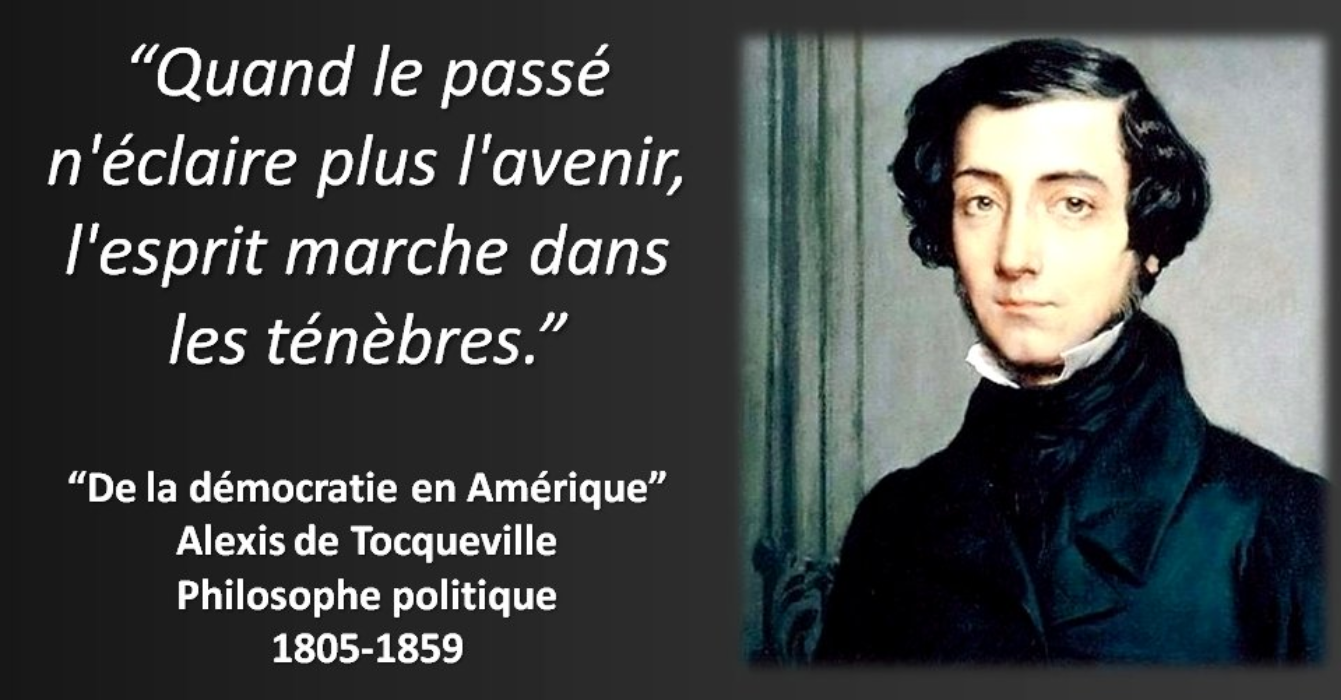
When the past no longer illuminates the future, the spirit walks in darkness (Alexis de Tocqueville - Democracy in America.)
At the same time, Auguste Comte said: "One does not fully know a science
until one knows its history." This truth could be applied to the idea of
freedom. Indeed, freedom is not a new idea. It is a legacy passed down
through generations. The entire history of civilization bears witness to a
relentless struggle for freedom. 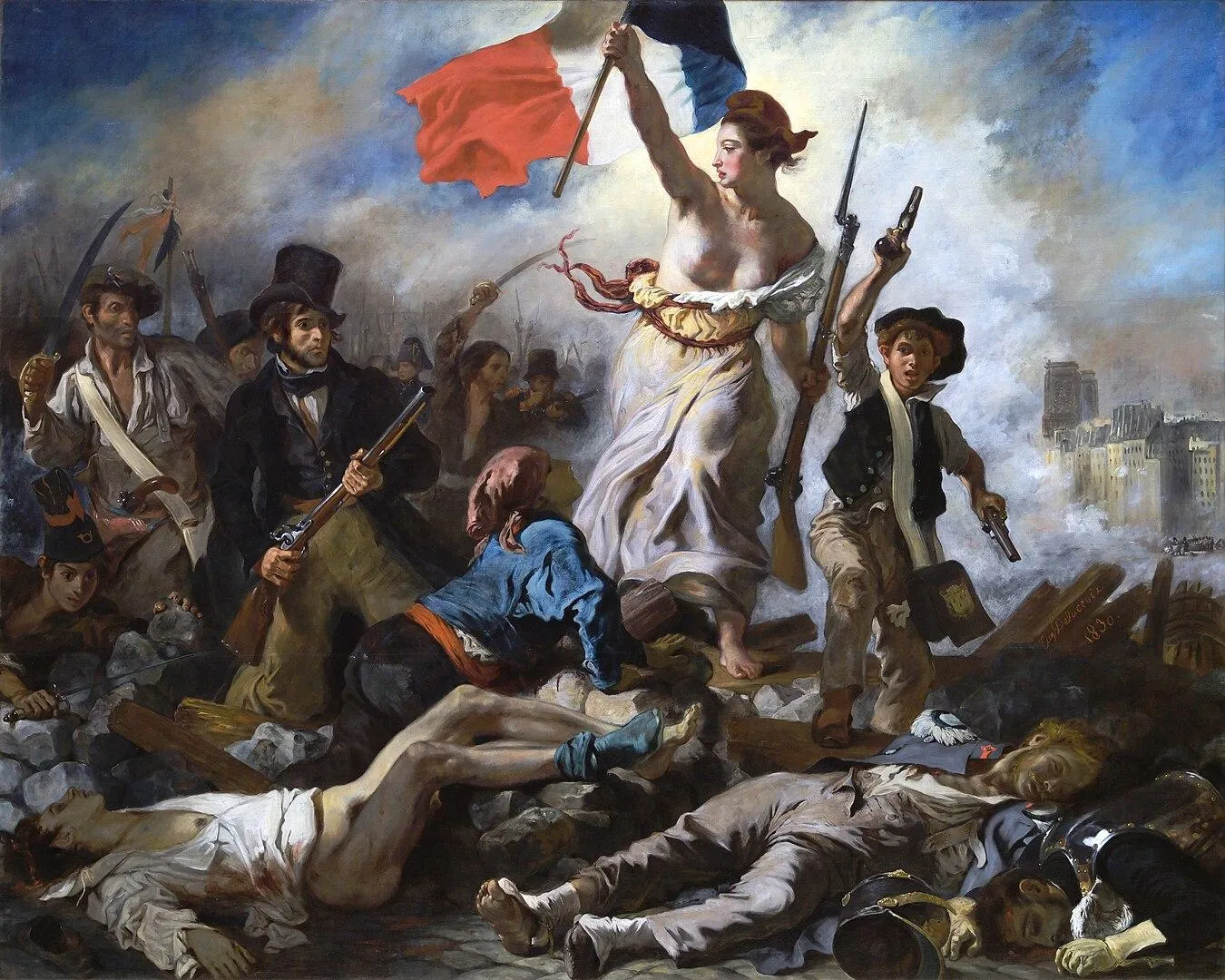
However, the goal of this course is not only to shed light on the history of freedom but also, and more importantly, to develop critical judgment. Indeed, history alone is not enough to judge the present and the future. It needs to be accompanied by critical reflection and a judgment on the mistakes of the past. This is the contribution of philosophy. That is why I have titled this course: a philosophical history of freedom. It is indeed about exploring how philosophers have conceived of freedom throughout the ages.
The task of philosophy
From its origins, it has a dual purpose:
- Firstly, it is to give meaning to vague and confused concepts. What is good, true, just, beautiful? Just as history's function is to illuminate the past, so philosophy is the art of correctly defining concepts. That is why we need to start in this course by understanding what freedom is.
Freedom is a concept that covers a multitude of variants, which are as many possible declinations of the same reality: political freedom, economic freedom, freedom of conscience, of speech, religious freedom, freedom of association, etc. What reality are we talking about?
Freedom can be simply defined as the power of choice, with what belongs to oneself. It is an inherent faculty of the human being. It is a reality that is essentially individual. Only the individual can think and act, that is, make choices. This does not mean that the individual is alone, that he owes nothing to others. On the contrary, he lives in society and must cooperate with others for his own good. But everyone remains free to cooperate or not and must assume the responsibility for their choices.
The notion of responsibility is corollary to freedom because every choice has consequences. The responsible person is the one who assumes the costs of their own choices and does not shift this cost onto others. In other words, freedom is demanding. It is a moral notion that implies rights but also duties towards others, including the duty to respect their freedom.
- Secondly, philosophy is normative, unlike history, which is merely descriptive. Thus, political philosophy is distinct from political sciences. Political philosophy is normative, meaning it prescribes values and judges human actions by a criterion of justice. On the other hand, political sciences are content to describe regimes, to make the history of institutions, without making value judgments.
Philosophy of freedom and philosophy of power
From this perspective, there are only two kinds of political philosophies: the philosophy of freedom and the philosophy of power.

- The philosophy of freedom is based on the natural right of property and asserts that the sole purpose of the law is to protect private property and contracts. Everyone should be able to do as they wish with what belongs to them, provided they do not harm anyone. It is a philosophy that defends equal freedom for all to dispose of oneself and one's property under the condition of responsibility. It is the philosophy of the free market.
- The philosophy of power justifies the authority of certain collective entities such as the State or society to decide the limits to be placed on the market and property, and therefore on freedom. In this framework, it is up to the law to organize the economy, health, housing, culture, education... This constructivist philosophy has always had its defenders, in the name of collective interest, equality, protection, and well-being.
The antagonism between these two philosophies exists in all eras. But we can illustrate it with the philosophy of the Enlightenment. There is clearly a dividing line between two types of thinkers.
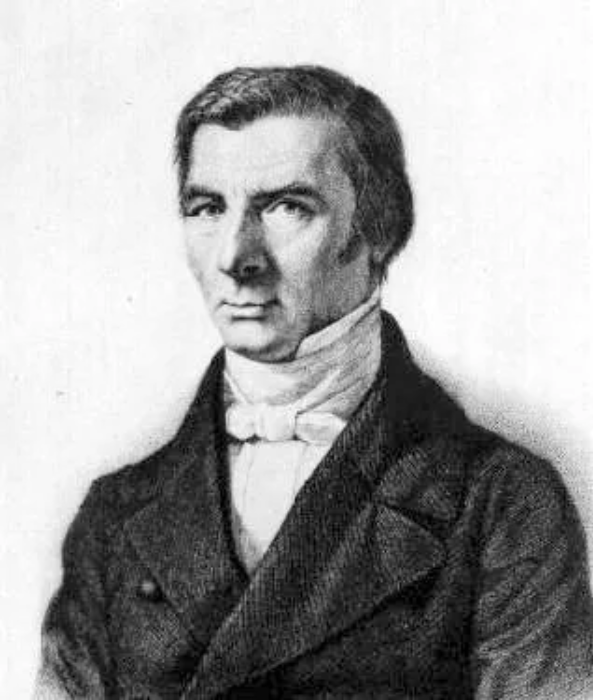
Those who defend the first philosophy in France are the Physiocrats, with François Quesnay at their head. They call themselves physiocrats (the name comes from the Greek Physis, which means nature, and Kratos, which means rule) because they develop an economic and social thought based on the natural rights of man. For them, society, people, and properties exist prior to laws. In this system, Bastiat explains,
It is not because there are laws that there are properties, but because there are properties that there are laws. (Property and Law).
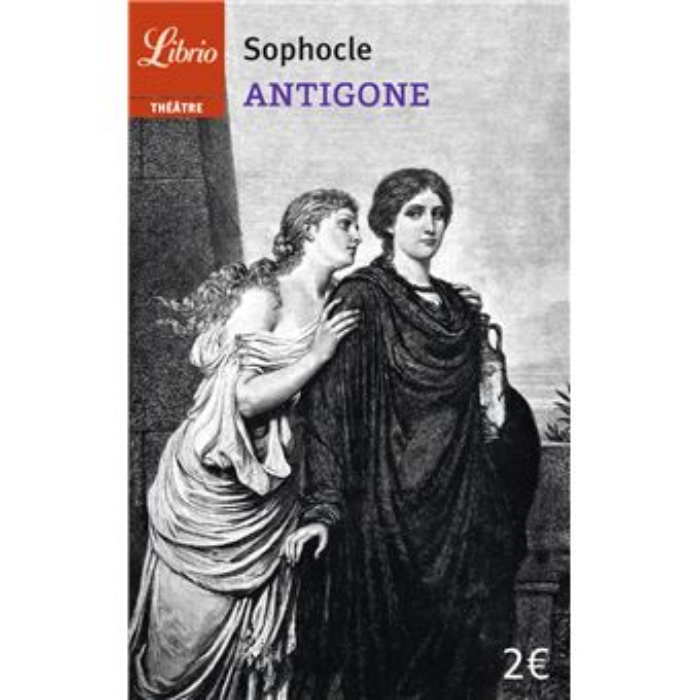
For Turgot and Say, disciples of Quesnay, there exists a natural law, independent of the whims of legislators, which is valid for all men and predates any society. This philosophy comes directly from medieval scholasticism, the Stoics, Aristotle, and Sophocles. The unwritten laws are both prior to and superior to written laws because they stem from human nature and reason.
 The second philosophy is found among authors like Rousseau, Robespierre, or Kant,
who embody the republican tradition for which the sovereignty of the general
will is the true source of law. A contemporary of Quesnay, Rousseau is an anti-physiocrat.
For him, the legislator must organize society, like a mechanic who invents a
machine from inert matter.
The second philosophy is found among authors like Rousseau, Robespierre, or Kant,
who embody the republican tradition for which the sovereignty of the general
will is the true source of law. A contemporary of Quesnay, Rousseau is an anti-physiocrat.
For him, the legislator must organize society, like a mechanic who invents a
machine from inert matter. 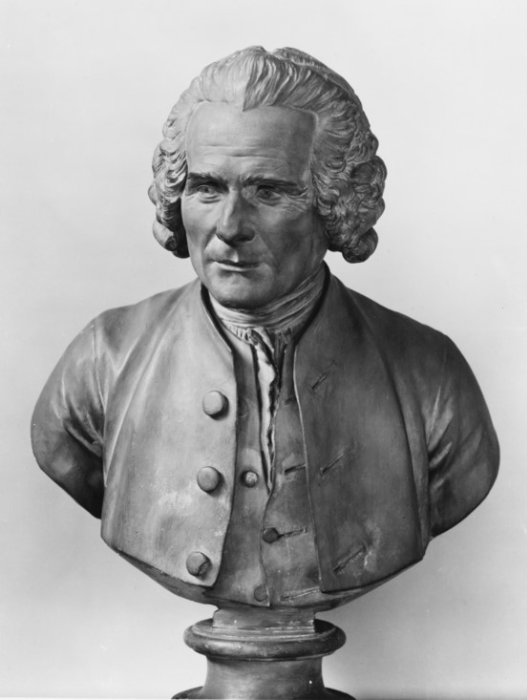
"He who dares to undertake the establishment of a people," says Rousseau, "must feel capable of changing, so to speak, human nature, of transforming each individual who, by himself, is a perfect and solitary whole, into part of a greater whole from which this individual receives, in a way, his life and being." (Social Contract)
From this perspective, the legislator's mission is to organize, modify, even abolish property if he deems it good. For Rousseau, property is not natural but conventional, like society itself. In turn, Robespierre establishes the principle that "Property is the right of every citizen to enjoy and dispose of the portion of goods guaranteed to him by law." There is no natural right to property; there are only an indefinite number of possible and contingent arrangements.
Frédéric Bastiat: production versus spoliation
When one opens textbooks, Bastiat noted, one learns that humanity would be doomed to nothingness without the intervention of power:
"It suffices to open, almost at random, a book of philosophy, politics, or history to see how deeply rooted in our country is this idea, born of classical studies and the mother of Socialism, that humanity is an inert matter receiving from power life, organization, morality, and wealth; — or worse, that humanity itself tends towards its degradation and is only stopped on this slope by the mysterious hand of the Legislator." (The Law).
In other words, the cultural prejudice dominating Western philosophy as well as historiography is that we owe everything to power: freedom, health, education, security, prosperity. Humanity is described as "inert matter" that takes shape thanks to the legislator.
But the reality of power is quite different according to Bastiat. Power is oppression. He writes: Open the annals of humanity at random! Consult ancient or modern history, sacred or profane, and ask yourself where all these wars of race, class, nations, and families come from! You will always get this unvarying answer: From the thirst for power. (Parliamentary Incompatibilities)
It is the thirst for power that is at the root of all forms of oppression in history. In a letter to Mrs. Chevreux, dated June 23, 1850, Bastiat outlines the phases of oppression: "Times of struggle, over who will seize the State; and times of truce which will be the ephemeral reign of triumphant oppression, a harbinger of a new struggle." First, the conquest of power through war, then the establishment of a State that subsists by plundering the wealth of its citizens.
History is thus a struggle between two principles: freedom and oppression:
Freedom! That is, in the end, the harmonious principle. Oppression! That is the dissonant principle; the struggle of these two powers fills the annals of mankind. (Economic Harmonies, conclusion of the original edition).
What is oppression?
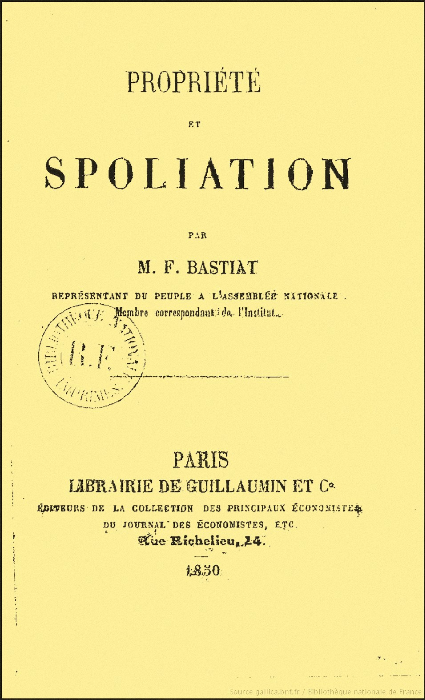
In a word, it is plunder. Bastiat sketches the main types of plunder that come from the ruling elites: war, slavery, theocracy, and monopoly. Indeed, according to him: "There are only two ways to acquire the necessities for the preservation, embellishment, and improvement of life: PRODUCTION and PLUNDER." (The Physiology of Plunder)
What is the difference between production and plunder? Here is Bastiat's answer:
To produce, one must direct all one's faculties towards the domination of nature; for it is nature that must be fought, tamed, and enslaved. That is why iron converted into a plow is the emblem of production. To plunder, one must direct all one's faculties towards the domination of men; for it is they who must be fought, killed, or enslaved. That is why iron converted into a sword is the emblem of plunder. (Economic Harmonies, War).
In other words, production is power over nature. Plunder is power over men. However, there are two forms of plunder: legal and illegal. Illegal plunder is the theft or crime committed by one citizen against another. It is the action of the bandit or the swindler. However, the worst form of plunder is that which is accomplished by law: "There are people who think that plunder loses all its immorality provided it is legal. As for me, I cannot imagine a more aggravating circumstance." (What is Seen and What is Not Seen).
Bastiat tells us there are still two forms of legal plunder:
External plunder is called war, conquests, colonies. Internal plunder is called taxes, positions, monopolies. (Cobden and the League, Introduction).
In The Physiology of Plunder, he elaborates:
The true and equitable law of men is: Freely debated exchange of service for service. Plunder consists of banning by force or by deceit the freedom of debate in order to receive a service without rendering one. Plunder by force is exercised as follows: One waits for a man to produce something, then snatches it from him, weapon in hand. It is formally condemned by the Decalogue: Thou shalt not steal. When it happens from individual to individual, it is called theft and leads to prison; when it's from nation to nation, it is called conquest and leads to glory.
History of Plunder
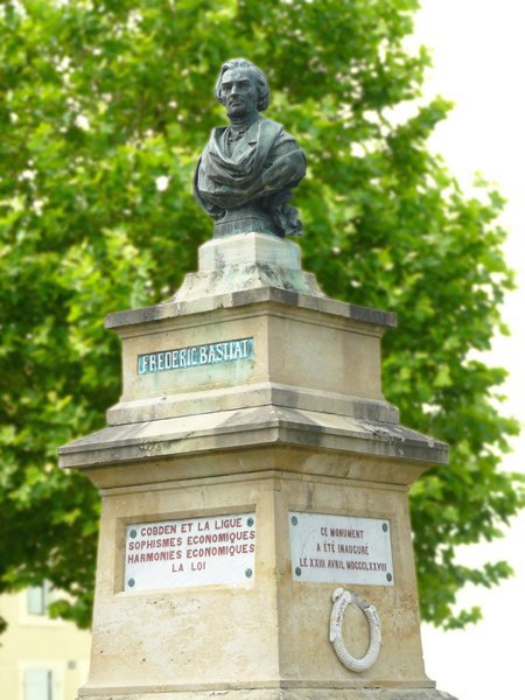
Historically, ruling elites have always lived off plunder. Bastiat notes:
Force applied to plunder is the basis of human annals. To trace its history would be to reproduce almost entirely the history of all peoples: Assyrians, Babylonians, Medes, Persians, Egyptians, Greeks, Romans, Goths, Franks, Huns, Turks, Arabs, Mongols, Tartars, not to mention the Spaniards in America, the English in India, the French in Africa, the Russians in Asia, etc.
(Economic Sophisms, Conclusion of the first volume). Plunder, in its most brutal form, armed with torch and sword, fills the annals of human history. What are the names that summarize history? Cyrus, Sesostris, Alexander, Scipio, Caesar, Attila, Tamerlan, Muhammad, Pizarro, William the Conqueror; this is naive plunder through conquests. To it belong the laurels, monuments, statues, and triumphal arches. (Economic Harmonies, conclusion of the original edition). The history of the world is the history of how one group of people plundered others, often systematically, through war, slavery, theocracy. Nowadays, it is the monopoly, that is, economic privileges distributed by the State to its clients.
A few days before his death in Rome in 1850, Bastiat confided to his friend Prosper Paillottet:
An important task for political economy is to write the history of Plunder. It is a long history in which, from the beginning, appear conquests, migrations of peoples, invasions, and all the disastrous excesses of force in conflict with justice. From all this, there are still living traces today, and it is a great difficulty for the solution of questions posed in our century. We will not arrive at this solution until we have clearly established in what and how injustice, taking its share among us, has entrenched itself in our customs and in our laws.
(P. Paillottet, Nine Days Near a Dying Man)
Lord Acton: Freedom is the Engine of History
It is known, history is written by the victors. Attention is often focused on the conquest of power, on the lives of leaders in power, and on the conflicts that oppose them to those who wish to take their place.
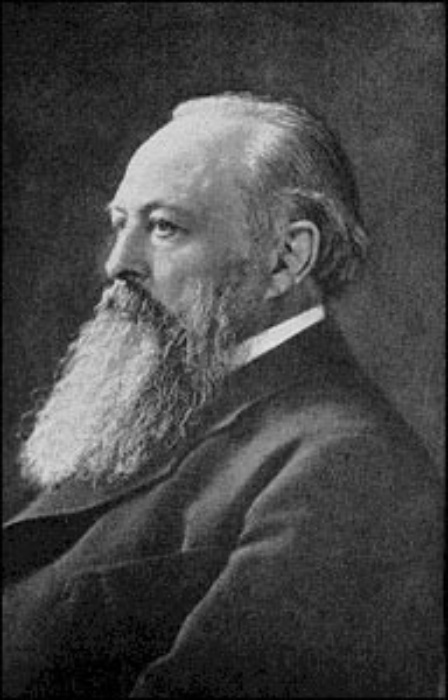
This is particularly true of textbooks intended for public schools and written by professors employed by the State. This is not the case for a work in two volumes written by a historian from Cambridge in the 19th century, Lord Acton. His full name is John Emerich Edward Dalberg, Baron of Acton (1834-1902). He is the author of History of Liberty in Antiquity and Christianity. His work is considered one of the most important on the subject, and he dedicated a large part of his career to it. His work, although unfinished, is a powerful warning against the dangers of power abuse, and his advocacy for freedom and individual responsibility remains relevant today.
This author is best known for his maxim: "Power tends to corrupt, and absolute power corrupts absolutely." A formula that echoes that of Montesquieu in The Spirit of the Laws:
It is an eternal experience that every man who has power is tempted to abuse it.
Acton's Thesis
For Acton, the conflict between liberty and power is the central theme of human history, and liberty is the driving force of progress and the evolution of societies. Acton sought to understand the factors that contributed to the rise of liberty in the West. His goal was to identify the conditions necessary for its preservation and development. He studied philosophical ideas, social structures, and political contexts that favored its emergence over time.
His central thesis is that "liberty is established by the conflict of powers." According to Acton, for centuries after the fall of the Western Roman Empire, the Catholic Church was the only force capable of challenging the authority of feudal lords, monarchs, and emperors. This power struggle between the Church and the State proved crucial for the rise of liberty. Europe had a strong God and a weak power, due to the ongoing quarrel, in the Middle Ages, between popes and kings. In contrast, China had a weak deity and a strong bureaucratic power.
By liberty, I mean the assurance that every man will be protected, when he does what he believes to be his duty, against the influence of authority and majorities, of custom and opinion. The State is competent to set duties and to distinguish between good and evil only in its own immediate sphere.
(Lord Acton) In other words, freedom is the right for individuals to follow their own conscience, and it is not the state's role to dictate a person's conduct in philosophical, moral, and religious matters. Friedrich Hayek had initially considered naming the Mont Pelerin Society the "Acton-Tocqueville Society," in tribute to two thinkers he deeply admired: Lord Acton and Alexis de Tocqueville. Ultimately, it was the name of the location where the Society's first meeting was held, Mont Pelerin in Switzerland, that was chosen.
Voltaire and Condorcet
But the idea that freedom in Europe was born from internal struggles among various claimants to power, preventing the establishment of absolute domination, is not unique to Acton. It can already be found in thinkers such as Voltaire and Condorcet.
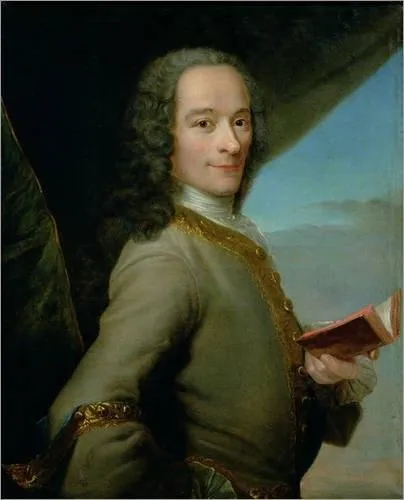
Thus, Voltaire, in his Philosophical Letters, attributes English freedom to conflicts between kings and nobles which prevented any excessive concentration of power. And he notes:
If there were only one religion in England, its despotism would be to be feared; if there were only two, they would cut each other's throats; but there are thirty, and they live in peace and happiness. (On the Presbyterians)
Condorcet, in his Sketch for a Historical Picture of the Progress of the Human Mind, attributes the decentralized structure of power in Italy to the rivalry between the pope and the emperor, which allowed many independent city-states to survive.
This thesis is also found in a monumental work dating from 1983: Law and Revolution: The Formation of the Western Legal Tradition, by Harold J. Berman (French translation by Raoul Audouin, published by the University of Aix en Provence Bookstore in 2002). Berman's analysis highlights the crucial role of legal pluralism in the history of the West. This system, far from being a mere source of complexity, was a driver of development, freedom, and innovation, shaping the Western legal traditions enduringly.
Marx: History as Class Struggle
438100e6-a385-55c6-b2c5-ad192c564757 Another perspective on history does
exist, however. It has been quite successful and long enjoyed the support of
Western intellectuals and representatives from the Global South. This is the
socialist and Marxist view of history. 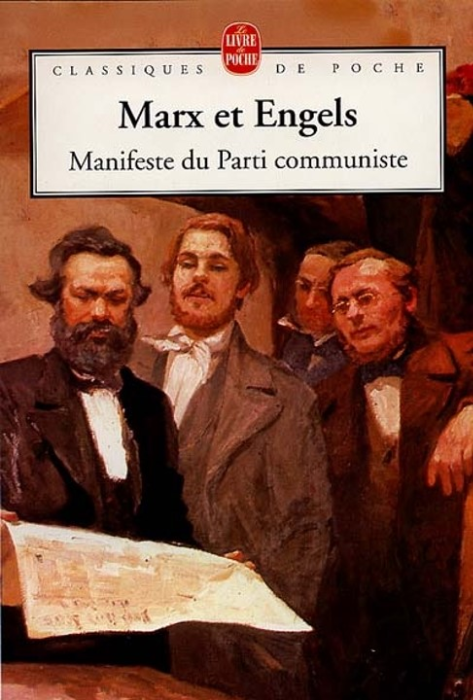
It explains Europe's extraordinary growth primarily through the progress of technology combined with the "primitive accumulation" of capital, stemming from imperialism, slavery, the triangular trade, the expropriation of small peasants, and the exploitation of the working class. The conclusion is clear. This exceptional European growth was achieved at the expense of millions and millions of slaves and oppressed individuals.
Initially, Marx is right about one thing: history is the history of class struggles and exploitation. The quote is well-known, it's the first sentence of the first chapter of the Communist Manifesto: "The history of all hitherto existing society is the history of class struggles." Marx himself acknowledged that he had borrowed his theory of class struggle from earlier authors:
I have no credit for discovering classes and class struggles in modern society. Long before me, bourgeois historians had described the historical development of this class struggle and bourgeois economists the economic anatomy of classes.
(Letter to J. Weydemeyer, March 5, 1852).
But he is mistaken about a fundamental point regarding the working class: it is not capital that produces exploitation. In other words, the class struggle does not take place within production but between those who pay taxes and those who collect them.
According to Marx, exploitation is a process that consists of extracting a portion of the value created by the worker without paying for it, which allows capitalists to make a profit. In other words, exploitation would be a mechanism that allows capitalists to enrich themselves by stealing the labor of the proletariat.
This analysis reflects a misunderstanding of surplus value and the cooperative and dynamic nature of economic life. Indeed, the profit that the entrepreneur receives is compensation for the risk they take, and the worker or employee is not a slave. In a competitive situation, they can accept or refuse a contract with their employer. They make a choice that reflects a cost-benefit analysis.
The Industrial Revolution in Question
In fact, the Marxist analysis distorts the historical reality of the
Industrial Revolution. Ludwig von Mises clarified this issue in his
economics treatise Human Action (see especially the chapter titled Popular Interpretation of the Industrial Revolution) as well as in a series of lectures published under the title: Economic Policy: Thoughts for Today and Tomorrow. (Also worth reading, The Anti-Capitalistic Mentality here and here). 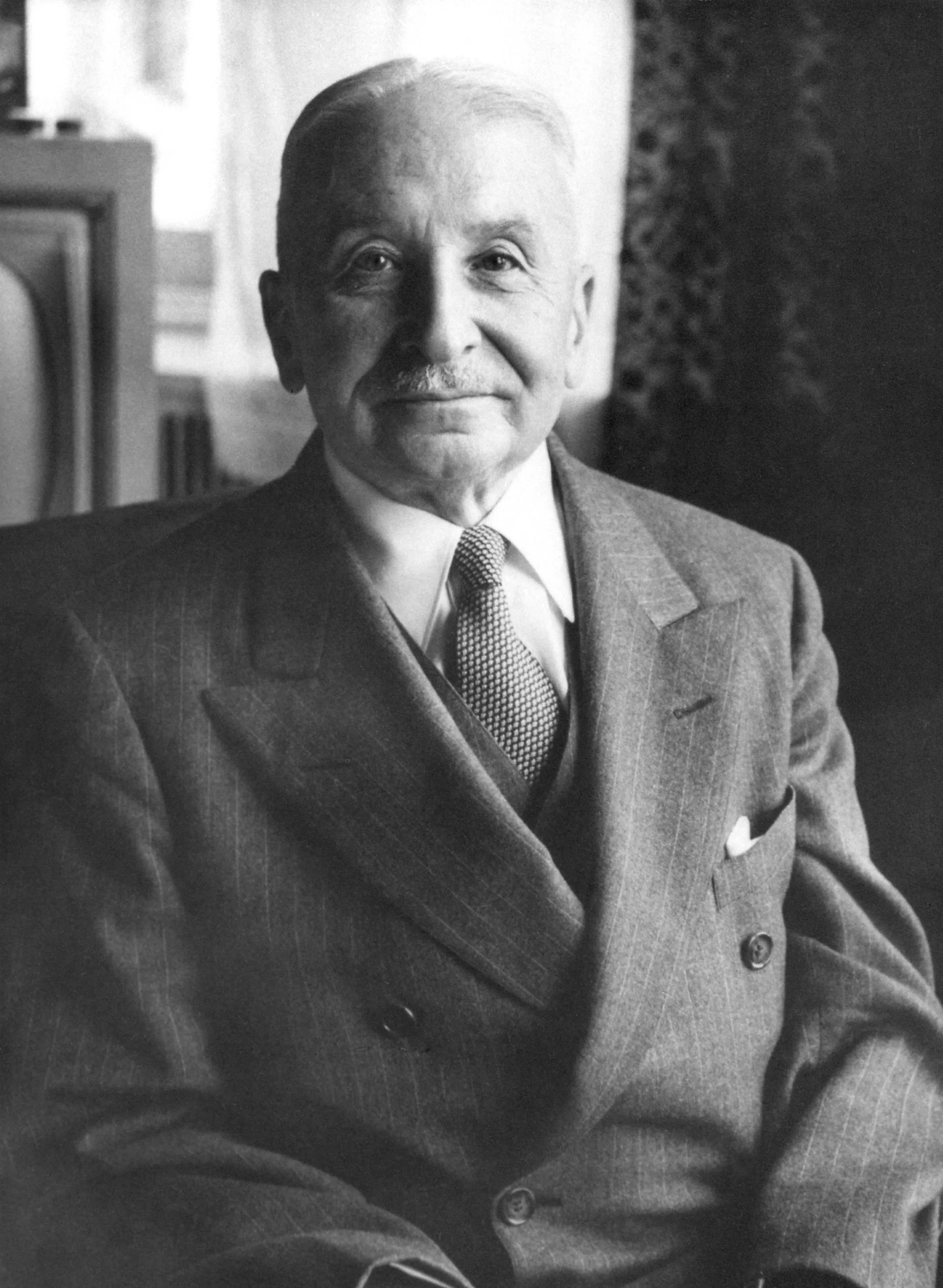
Mises explains that jobs in factories, although miserable by our standards, represented the best possible opportunity for workers of the time.
Let's read an excerpt from Human Action:
In the first decades of the industrial revolution, the living standards of factory workers were scandalously low compared to the conditions of their contemporaries from the upper classes, and compared to the present situation of industrial crowds. Working hours were long, the sanitary conditions of the workshops deplorable. The working capacity of individuals quickly exhausted. But the fact remains, that for the surplus population that the appropriation of communal grazing lands (enclosures) had reduced to the worst misery, and for whom there was literally no place within the framework of the reigning production system, factory work was salvation. These people flocked to the workshops, for the sole reason that they absolutely needed to improve their standard of living.
Mises adds that the improvement of the human condition was thus made possible by the accumulation of capital:
The radical change in situation that has conferred upon the Western masses the present standard of living (a high standard of living indeed, compared to what it was in pre-capitalist times, and to what it is in Soviet Russia) was the effect of capital accumulation through saving and wise investment by far-sighted entrepreneurs. No technological improvement would have been achievable if the additional material capitals required for the practical use of new inventions had not been made feasible by saving beforehand. Regarding Marxist historiography, we can also refer to Friedrich Hayek in Capitalism and the Historians (University of Chicago Press, 1954) and his chapter titled "History and Politics". According to Hayek, it was not industrialization that made workers miserable, as the dark legend of capitalism propagated by Marxism claims. He notes: The real history of the connection between capitalism and the rise of the proletariat is almost the opposite of what these theories of the expropriation of the masses suggest.
Before the Industrial Revolution, most people lived in rural societies and depended on agriculture for their survival. They had little to sell in the market, which limited their opportunities and their standard of living. Everyone expected to live in absolute poverty and envisioned a similar fate for their descendants. No one was outraged by a situation that seemed to be inevitable.
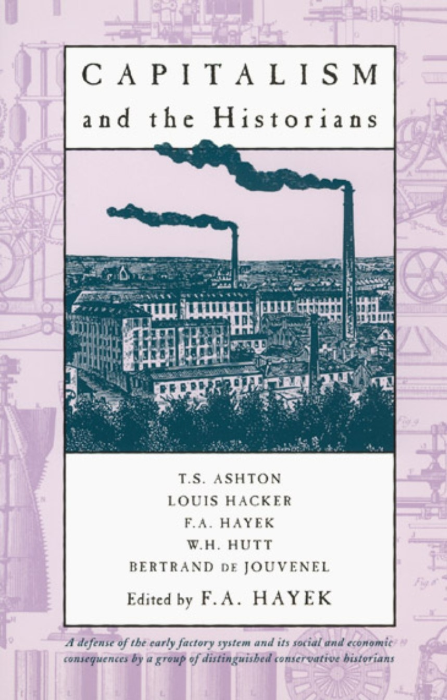
With the advent of industrialization, new opportunities emerged, creating a growing demand for labor. For the first time, people without land or significant resources could sell their labor to factories and manufactures in exchange for a wage, ensuring security for the future.
This new access to income allowed them to feed and house themselves, even in rapidly expanding cities. Thus, the Industrial Revolution fostered a population explosion that would not have been possible under the economic stagnation conditions of the pre-industrial era.
This is how, Hayek remarks, "economic suffering became both more visible and seemed less justified, because general wealth was increasing faster than ever before."
Therefore, the worker was not exploited, even if wages were low, due to the abundance of labor fleeing the countryside.
In reality, exploitation only makes sense as an aggression against private property. In this sense, exploitation is always the act of the State. For the State is the only institution that obtains its revenues through coercion, that is, by force. Thus, the real exploitation, as we have seen with Bastiat, is that of the productive classes by the class of state officials. It would be more accurate to say that the history of all society up to our days is nothing but the history of the struggle between plunderers and the productive classes.
The "European Miracle"
Subsequently, a more nuanced historical analysis than that of Marx allows us to challenge the idea of a predatory Europe, which owes its success solely to imperialism and slavery. By delving into comparative economic history, some contemporary historians have sought the origins of Europe's development in what distinguished it from other major civilizations, particularly those of China, India, and Islam. These characteristics have been explored by David Landes, Jean Baechler, François Crouzet, and Douglass North. These researchers have attempted to understand what is referred to as the "European miracle." They focused their attention on the fact that Europe was a mosaic of divided and competing jurisdictions, where, after the fall of Rome, no central political power was capable of imposing its will.
As Jean Baechler, a member of the Academy of Moral and Political Sciences, says in The Origins of Capitalism (1971):
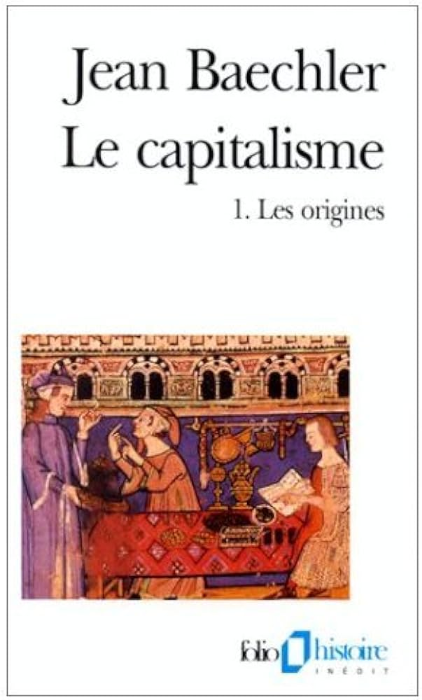
The first condition for the maximization of economic efficiency is the liberation of civil society from the State (...) The expansion of capitalism owes its origin and raison d'être to political anarchy.
In other words, the great "non-event" that dominated Europe's destiny was the absence of a hegemonic empire, like the one that dominated China.
It is this radically decentralized Europe that produced parliaments, diets, and Estates-General. It gave birth to charters like the famous Magna Carta of the English, but it also produced the free cities of Northern Italy and Flanders: Venice, Florence, Genoa, Amsterdam, Ghent, and Bruges. Finally, it developed the concept of natural law, as well as the principle that even the Prince is not above the law, a doctrine rooted in the medieval universities of Bologna, Oxford, and Paris, extending to Vienna and Krakow. In conclusion of this chapter, Europe's economic and cultural takeoff was not due to the conquest and exploitation of the rest of the world. It dominated the world thanks to its economic progress. What has been called "imperialism" is the consequence, not the cause, of Europe's economic progress. But to return to Lord Acton, what distinguishes Western civilization even more from all others is its affirmation of the value of the individual. In this sense, freedom of conscience, especially in religious matters, has been a fundamental pillar of this civilization. We will return to this in the following section.
Murray Rothbard: State versus Society
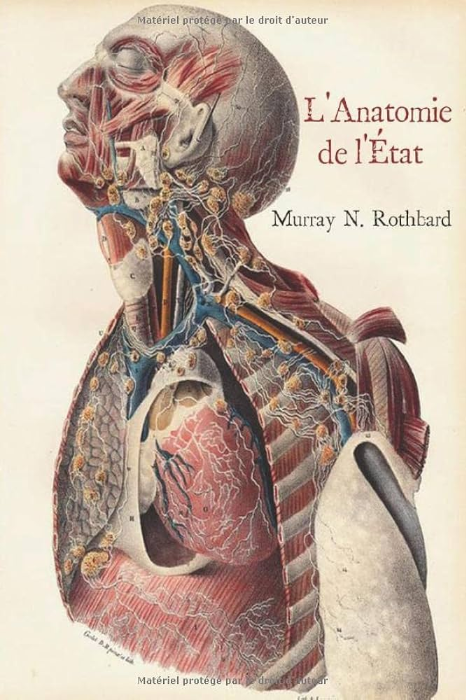
In the last chapter of Anatomy of the State (translated into French as L’anatomie de l’Etat, by Résurgence editions), Murray Rothbard proposes a theory of history. This very short chapter is titled: History, a race between state power and social power. According to Rothbard, history can be understood as a perpetual conflict between two fundamental principles:
- Peaceful cooperation and production, which represent voluntary exchange and the creation of wealth through labor and innovation.
- Coercive exploitation and predation, embodied by the domination of the State, which appropriates the fruits of individuals' labor by force.
Referring to Albert J. Nock, Rothbard uses the terms "social power" and "state power" to designate these two opposing forces:
- Social power: emerges from the cooperation and ingenuity of free individuals, leading to economic progress and prosperity. It is a power over nature, the creative capacity of man to transform nature into resources and knowledge, for the collective good of society.
- State power: is imposed through coercion and violence, seeking to control and exploit society for its own benefit. It is a power exercised over man. It consists of "draining the fruits of society for the benefit of non-productive (in fact, anti-productive) leaders."
The State as a Parasite
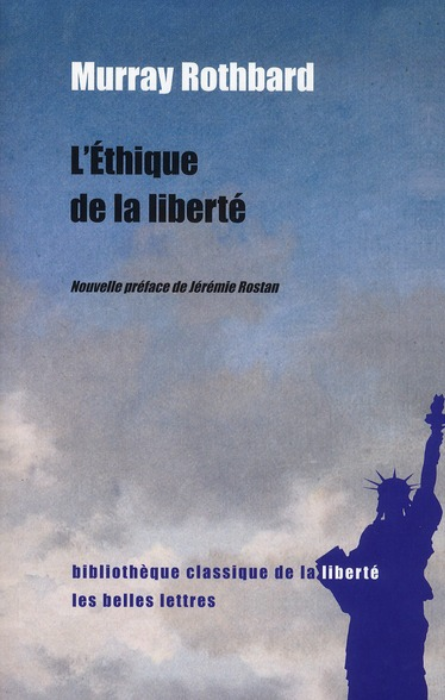
Rothbard considers the State as a parasite that lives at the expense of the productive society. It seizes "command posts" strategically to appropriate wealth and power. Monopoly of force, justice, education, infrastructure. And he adds, "In the modern economy, money is the essential command post." For Rothbard, the principle of freedom should also apply to money. If we are in favor of freedom in other sectors, if we want to protect property and the person against the intrusion of the State, our most urgent task must be to explore the possibility of a free market for money. (See on this point his essay: State, What Have You Done with Our Money? Translation by Stéphane Couvreur for the Institut Coppet, 2011).
The Failure of Attempts to Limit the State
Rothbard warns against the idea that written constitutions, by themselves, could guarantee freedom and the limitation of power:
The last centuries were times when men tried to impose constitutional and other limits on the State, only to find that such limits, like all other attempts, had failed. Of all the many forms that regimes took over the centuries, of all the concepts and institutions that were tried, none succeeded in keeping the State under control.
A written constitution certainly has many advantages, but it is a serious mistake to assume that it would be sufficient. Indeed, the majority party, with its power, can adopt an extensive interpretation to increase its power. Without concrete mechanisms to enforce rights, and faced with a dominant party determined to extend its power, constitutions risk becoming ineffective, misleading tools.
The 20th Century: A Century of Retreat

According to Rothbard, history is not a linear process, but rather an oscillation between the advancement of social power and the resurgence of control by the State:
- Periods of freedom: when social power flourishes, freedom, peace, and prosperity increase.
- Periods of state domination: when the State gains the upper hand, leading to oppression, war, and regression.
From the 17th century to the 19th century, in many Western countries, there were periods of acceleration of social power and a corresponding increase in freedom, peace, and material well-being. But Rothbard reminds us that the 20th century was marked by a resurgence of State power, with dire consequences: an increase in slavery, war, and destruction:
During this century, the human race faces, once again, the virulent reign of the State; the State now armed with the creative power of man, confiscated and perverted for its own ends. What is a free society, after all? It's a society without monopoly. In his work of political philosophy, Ethics of Liberty (1982), Rothbard answers: "a society in which there is no legal possibility of coercive aggression against an individual's person or property." This is why, according to him, political philosophy, which must define the principles of a just society, boils down to one single question: "Who legitimately owns what?"
For Rothbard, social order can prevail if it is the product of the generalization of contractual procedures for the free exchange of property rights, by privatizing all economic activities and even sovereign functions (central bank, courts) and by resorting to competition among protection agencies.
And he adds:
We have now tasted all the variants of statism, and they have all failed. Everywhere in the Western world at the beginning of the 20th century, business leaders, politicians, and intellectuals had started to call for a "new" mixed economy system, of state domination, in place of the relative laissez-faire of the previous century. New panaceas, attractive at first glance, like socialism, the corporatist state, the Welfare-Warfare state, etc., have been tried and all have manifestly failed. The arguments in favor of socialism and state planning now appear as pleas for an aged, exhausted, and failed system. What is left to try but freedom?
(Ethics of Liberty)
The origins of freedom: Antiquity
The invention of critical rationality by the Greeks
The experience of Athenian democracy has left a lasting mark on the history of political thought and continues to inspire ideals of democracy and citizen participation in today's world.
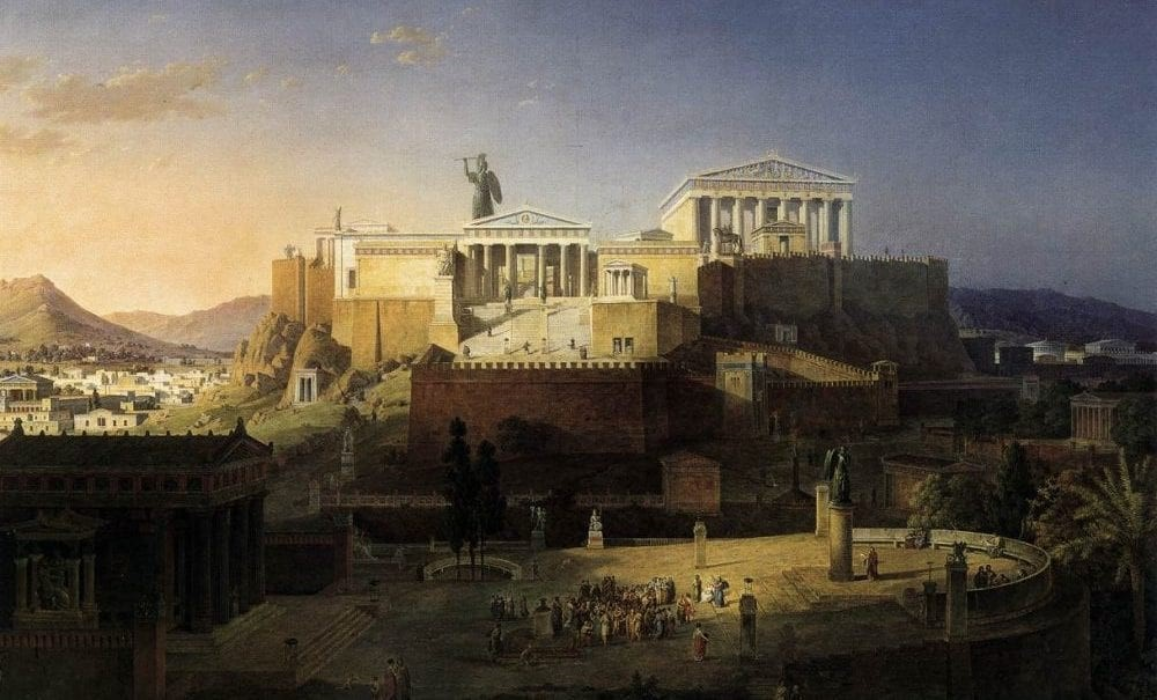
Athenian democracy was characterized by lively public debate on city affairs, which primarily took place in the agora, the marketplace. This mode of operation, based on reason and critical discussion, sharply contrasted with earlier practices where laws and customs were considered sacred and immutable, handed down by ancestors and protected by the gods.
The birth of politics with the city
Athenian democracy represents a major break from past traditions. Indeed, in
earlier societies, there could not be "politics" in the sense of a
discussion about social rules, since these were imposed in a transcendent
manner by myth. 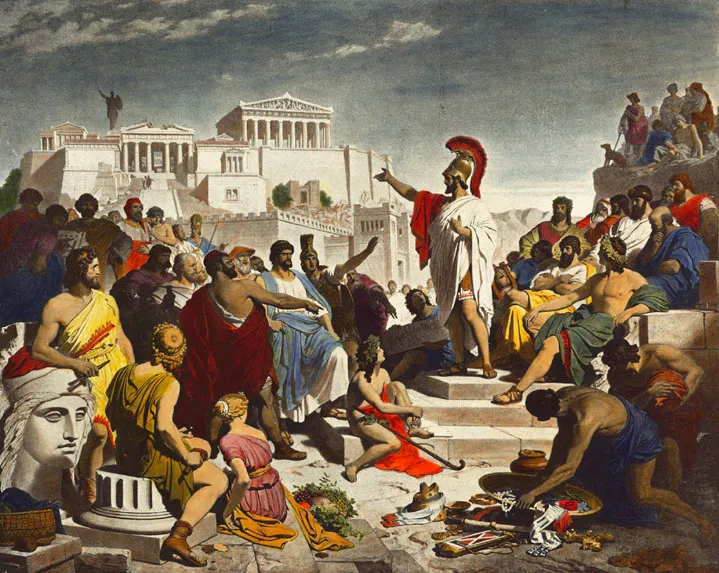
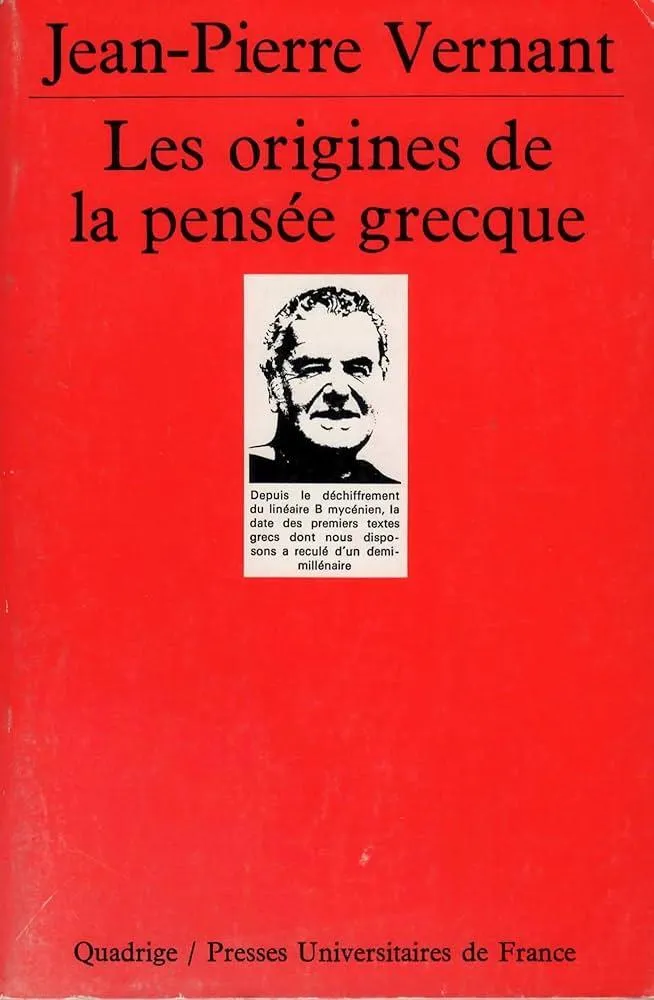
Historian Jean-Pierre Vernant writes:
The emergence of the polis constitutes, in the history of Greek thought, a decisive event. Certainly, in terms of intellectual development and in the realm of institutions, its full consequences would only be realized in the long term; the polis would go through multiple stages, various forms. However, from its advent, which can be placed between the 8th and 7th centuries, it marks a beginning, a true invention; through it, social life and relations among men take on a new form, the originality of which the Greeks would fully feel. (...) What the polis system implies first and foremost is an extraordinary preeminence of speech over all other instruments of power. It becomes the political tool par excellence, the key to all authority in the state, the means of command and domination over others. (...) A second characteristic of the polis is the nature of full publicity given to the most important manifestations of social life. One could even say that the polis exists only insofar as a public domain has emerged, in two different, yet interconnected senses of the term: a sector of common interest, as opposed to private affairs; open practices, established in broad daylight, as opposed to secret procedures. (...) Henceforth, discussion, argumentation, controversy become the rules of the intellectual game, as well as the political game. The constant control of the community is exercised over the creations of the mind as well as over the state's magistracies.
(Jean Pierre Vernant, The Origins of Greek Thought, Paris, P.U.F, 1962)
The Greek word "polis," which gives "politics" in French, means the city-state. When Aristotle writes that "man is by nature a political animal," it does not mean he is made for power. By politics, he refers to the faculty men have to deliberate in the public square to determine what is just and unjust.
This novelty is based on the fundamental distinction between two terms in the Greek language, "phusis" and "nomos," which designate two types of laws:
- Phusis is the law of nature (which gives the word "physics" in French).
- Nomos is human law (a term found in the word "autonomy," which means "to obey one's own law"). The City emerges with the idea that the law (nomos) is of human origin, that it can be freely modified by humans, unlike nature, and can apply to all. The Greeks then become aware of the autonomy of the social and political order in relation to the natural order. This marks the appearance of politics: the ongoing discussion about the very rules of social life. From now on, problems will be resolved through concerted action and not by an immutable sacred order.
And Jean-Pierre Vernant adds:
Greek reason is the one that, in a positive, reflective, methodical way, allows us to act upon men, not to transform nature. Within its limits as in its innovations, it is the daughter of the city.
The Idea of Freedom Under the Law
Social harmony is not produced by the intentional action of the gods, but by the obedience of all citizens to the same impersonal law. Power is no longer the affair of priests, it has become the affair of all. Thus emerges the notion of equality before the law: "isonomia," but also rhetoric. Mastery of speech was essential to convince one's fellow citizens in assemblies and courts.
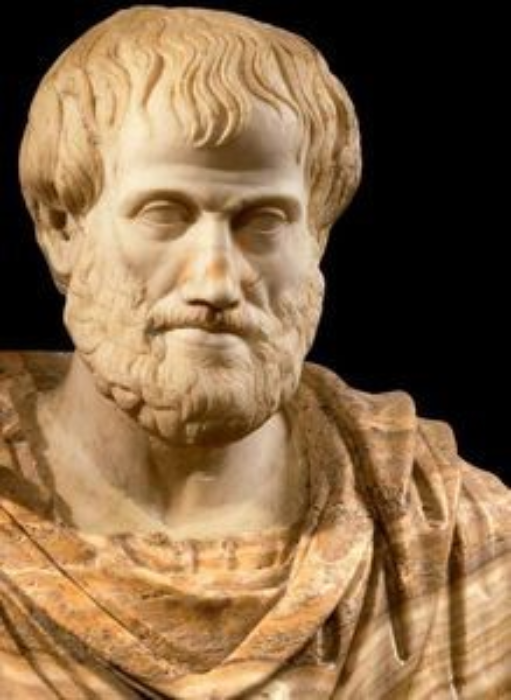
For Aristotle, tyranny is obedience to a man, and freedom is obedience to the law. He is credited with this quote:
To desire the rule of law is to desire the exclusive reign of reason. To desire instead the rule of a man is to add that of a wild beast, for desire and anger distort the judgment of rulers, even if they are the best of men.
According to him, laws, being impersonal and permanent, guarantee justice and equality for all citizens.
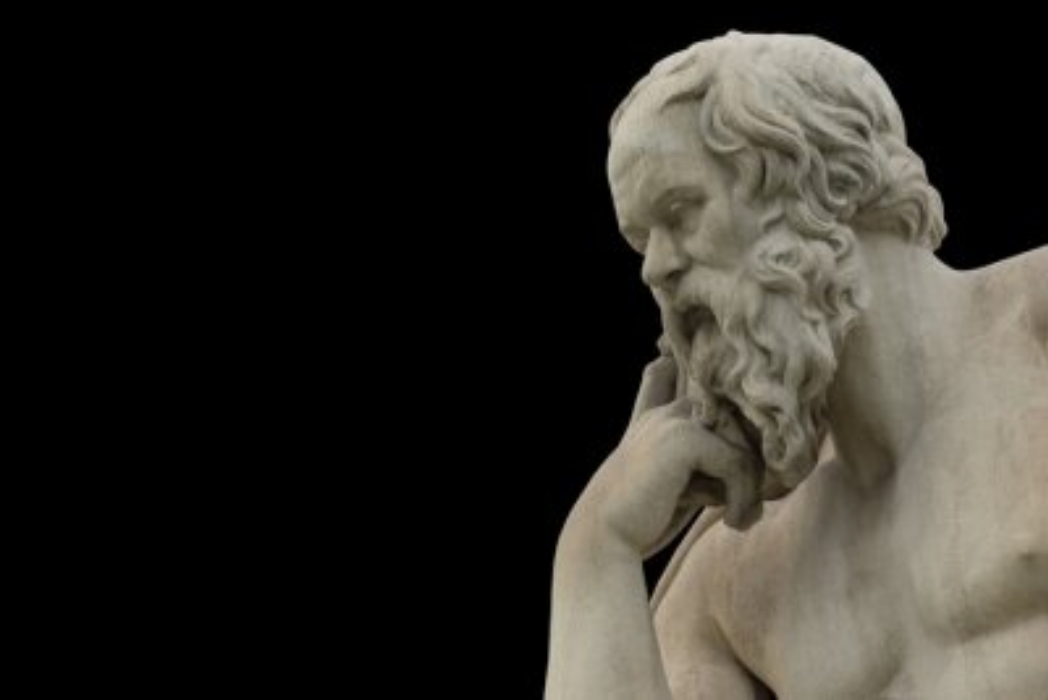
Cicero, the famous Roman orator and philosopher of the 1st century BC, took up this idea: "We are slaves of the laws so that we may be free" (De Republica, Book III, chapter 13). In this passage, Cicero develops an argument in favor of a republic governed by laws, rather than by one man or a small group of men. The idea of the republic is one that comes from Greek philosophy. It has often been contrasted with democracy, deemed too risky. Plato titled his main work of political philosophy: The Republic, and he judges democracy very harshly. When the people govern, there is a strong risk of imposing the law of their desires and confusing the good with the pleasant. Hence the tragic death of Socrates, condemned to death by a popular jury, manipulated by the sophists. Plato learned all the lessons from this.
Aristotle would use the term republic to designate the just constitution, the one that aims for the common interest and treats citizens as free men. A true regime of freedom is one where the law is general, equal for all, anonymous, and not a personal command.
The idea of freedom under the law is also found in the Anglo-Saxon term "Rule of Law".
Political Freedom
It can be said that the Greeks invented the concept of political freedom, in opposition to tyrannical domination. The Greeks of that era considered slavery to be a natural institution and that slaves did not have the same status as citizens. This may seem contradictory to the idea of freedom, but for them, freedom was linked to citizenship and not to the absence of slavery.
Herodotus, in Historia and Aeschylus in his tragedy The Persians, brilliantly illustrate the contrast between the absolute and tyrannical monarchy of Xerxes and the spirit of freedom of the Greeks. This people, characterized by the absence of masters and the refusal to submit to slavery by barbarians, no matter how numerous, finds its strength in the law, the "nomos", its true master that guarantees its freedom. And this law emanates from the will of all.
According to Jacqueline de Romilly: The Greeks themselves seem to have measured this originality and became aware of it at the beginning of the 5th century, in the shock that opposed them to the Persian invaders. And the first fact that struck them was that there was a political difference between them and their adversaries, which commanded everything else. The Persians obeyed an absolute sovereign, who was their master, whom they feared, and before whom they prostrated themselves: these practices were not common in Greece. There is an astonishing dialogue in Herodotus, which opposes Xerxes to a former king of Sparta. This king announces to Xerxes that the Greeks will not yield because Greece always fights against enslavement to a master. It will fight, no matter the number of its adversaries. For, if the Greeks are free, "they are not free in everything: they have a master, the law, which they fear even more than your subjects fear you."
(Ancient Greece at the Discovery of Freedom, Paris, Editions de Fallois, 1989)
Herodotus is convinced that a people of free men is a people who obeys a law and not a master, as in the Persian empire where only one man is free and all the others are slaves. This is true for Athens, a democracy, but it is also true for Sparta. The king does not create the law, he does not impose his will. He ensures the respect of the law, he is at its service and he dies, if necessary, to defend it.
The Quest for Truth and Pluralism
Moving away from mythological thought, Thales, Anaximander, Anaximenes, and later Democritus and Empedocles, were the first to seek to understand phusis (nature) through reason and not through supernatural entities.
The fundamental principle posited by these early Pre-Socratic philosophers is that the elements of the kosmos (the universe) hold in place because they are all equally subject to the same "law of nature" (phusis) that can be stated in a universal and necessary manner. The universe is rational, it constitutes a structured whole, which man can discover with his reason (the "logos" as opposed to the "mutos", the myth).
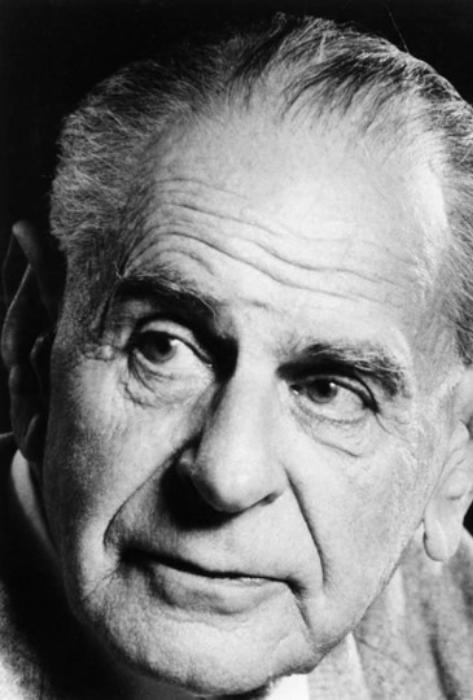
According to Karl Popper, we owe to the philosophers of ancient Greece, particularly the Pre-Socratics, the invention of critical rationalism, that is, the Western tradition of critical discussion, the source of scientific thought and pluralism. He explains this in a chapter of Conjectures and Refutations titled "Return to the Pre-Socratics": Regarding the first signs of the existence of a critical attitude, of a new freedom of thought, they appear in Anaximander's critique of Thales. This is a quite singular phenomenon, the thinker whom Anaximander criticizes is his master, his compatriot, one of the Seven Sages, the one who founded the Ionian School. According to tradition, Anaximander was only fourteen years younger than Thales, and he likely formulated his critiques and presented his new concepts during his master's lifetime (they died, it seems, a few years apart). However, no evidence of dissent, quarrel, or schism is found in the sources.
These elements indicate, according to him, that it was Thales who originated this new tradition of freedom, based on an original relationship between master and disciple. Thales was able to tolerate criticism and, moreover, he established the tradition of acknowledging it. Popper identifies here a break from the dogmatic tradition, which allows only a single school doctrine, to replace it with pluralism and fallibilism.
Our attempts to grasp and discover the truth are not definitive but are capable of improvement, our knowledge, our body of doctrine are conjectural in nature, they are made of assumptions, hypotheses, and not of certain and final truths.
The only means we have to approach the truth are criticism and discussion. From ancient Greece, therefore, comes this tradition:
Which consists of formulating bold conjectures and exercising free criticism, a tradition that was at the origin of the rational and scientific approach and, consequently, of this Western culture that is ours and the only one that is founded on science even if, obviously, this is not its only basis.
The invention of law by the Romans
The Roman Empire was a vast cosmopolitan entity. At its peak, around 117 AD, it was an immense multiethnic and multilingual state:
- In the west, it extended from Great Britain (present-day England) to Spain, passing through Gaul (present-day France) and the north of Africa.
- In the north, it reached the Rhine and the Danube, encompassing parts of Germany, the Netherlands, Switzerland, Austria, Hungary, Romania, and Bulgaria.
- To the south, it bordered the Mediterranean Sea, including Italy, Greece, the Balkans, Asia Minor (present-day Turkey), Syria, Lebanon, Palestine, Egypt, and Cyrenaica (part of present-day Libya).
- To the east, it extended to Mesopotamia (present-day Iraq) and Armenia.
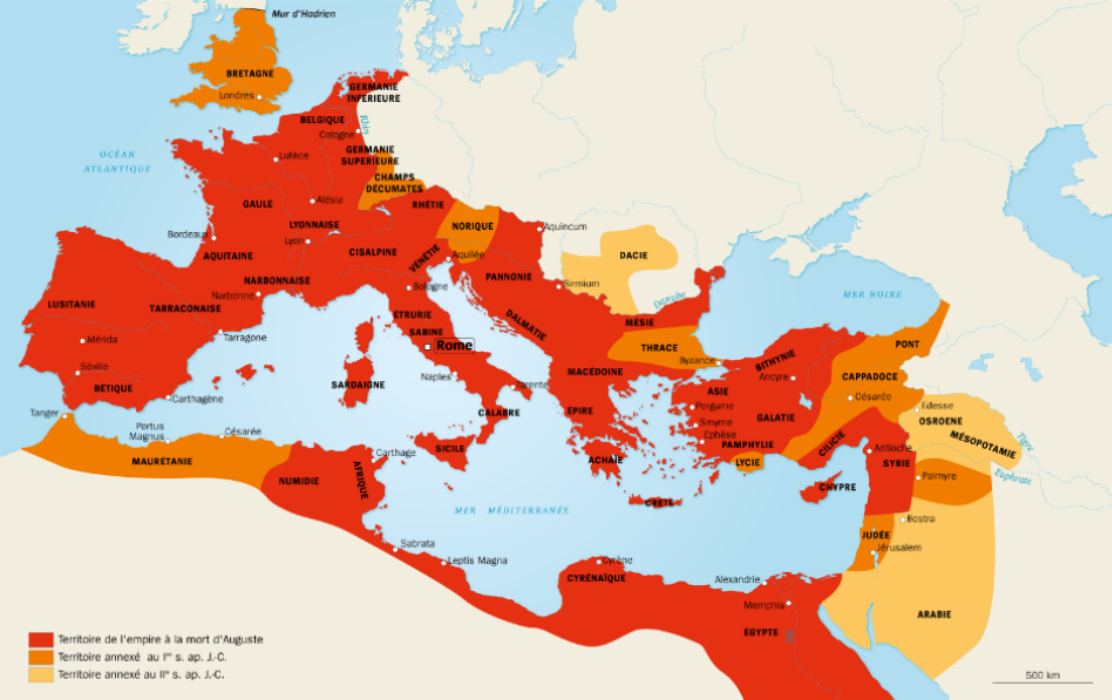
From then on, the Romans advanced the development of law far beyond the Greeks, who lived in small, ethnically homogeneous city-states. Under the Roman Republic, there was already legal protection of property and individual rights.
Indeed, the function of law was to make peaceful cohabitation and exchange among people possible, by delineating the boundaries of "mine" and "yours."
Private property took on a new dimension in Roman civilization that it had not known before, even in Greek civilization.
Roman law would become the foundation of all modern Western laws during the Middle Ages and up to our times.
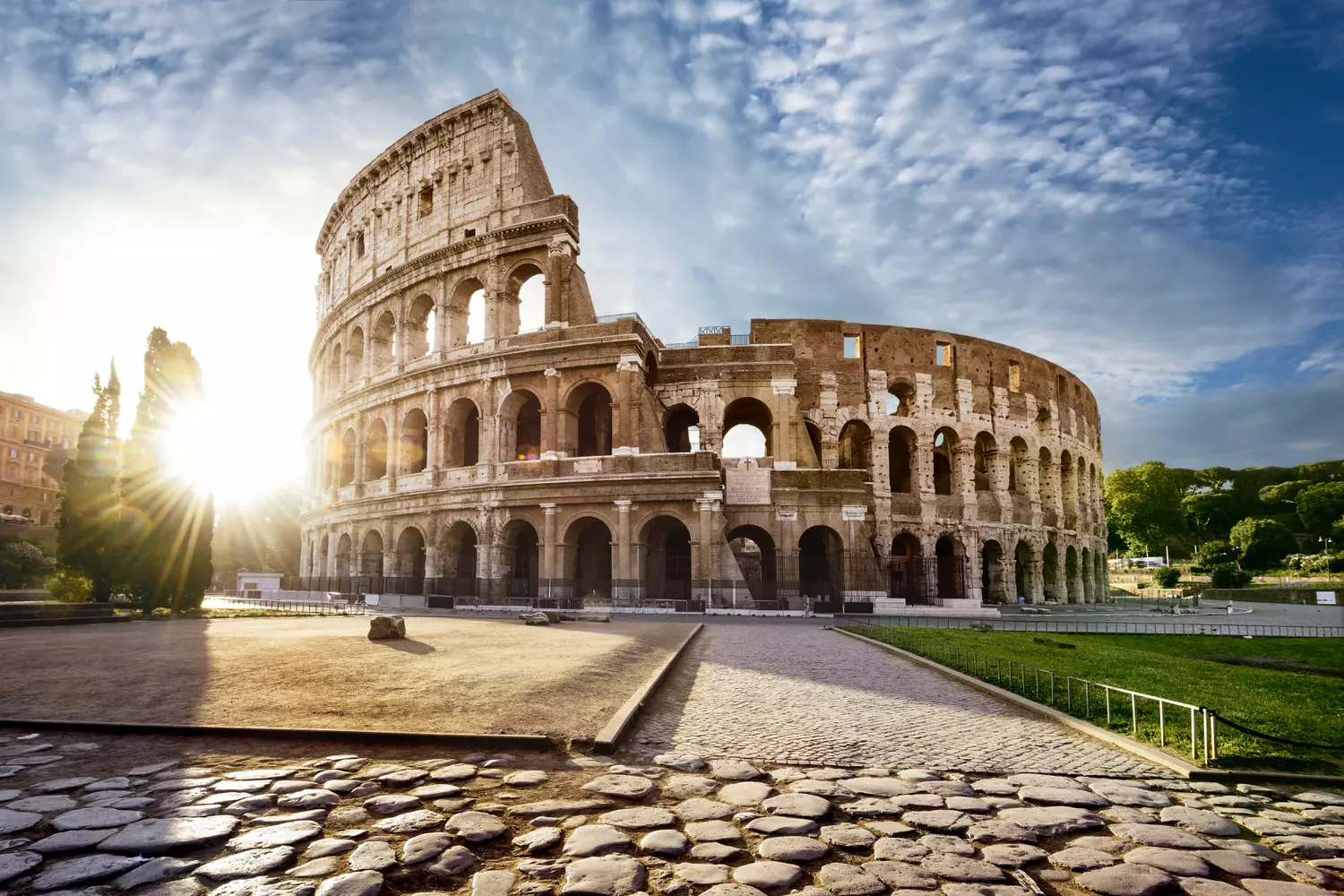
The protection of individual rights
Finally, Roman law placed great importance on the rights and freedoms of individuals, and Roman citizens were proud of their citizen status. The Law of the Twelve Tables (450 BC) constituted the first corpus of written laws accessible to all Roman citizens, both patricians and plebeians. This codification helped to clarify and standardize the law, which was previously scattered and often customary, ensuring a certain level of transparency in the application of the right to marry, buy, sell, etc.
This law corresponds astonishingly to the fundamental natural rights as theorized by John Locke two thousand years later. It allows for the protection of individual rights against arbitrariness and abuses of power.
Certainly, women, slaves, and foreigners were still excluded from the full protection of the law. Nevertheless, the Law of the Twelve Tables represented a significant progress and a basis for the further development of individual rights extended to all.
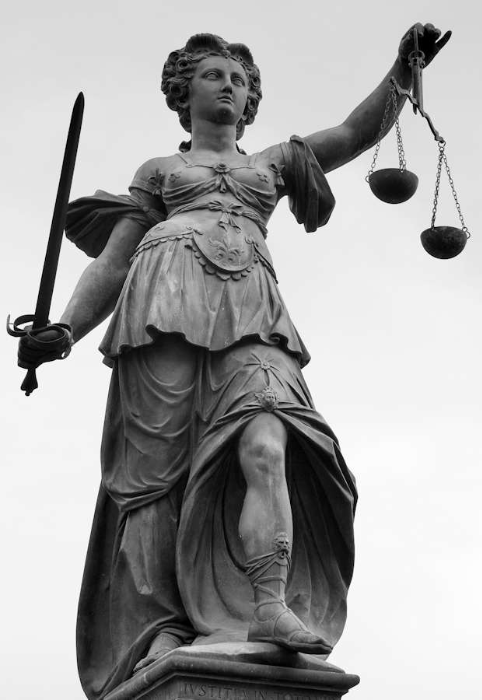
The Law of the Twelve Tables notably places particular importance on property rights:
- It defines the different types of property (land, movable, etc.)
- It breaks down property into usus (right of use), fructus (right to receive the fruits), and abusus (right to alienate)
- It specifies the conditions for the acquisition, transmission, and protection of these goods.
In summary, it contributes to securing transactions and protecting individuals against arbitrary expropriations, with the possibility of recourse in case of dispute.
The Birth of Humanism and Private Life
What one is depends on what one has. Being is not as independent of having as is sometimes said because what we possess distinguishes us from what others possess. And our life belongs to us, we first own our faculties, our body before owning material goods.
In Roman society, everyone could increasingly differentiate themselves from others and thus become the actor of their own life. Man now plays a unique role, and Cicero uses the word "persona" to designate him. The "persona" was a mask worn by Roman actors, but it also referred to the legal and social personality of an individual. The notion of persona implied that individuals were distinct entities with their own rights and responsibilities. The concept of the individual human person (the ego) with its inner life and unique destiny was born, and it would develop with Christianity.
Moreover, Roman literature and philosophy contain many examples of reflections on the nature of the individual, happiness, wisdom, and life in society.
Seneca and the Happy Life
A model of balance in thought is Seneca, a Roman Stoic philosopher who wrote about the importance of virtue, reason, and self-control. A contemporary of Jesus, he was at the same time a tutor to Nero, a wealthy banker, and a famous Roman writer.
The Treatise on the Happy Life (De Vita Beata) is a plea for Stoic morality. Happiness, says Seneca, "is a free soul [...] inaccessible to fear [...] for whom the only evil is moral indignity." A disciple of Socrates, the Stoic sage does not fear physical evil, death, or even suffering injustice. For him, the only evil is moral evil. Therefore, the supreme good lies in virtue.
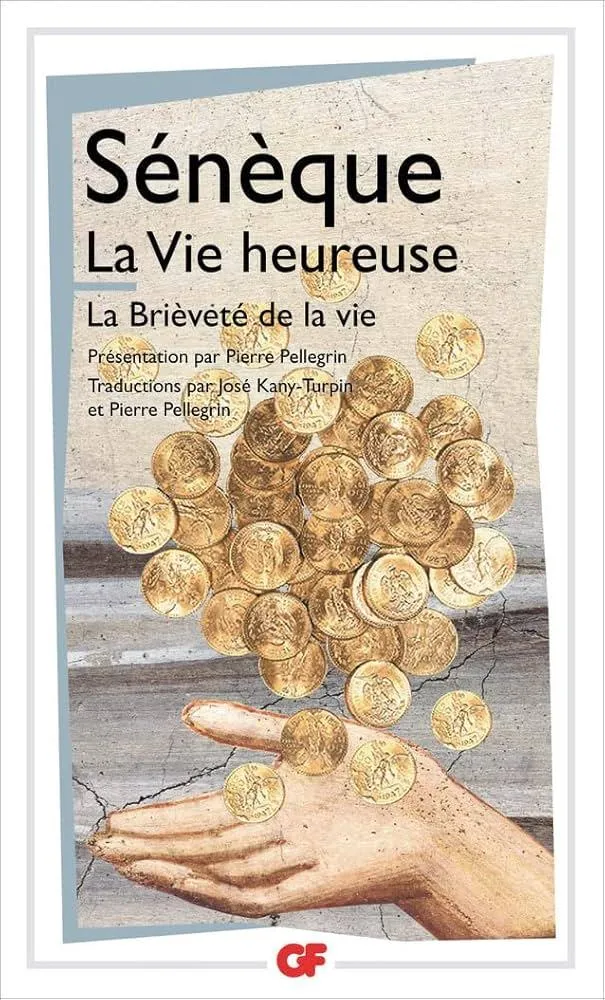
However, pleasure is not incompatible with virtue:
The ancients prescribed living the best life, not the most pleasant, in such a way that pleasure is not the guide of right will, but its companion on the road.
That's why the wise man does not reject the gifts of fortune:
He does not love riches, he prefers them; he does not welcome them into his heart, but into his house; he does not reject what he possesses, he dominates them and wants them to provide his virtue with ample matter.
Seneca goes even further. For the wise man, riches are the occasion and the means to exercise virtue: In poverty [...] there is only one kind of virtue: not to falter or let oneself be depressed; amidst wealth, temperance, generosity, discernment, economy, and magnificence have free rein.
The Concept of a Higher Law
The term "human rights," which many jurists rally around, implicitly subscribes to the idea of a higher law because it targets rights linked to humanity itself before any positive legislation. Without this superior moral norm, there would no longer be a critical authority capable of interpreting and questioning the legal order.
This idea reminds us that the Prince (just like political leaders) does not possess justice itself but is himself subject to a law that surpasses him and must regulate his judgment.
This is what philosophers of Antiquity, especially the Romans like Cicero or the Stoics, called natural law. Its origins can be found in Greek thought, with Sophocles and Aristotle.
Aristotle distinguishes between natural justice and legal justice. Natural justice is what is universally valid, in every place and at all times. It is an unwritten law, known through reason. Legal justice is what is in itself indifferent but becomes mandatory for everyone as a result of a conventional choice and is written in a legal text. In other words, a distinction is made between natural law and positive law.
The playwright Sophocles, in his play Antigone, stages a conflict between divine law and human law. Antigone refuses to obey King Creon's decree that forbids the burial of her brother, arguing that divine laws, immutable and superior, take precedence over human laws.
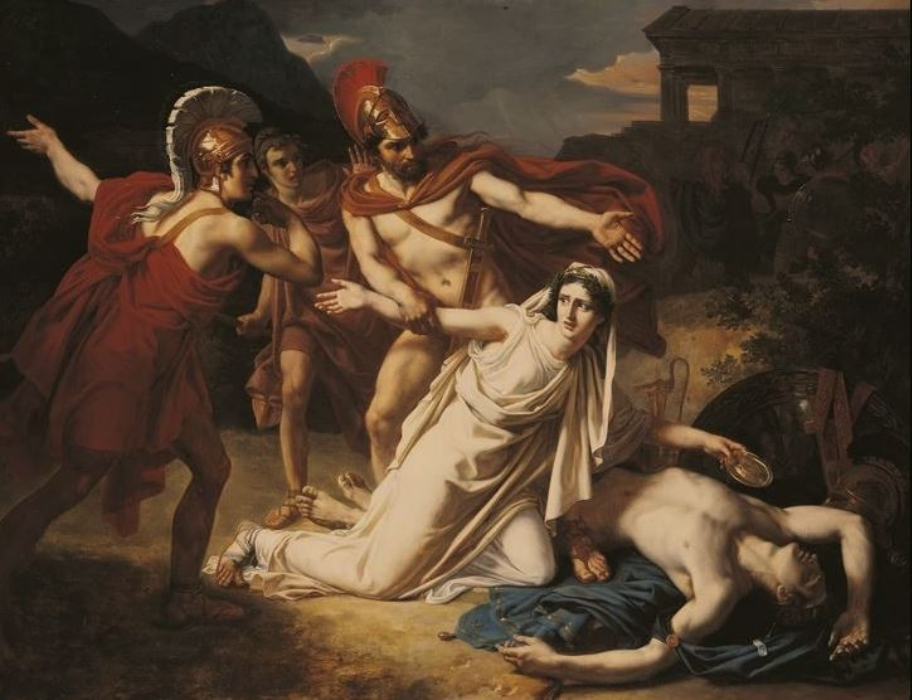
When Antigone disobeys Creon, she opposes positive law to obey her moral and religious conscience. If there is only positive law, says Aristotle, Creon is always right, even when he is wrong. But if we maintain the regulatory idea of a natural or divine law, Antigone can stand up when the time comes and invoke against an unjust law, the superior right of the unwritten law.
Cicero and Natural Law
Cicero lived in the 1st century BC and is considered the greatest orator of the Latin language under the Roman Empire. He is also a moral and political philosopher close to the Stoics. His essays have been read by educated Europeans for many centuries.
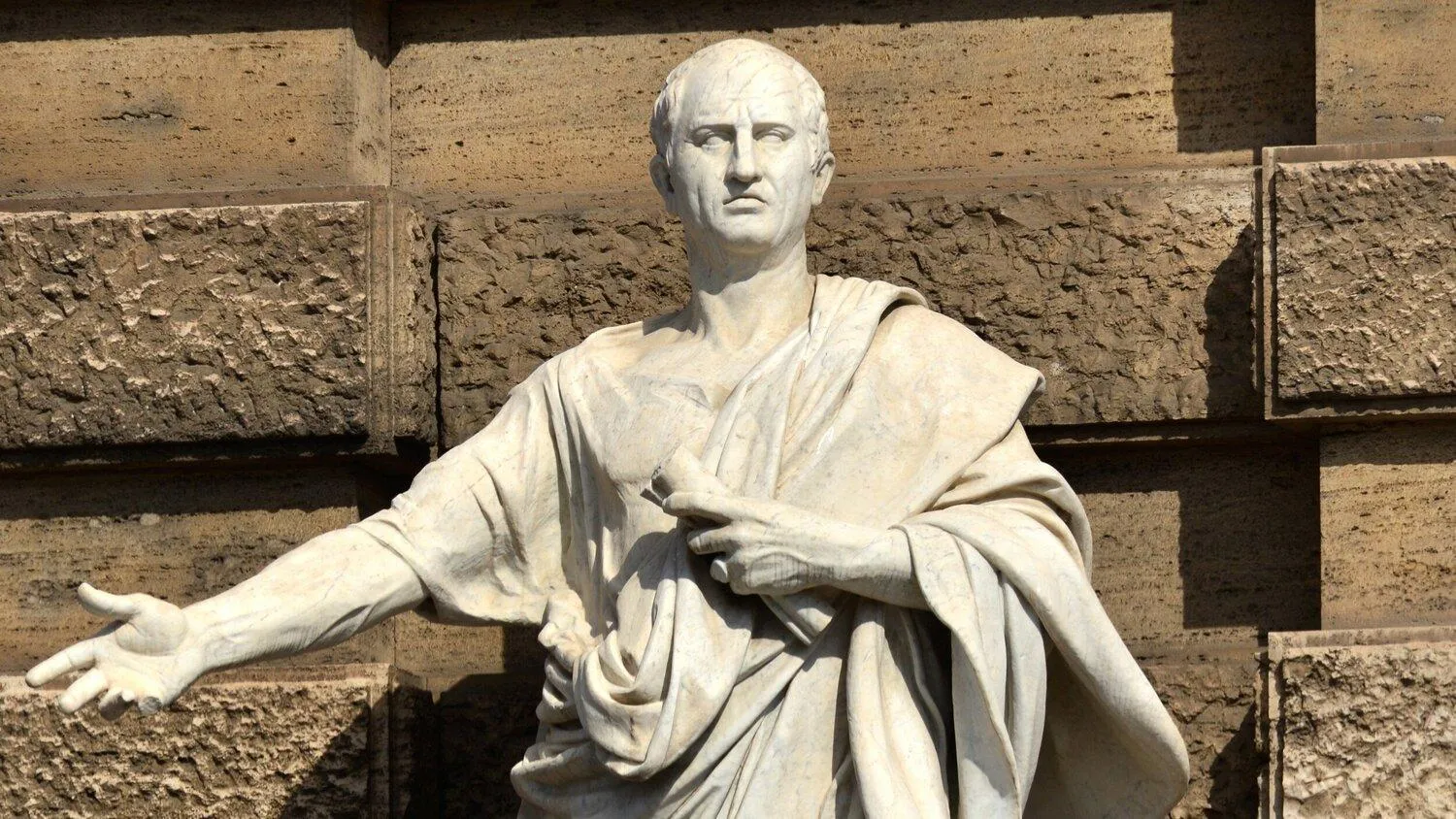 In his treatise On the Laws (De Legibus), he reflects on
the foundation of law. According to him, positive law, the set of
conventions or written laws adopted by a society, cannot establish justice
worthy of the name. There exists a natural justice, inscribed in human
reason: "law has a foundation in nature itself." To say that just and unjust
are the result of a convention is to say that truth is decreed. However,
truth cannot be decreed, even by the majority, it guides our judgments.
Cicero also rejects utility as the foundation of law. Indeed, he writes:
In his treatise On the Laws (De Legibus), he reflects on
the foundation of law. According to him, positive law, the set of
conventions or written laws adopted by a society, cannot establish justice
worthy of the name. There exists a natural justice, inscribed in human
reason: "law has a foundation in nature itself." To say that just and unjust
are the result of a convention is to say that truth is decreed. However,
truth cannot be decreed, even by the majority, it guides our judgments.
Cicero also rejects utility as the foundation of law. Indeed, he writes:
If justice is the obedience to written laws and to the institutions of peoples and if, as those who maintain it say, utility is the measure of all things, he will despise and break the laws, who believes to see his advantage in it. Thus, no more justice, if there is not a nature of justice at work; if it is based on utility, another utility overturns it. If, therefore, the right does not rest on nature, all virtues disappear. What becomes, indeed, of liberality, love of country, respect for things that must be sacred to us, the will to serve others, the willingness to recognize service rendered? All these virtues arise from the inclination we have to love men, which is the foundation of law.
Therefore, according to him, there is a universal justice, inscribed in reason and nature. Cicero writes in the De Republica:
The true law is right reason in agreement with nature; it is of universal application, unchanging and eternal; it invites to duty by its commands and turns away from the wrong path by its prohibitions […]. Neither the Senate nor the people have the power to dispense us from obeying it […]. It is not one thing at Athens and another at Rome, not one thing today and another tomorrow. But it is a single and same law, eternal, immutable, in force at all times and among all peoples […]. Whoever does not obey this law flees from himself and despises his own human nature.
This law is superior to the legislations in force, hence, "it cannot be invalidated by other laws, nor can any of its precepts be derogated, nor can it be entirely abrogated," adds Cicero. Political power has no hold on it.
Neither truth nor justice can be decreed, even by the majority, for otherwise they become the object of all manipulations. Therefore, even if the ruler is the people, it is not right to transgress the principles of natural law. Asserting that law cannot be reduced to merely the statutes enacted by the legislature, Cicero aimed to fight against legislative arbitrariness and propose a political morality. This idea has had a lasting influence on Western thought.
The Fall of Rome
Why did Rome decline and ultimately fall? Many like to think that the Roman Empire collapsed suddenly, under the impact of barbarian invasions. However, the causes of the Roman Empire's collapse are to be found much earlier, in imperialism and economic and monetary dirigisme.
In 1734, in his Considerations on the Causes of the Greatness of the Romans and of Their Decline, Montesquieu developed an original and unified thesis to explain the rise and fall of Roman power: the freedom gained under the Republic and then lost under the Empire. From the moment Roman domination expanded, freedom was lost, and decadence set in.
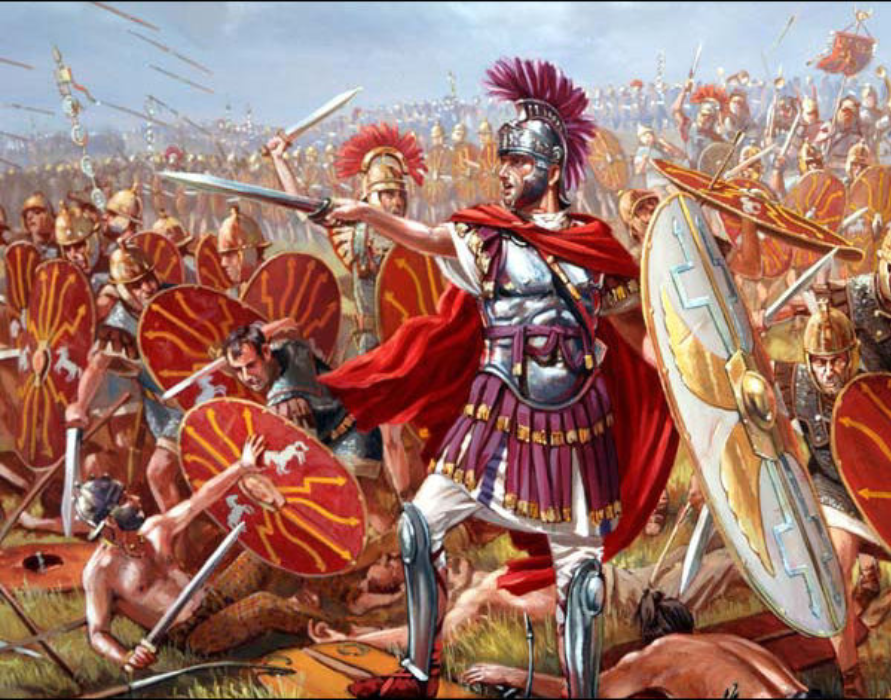
The Roman Empire was a parasitic military regime, which could only survive through a constant influx of plundered wealth from outside, prisoners reduced to slavery, and stolen lands.
Indeed, the enrichment of the Roman aristocracy came only from the booty of invasions and not from any creation of value. But with the end of conquests and the diminishing returns from plundering, the administration had to resort more and more to tax increases to satisfy its need for wealth, which led to a general impoverishment of the Empire's population.
Bread and Circuses
Around 140, the Roman historian Fronto wrote:
Roman society is primarily concerned with two things, its food supplies and its spectacles.
Gladiator fights, chariot races, and theatrical performances, often free, attracted huge crowds and allowed the elites to win the favor of the people. The power provided games to its citizens, but also wheat, bread, pork, and olive oil. This strategy served as a political strategy to ease social tensions, divert attention from economic problems, and strengthen the power of the emperors.
Under the reign of Emperor Antoninus Pius (from 138 to 161), the Roman bureaucracy reached gigantic proportions. But as tax revenues were not sufficient to fund the administration and garrisons, emperors began to issue more and more currency by reducing the amount of silver in each coin. The Denarius, the main currency of Rome, saw its silver content drop from 100% to 0.5% between 235 and 284 AD. With the devaluation of the currency, prices increased uncontrollably, leading to a decrease in consumption, trade, and confidence.
The fall of the Roman Empire was a slow process, directly linked to the bankruptcy of a corrupt monetary system. The hyperinflation that ensued caused the economy to collapse and led to the loss of people's confidence in the currency.
Then political instability was added to the economic instability, with more than 50 different emperors on the throne in 50 years.
Price Control
A classic example of interventionism emerged in Rome when Emperor Diocletian wanted to cap prices. Interventionism is defined as the action of a power that goes beyond its role of maintaining order and protecting citizens. It is an attempt to control the market, aiming to modify prices, wages, interest rates, and profits.
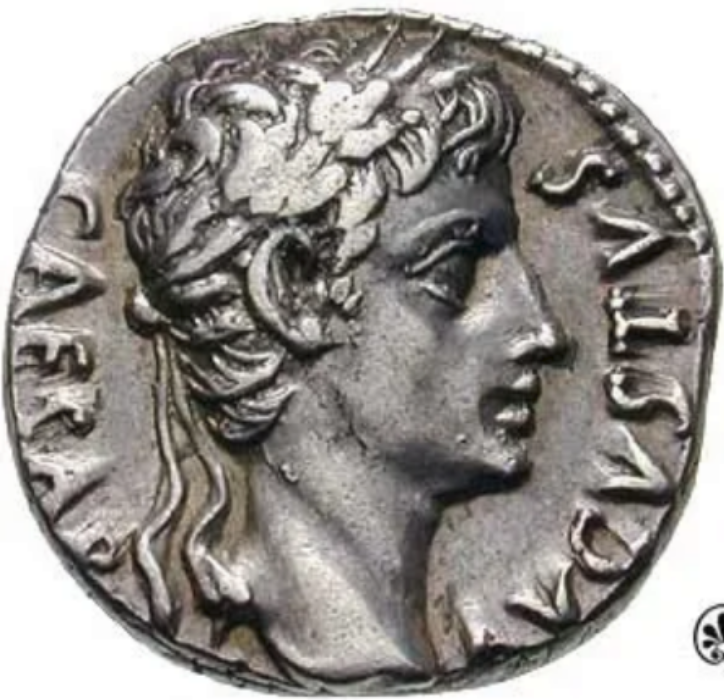
The repeated monetary emissions by successive emperors to cope with the increase in military expenditures had caused a surge in prices. In 301, Diocletian proclaimed the Edict of Maximum in an attempt to cap them. It was a failure.
Ludwig von Mises describes this episode, which well illustrates the harmful effects of interventionism: Roman Emperor Diocletian is well-known for having been the last Roman emperor to persecute Christians. Roman emperors, in the latter part of the third century, had only one financial method, which was to debase the currency. In these primitive times, before the invention of the printing press, inflation itself was primitive, so to speak. It involved fraud in the minting of coins, especially silver, until the color of the alloy was changed and the weight significantly reduced. The result of this debasement of the currencies, coupled with the corresponding increase in circulation, was a rise in prices, followed by an edict of price control. And the Roman emperors did not hold back in enforcing the laws; they did not consider death too severe a penalty for a man who had asked for too high a price. They enforced price controls, but as a consequence, they brought down society. This eventually led to the disintegration of the Roman Empire, and also to the breakdown of the division of labor. (Economic Policy, Reflections for Today and Tomorrow)
From Liberalism to Socialism
Following in the footsteps of Montesquieu, Philippe Fabry demonstrates that Rome experienced a trajectory from liberalism to socialism. Philippe Fabry is a historian of law, institutions, and political ideas. He has taught at the University of Toulouse 1 Capitole and is the author of several books, including Rome, from Liberalism to Socialism, 2014.
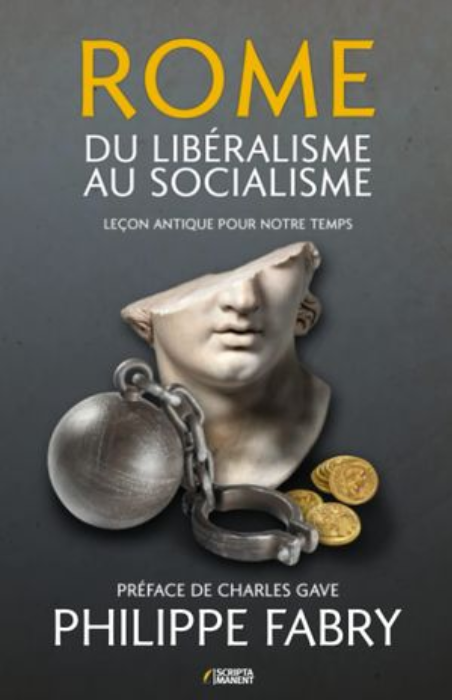
Was Rome the greatest liberal power of the ancient world? Did it then fall into a form of socialism? Let's first define the terms:
Liberalism: trust in the action of individuals, producing a spontaneous order, just because it results from their voluntary interactions, through the free play of the market and the respect for their inalienable rights.
Socialism: the organization by the State of society considered as a whole, through the planning of production and consumption.
The thesis of Philippe Fabry's book is that "the fall of the Roman Empire is the consequence of the deadlock into which imperial socialism had led the ancient world." It was the dirigisme of the Roman imperial state that led to its collapse. The Roman Republic, which was the greatest liberal power of the ancient world, lasted from 510 BC to 23 BC, nearly 500 years. However, gradually, the civic collegiality that characterized the Roman Republic disappeared in favor of personal power embodied by emperors who adopted the style of government of the oriental potentates of ancient Egypt and Persia. Breaking with a previously moderate foreign policy, Rome suddenly subdued vast populations through war, providing streams of slaves to wealthy Roman investors, ruining the middle classes. In return, the Roman population demanded more and more subsidies.
In the early days of its greatness, each Roman considered himself as the main source of his income. What he could voluntarily acquire in the market was the source of his livelihood. Rome's decline began when a large number of citizens discovered another source of income: the political process or the redistributive state.
Romans then abandoned freedom and personal responsibility in exchange for promises of privileges and wealth distributed directly by the government. Citizens adopted the idea that it was more advantageous to obtain income through political means rather than through labor.
Philippe Fabry summarizes:
the observed weaknesses of the imperial system […] are those of all totalitarian regimes: "Absolute priority given to maintaining the system in place, inefficiency in economic production, corruption, cronyism.
And he adds:
In total, the economic, political, artistic, and religious life under the Roman Empire in the 4th century must have been quite similar to what it was under Brezhnev in the USSR (and in the worst moments under Stalin) or to what it can be today in North Korea: the entire population of the Roman world was regimented by imperial socialism and suffered, directly or indirectly, its effects.
The origins of freedom: the Middle Ages
The affirmation of human freedom
The Christian idea of freedom developed in the medieval theology of Saint Augustine in the 4th century, to Saint Thomas Aquinas in the 13th century. What is this idea?
Freedom is implicated in the idea of sin
Right from the start, Christianity teaches that sin is a personal matter, not inherent to the group, but that each individual must take responsibility for their own salvation. "God has endowed his creature, with free will, the capacity to do wrong, and thereby, the responsibility for sin," asserts Saint Augustine in his treatise on free will, De Libero Arbitrio. Sin cannot exist without freedom. Indeed, the Christian God is a judge who rewards "virtue" and punishes "sin". But this conception of God is precisely incompatible with fatalism because a person could not be guilty and make their mea culpa if they were not first free to determine their own behavior. To acknowledge one's moral fault, one's guilt, is to recognize that one could have acted differently.
"Why do we do wrong?" asks Saint Augustine. If I am not mistaken, the argument has shown that we act this way through the free will of the will. But this free will to which we owe our ability to sin, we are convinced, I wonder if He who created us did well to give it to us. It seems, indeed, that we would not have been exposed to sin if we had been deprived of it; but it is to be feared that, in this way, God also appears as the author of our bad actions. (De libero arbitrio, I, 16, 35.)
If God wanted man to be able to do wrong, isn't He then indirectly responsible for evil? Why did God want the possibility of evil? Saint Augustine answers:
the free will without which no one can live well, you must recognize that it is a good, and that it is a gift from God, and that those who misuse this good should be condemned rather than saying of the one who gave it that he should not have given it.
Saint Augustine's response to the problem is to say that God is responsible for the possibility of evil but not for its realization. He wants the possibility of evil because this possibility is necessary for freedom without which there is no responsibility, that is, no access to the dignity of moral life.
But the realization of moral evil is the work of man, who makes bad use of his freedom, and not of God who wants man to choose the good.
In summary, freedom is a good because it allows one to order oneself to the good and to God who is the absolute good, but it necessarily and simultaneously implies the possibility to choose evil and to reject God.
God does not do good in our place
In medieval theology, providence is not a constant intervention of God in
the lives of men, as if God acted in our place and without our consent. On
the contrary, God gives to each creature, according to its nature, faculties
that allow it to provide for itself and thus reach its full development. God
does not do the good for the creature in its stead. 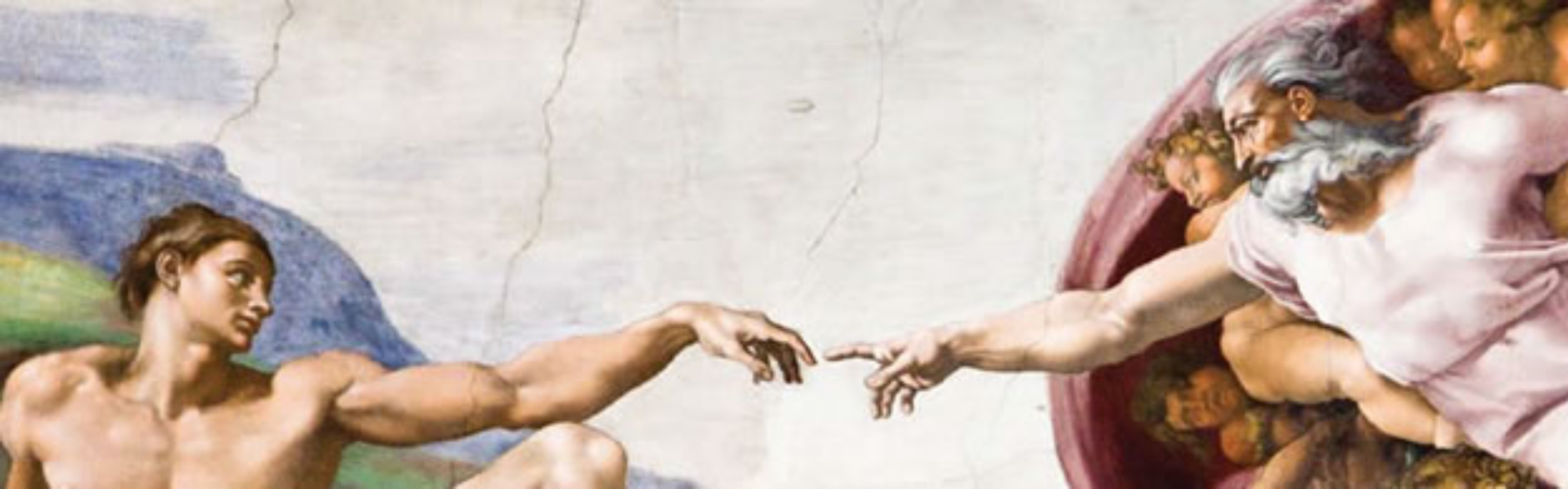
And the higher we go in the scale of beings, from mineral to man, the more God delegates to his creature the power to act on its own. He entrusts man with the freedom to govern himself and to govern the world with his reason, according to the virtue of prudence.
Thus, Saint Thomas writes (Summa contra Gentiles, III, 69 and 122):
To take away from the perfection of creatures is to detract from the perfection of divine power (...) God is offended by us only because we act against our own good.
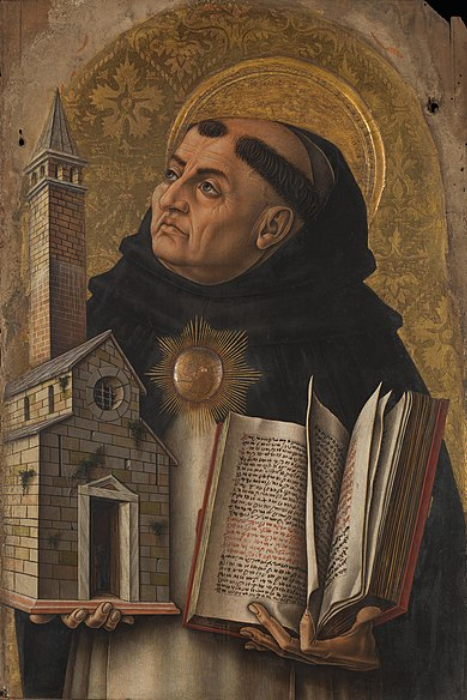
Providence, therefore, gives us the means to be our own providence. And he adds:
A man can direct and govern his actions. Therefore, the rational creature participates in divine providence not only by being governed but also by governing.
For man to make the best possible use of his freedom, God gives him a tool which is his reason and a manual to enlighten him which is natural law.
Natural law expresses itself in us through inclinations such as the love of truth, obedience to reason, or the famous golden rule: "Do not do unto others what you would not want done unto you." These inclinations are, according to him, innate. Indeed, Saint Thomas writes, "it must be considered that natural justice is that towards which the nature of man inclines."
However, this inner light is not enough to act well. The development of concrete norms of action and their application to specific situations is necessary. It then falls to jurists to define these norms, in accordance with natural law: these are human laws. But natural law is superior to human law and it imposes itself universally, including on Princes.
According to Saint Thomas:
Through the knowledge of natural law, man directly accesses the common order of reason, before and above the political order to which he belongs as a citizen of a particular society. Therefore, there exists a right prior to the formation of the State, a set of general principles that reason can articulate by studying the nature of man as God created it. This right imposes itself on the monarch, on power, which must then respect it. And the laws enacted by political authority are binding only insofar as they conform to natural law.
Reason and faith: an open competition
In the Middle Ages, reason and faith compete for access to truth. Following Abélard and Albert the Great, Thomas Aquinas, in the 13th century, chose to defend the rights of reason and its autonomy in relation to faith.
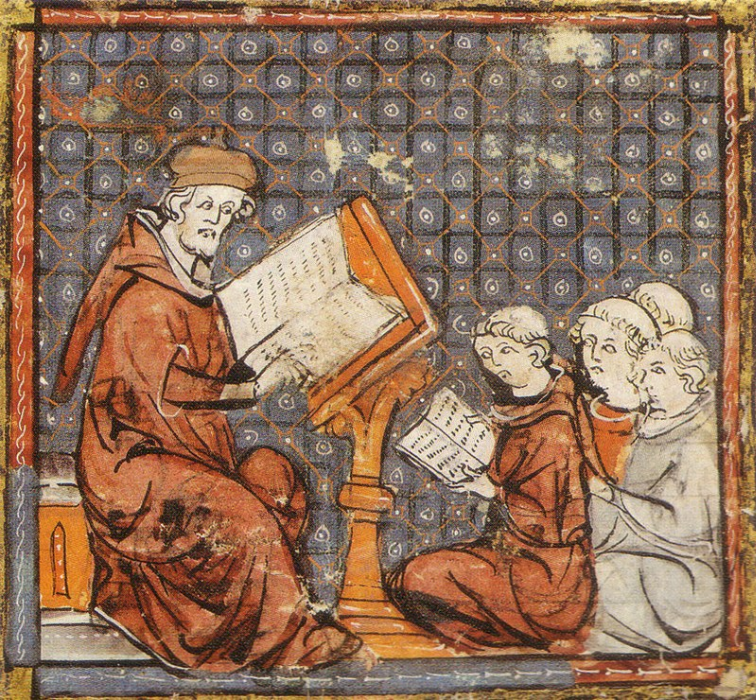
He borrows from Aristotle's thought the idea of an autonomous natural order, independent of the celestial order. This natural order is indeed transcended by the supernatural order, but it exists separately and is prior to it. Therefore, for him, there are two ways to access the truth about the world and particularly about God:
- On one hand, reason, which starts from nature, from sensible experience, which develops ideas and reaches rational certainties through its reasoning.
- On the other, faith which starts from a Revelation, that is, a sacred text inspired by God. The approach is the opposite, it is not reality or a human characteristic (thought) that leads to certainties but truths given from above by God that will explain reality.
How then to reconcile the two? In the Middle Ages, two traditions of articulating the relationship between reason/faith can be identified: mysticism and religious rationalism.
The rivalry between mysticism and religious rationalism
Mysticism consists of excluding reason from faith. Faith is absolute, beyond reasoning, and should never be subjected to reason. If it contradicts reason, that's normal, and trying to fit revealed truths into the framework of reason is heresy. God is well beyond reason, in other words, there is no point in trying to explain Him. Therefore, philosophy is very poorly regarded. God would even be beyond human language: He would be the unnameable, the wholly Other. His will is absolute and arbitrary. Therefore, one should not seek to understand why God did this or that, obedience is the only appropriate attitude. In Islam, it is also said that one should not represent God or give Him an image. In the Christian world, a mystic like Meister Eckhart notably wrote in a Sermon: "All things have a why, but God has no why." For mystics, the only valid philosophy is the one that comes directly from Revelation. Anything that does not come from it is neither true nor false but devoid of any truth value. The direct opposite of this thought is the one that states that only reason is right, and that all faith is nonsensical. This is absolute rationalism, which leads to atheism. However, such a current did not yet emerge in the Middle Ages.
For proponents of religious rationalism, there is a complementarity between reason and faith: this is the middle position. The truth can be known both by faith and by reason. And so, what is true in faith must also be true in reason, and vice versa. The truth is one but it is accessible in two ways. Therefore, there are two sciences that cannot contradict each other but complement one another: natural science or philosophy and sacred science or theology. If this is not the case, if a contradiction appears between reason and faith, it is either that one reasons poorly, or that one misinterprets the Scriptures.
Thus, for Thomas Aquinas, "Faith is the assent of reason moved by the will in the absence of evidence." In other words, reason is capable of apprehending the world and God, rationally, up to a certain point. At this point, it encounters no more evidence. The will can then choose to believe, and thus go further towards the truth by faith, or not to believe. But faith is not a leap into the absurd, it is not a humiliation of reason.
This is the middle position, which seeks to reconcile faith and reason. True rationalism is not to reject everything that reason does not understand but to think about the limits of reason. What goes beyond reason is not necessarily against reason. A quote from Pascal in the Pensées illustrates this mindset very well: "Two extremes: to exclude reason, to admit only reason."
The Birth of Universities
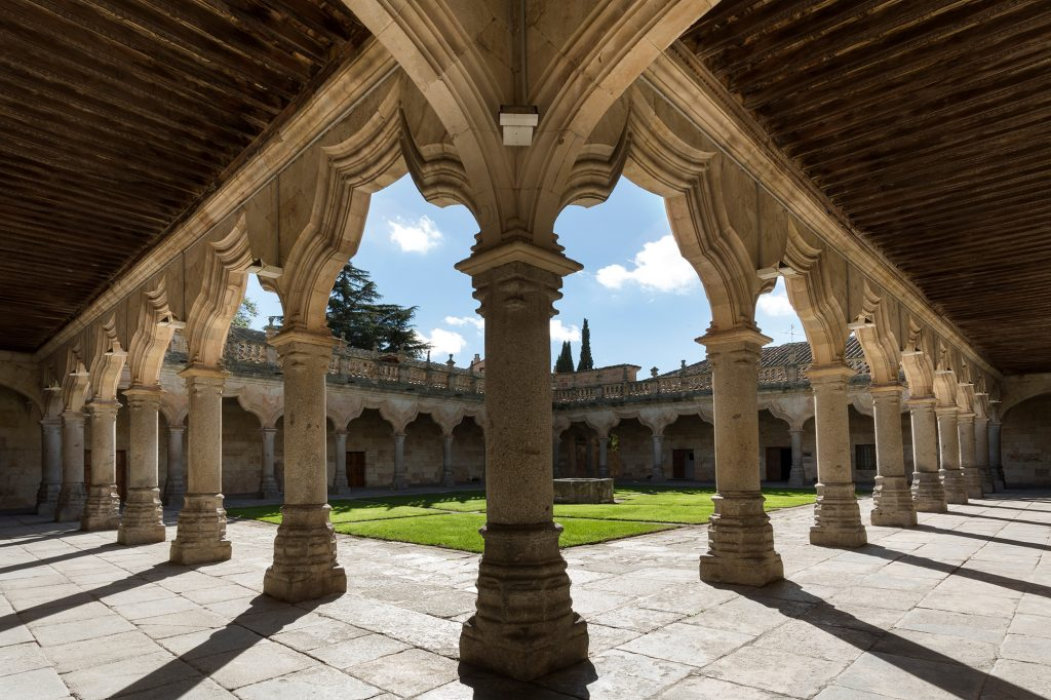
The Christian Middle Ages were marked, at the beginning of the 13th century, by the birth and multiplicity of universities in the West. A university is a community of students and masters from the same city under the control of the Church and comprising in principle four faculties: arts, theology, law, medicine. Theology is conceived as a science, on the model of Greek science.
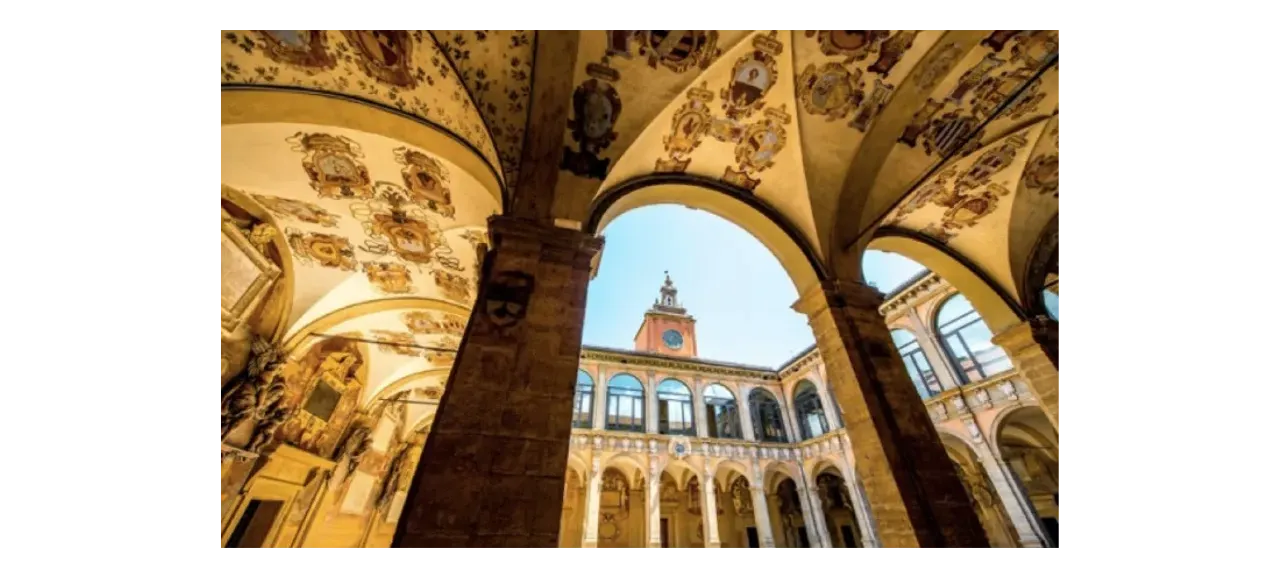 In 1200, Philippe-Auguste established the University of Paris, which quickly
became the most renowned university in Europe. In 1257, Robert de Sorbon founded
a college of theology at the University of Paris, which would later be called
the Sorbonne. A new method of teaching and research known as scholasticism (from
schola, school) emerged within these universities. It involved the "disputatio,"
a kind of contradictory debate in front of an audience. A thesis was proposed,
followed by objections to which a response had to be provided. Once all arguments
were exhausted, the master would resolve the debate with a reasoned solution.
In 1200, Philippe-Auguste established the University of Paris, which quickly
became the most renowned university in Europe. In 1257, Robert de Sorbon founded
a college of theology at the University of Paris, which would later be called
the Sorbonne. A new method of teaching and research known as scholasticism (from
schola, school) emerged within these universities. It involved the "disputatio,"
a kind of contradictory debate in front of an audience. A thesis was proposed,
followed by objections to which a response had to be provided. Once all arguments
were exhausted, the master would resolve the debate with a reasoned solution.
Among the great Aristotelian masters who marked this era, we can mention Albert the Great (1200-1280) and Thomas Aquinas (1224-1274). The latter, by establishing reason in its rights, highlighted the specificity and autonomy of philosophical wisdom in relation to theology. Just as grace presupposes nature and fulfills it, faith presupposes and perfects reason.
From then on, religious rationalism would definitively prevail over mysticism.
Religion and Politics: The Birth of the Sovereign State
In the Middle Ages, the Church and Christian monarchies inherited a political model from the Roman Empire, which historians call the theologico-political system, meaning a system where power is sacred, i.e., where the political leader is also a religious leader.
This is why medieval societies are characterized by politico-religious unanimism. Political power bases its legitimacy, authority, and unity on the Christian (or Muslim) faith. It considers itself the guardian of cultural and religious orthodoxy and treats as pariahs those who stray from this unanimity. In this context, even if a certain tolerance could be conceded to those who detach from the common cultural vision (such as Jews), no right to pluralism could be recognized for them. It was not until the end of the Middle Ages, with the conquest of America, that the problem of civil liberties became crucial to the Church and saw the emergence of a first philosophy of law that affirmed and protected individual freedoms, legitimized pluralism, and condemned state coercion.
Saint Augustine and the Theocratic Temptation
The question of the relationship between politics and religion took shape
with Saint Augustine's work Civitas Dei (The City of God).
In it, he explains that two spheres coexist: Two loves have thus made two
cities: the love of self to the contempt of God, the earthly city; the love
of God, to the contempt of self, the heavenly city. 
We have, therefore:
- A spiritual power derived from God is embodied by the Pope and is exercised over all Christendom (this is the City of God).
- The city of men, which is earthly and made of a local and temporal power. It originates from original sin, from Evil.
However, for Augustine, this earthly city is necessary. It is necessary because it guarantees peace. Thus, coexistence with the religious must be well managed, and it should be regulated by a predominance of spiritual power over temporal power. But there should not be a radical separation or open conflict, and both entities should work together. Historians have called this doctrine political Augustinianism.
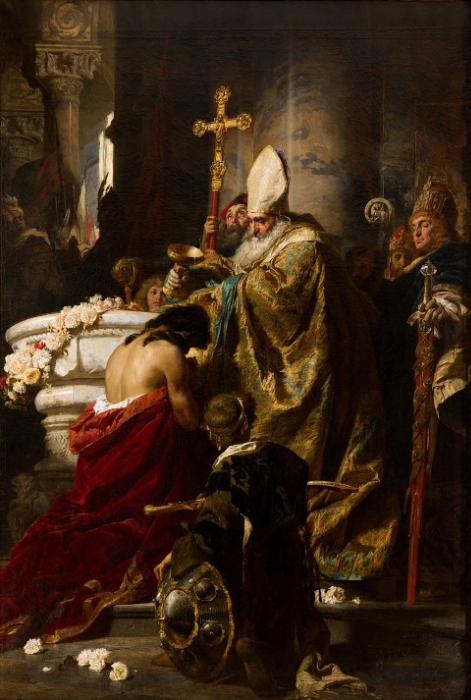
The rivalry between temporal power and spiritual power
However, neither popes nor kings were satisfied with this alliance. The Church tried to claim its authority over political power while political power attempted to free itself to assert its sovereignty.
Thus, the Church on its side will develop its law and its courts and will postulate that the Pope can settle earthly disputes. On their side, kings will begin to develop a state apparatus as powerful as possible. They will also try to centralize the resolution of legal conflicts, then they will gradually generalize taxation, develop territorial administration, and raise armies: they will lay the foundations of the modern State.
In reality, the competition between the powers led to numerous conflicts. Each Prince or each Pope always tried to have the last word and to convince that he held the supreme authority, as a last resort. Thus, Pope Gregory VII declared:
The pope is the only man whose feet all princes must kiss.
On his side, Saint Louis did not hesitate to oppose Pope Innocent IV who had excommunicated and deposed Emperor Frederick II, thus depriving him of all credibility among his people. His grandson, Philip the Fair, would do the same.
The Church's theocratic temptation also clashes with the theory of "divine right." If the kings of France proclaim themselves monarchs by "divine right," it is to escape the grip of the Pope and draw their authority directly from God, without having to receive orders from the clergy.
Biblical Ethics: The Sacred Value of the Individual
Ancient thought subordinated man to a divine cosmos, that is, to a perfect universe of which he was merely a part. Monotheism, on the other hand, asserts the infinitely superior value of man over nature, insofar as man is created in the image of God. This crucial point is at the origin of a true ethical revolution. The Bible affirms the sacred and infinite value of each human being.
This is why biblical ethics change our relationship to evil. It brings a sharp and unprecedented sensitivity to human suffering. It therefore encourages us to consider as abnormal and unbearable evils that humanity until then had found perfectly bearable, especially the evil done to others, to the weak, to the innocent.
The Transition from a Symmetrical Ethics to an Asymmetrical Ethics
Symmetrical ethics is about establishing strict equality in human relationships or strict reciprocity. It appears in the virtue of justice, the supreme virtue for the Greeks. Justice is giving to others what is owed to them: to each their own. And perceiving time as cyclical leads to not feeling responsible for the evil done by others. There is evil on Earth but it has always existed and will always exist. This must be chalked up to the profit and loss account, and the sum of it is constant. There is nothing to be done, it will always be so, this is Greek and Roman fatalism.
Biblical ethics are asymmetrical, meaning that one must give more than what is owed. Everyone feels responsible for evil, even for that which they have not committed. Ethics of giving, ethics of forgiveness, ethics of compassion. One cannot remain indifferent to the suffering of others and must not tolerate gratuitous suffering, even when it does not come from us. The tranquility of the stoic sage who accepts fate becomes impossible. This is the meaning of the parable of the Good Samaritan. Nothing obliges him to stop and take care of a man wounded by bandits. From the ethical revolution brought by the Bible, all of humanity becomes a sort of Good Samaritan. It is invited not to tolerate the evil done to others and to fight against it. Moreover, since God is the creator, we see the emergence of a new concept, that of equality: before God, all men are equal. There are no privileged individuals in the face of the transcendent immensity of God, and all men are equal.
The Rights of the Indians
The most well-known incarnation of this emerging doctrine is the School of Salamanca, in Spain in the 16th century. Francisco de Vitoria, one of its representatives, asserts that if every man is created in the image of God, no man can be declared inferior to another, not the Jew, nor the black slave, nor the Indian.
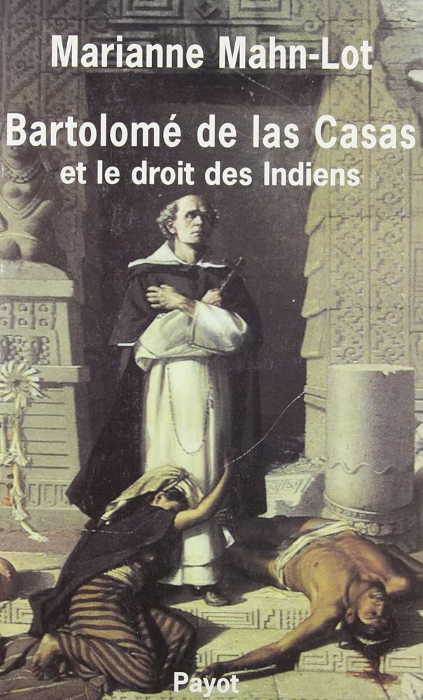
The discovery of the Americas constituted a real cultural shock, a first breach in the politico-religious unanimism inherited from Antiquity. The famous controversy over the rights of the Indians indeed divided theologians into two opposed and irreconcilable camps.
In one camp, there were the proponents of cultural monolithism and the principle of coercion. For them, the Indians lived outside the biblical message. This could mean that God did not want to reveal Himself to them. Why? Two hypotheses are then conceivable: 1° They are great sinners (cannibalism) 2° They are backward and closer to the beast than to man. That's why they have the right to treat them as slaves and take their lands by force, on the grounds that they are both infidels and barbarians.
In the other camp, there were the proponents of pluralism and civil liberties: these are the theologians of the School of Salamanca, disciples of St. Thomas. According to Francisco de Vitoria and Bartolomeo de Las Casas, rights must be recognized for the Indians as human beings and not because they have adhered or not to the Catholic faith. Not only should they not be converted by force, but their possessions should not be taken, nor should they be subjected to any form of slavery. Their argumentation is based on the Thomistic conception of natural law, distinct from divine law.
In the Summa Theologica, St. Thomas poses the following question:
should one obey an unfaithful Prince, who does not believe in God? And he
answers yes, because legitimate authority is by natural right, and the
Prince's infidelity or atheism is not a reason for rebellion. The political
order is primarily a natural order. He further asks: should war be waged on
the infidels and the faith imposed on them? He answers no: a war is just
only if it is defensive. Finally, faith can only be a free act. The scholars
of Salamanca applied this reasoning to the case of the Indigenous peoples:
property is a natural right. Therefore, taking lands from the Indigenous
peoples is to commit theft, just as if they were Christians. It is also not
permissible to wage war on them given that there is no aggression on their
part, but rather from ours. 
The matter of the Indigenous peoples was the first crack in the politico-religious monolith. It showed that the unity of the political society could rest on a basis other than the religious unity of the inhabitants of the same territory, on the basis of a common belonging to human nature.
The idea of humanity progresses. It effectively came to be considered that there is only one humanity to which equal rights are naturally linked. But it will still take time for it to be accepted by all. This will notably require the contribution of the natural sciences with the concept of the human species.
The First Sketches of Capitalism
We have seen that Christianity imposes a moral duty on people to work towards the improvement of the world. God wants man to be happy but does not want to achieve his good in his place. It is therefore up to the Christian to fight moral evil, to love their neighbor, to help the victims, in short, to work for a more just and humane world. Is capitalism, that is, the free economy based on private property and the freedom of contracts, compatible with the Christian duty?
Part of the answer lies in the fact that capitalism originated in a religious context, well before the Protestant Reformation. The other part of the answer consists of observing the fact that capitalism is the best means of improving the material and moral condition of individuals. Only a free economy, based on property rights and voluntary cooperation, is capable of sustainably lifting people out of misery.
Let's focus on the first point. The second point will be addressed in the following section.
The Rise of Italian Cities
Henri Pirenne, a Belgian historian of the early 20th century, dedicated part of his work to the analysis of the emergence of capitalism in Europe. In his book History of Europe, he states:
All the essential features of capitalism — individual enterprise, the progress of credit, commercial profits, speculation, etc. — already existed from the 12th century in the Italian city-states, Venice, Genoa, or Florence. According to Pirenne, these trading cities, thanks to their commercial dynamism and strategic position on maritime routes, had developed economic practices characteristic of nascent capitalism. He notably highlights:
- The rise of individual enterprise: Italian merchants, often from wealthy families, invested their own funds in distant commercial expeditions, thus assuming the risks and expecting substantial profits.
- The expansion of credit: The development of international trade stimulated the use of various credit instruments, such as bills of exchange and banking operations, allowing for the financing of transactions and facilitating capital movements.
- The pursuit of profit: The primary motivation of Italian merchants was the pursuit of commercial profits. They engaged in risky ventures, hoping to maximize their gains by trading valuable products in distant markets.
- The emergence of speculation: The uncertainty inherent in maritime voyages and price fluctuations gave rise to speculative practices, where merchants bet on the evolution of commodity prices.
Pirenne observes that these practices, although present in other regions of Europe, experienced a particularly early and intense development in the Italian city-states. He attributes this phenomenon to several factors, including the rise of maritime trade, the influence of the Crusades, the weakening of feudal structures, and the innovative spirit characteristic of these trading cities.
The issue of interest-bearing loans
The Scriptures condemn interest-bearing loans, called usury, considering that lending money at interest amounted to exploiting vulnerable borrowers. However, in practice, the Church turned a blind eye to the issue.
Jacques Le Goff is a French historian specializing in the culture and
mentalities of the Middle Ages. Following Pirenne, he recognizes the
presence of capitalism's seeds as early as the Middle Ages, notably in
Italian cities, where practices such as individual enterprise, the pursuit
of profit, and the use of credit instruments were already present. Or Le
Goff highlights in L'usure au Moyen Âge (1967, republished in 1986
under the title: La bourse et la vie; économie et religion au moyen-age) that as
early as the 13th century, Saint Albert the Great had theorized the notion
of "legitimate interest" which was further developed by Saint Thomas Aquinas
after him. Despite religious prohibitions, the practice of lending existed
and met real economic needs. Long before Adam Smith, they understood that
interest on loans was not usury but a way to allow for the remuneration of
risk for the lender and investment for the borrower, which are at the
foundation of capitalism. 
However, according to the French historian, the rise of capitalism must be placed in a broader context of economic, social, and cultural transformations that unfolded over several centuries. Le Goff notably emphasizes the importance of the Commercial Revolution of the 15th and 16th centuries, marked by the expansion of maritime trade and the discovery of new trade routes, which stimulated the accumulation of capital and the predominance of the market logic.
A Critique of Monetary Manipulations
The systematic study of economic laws begins in the High Middle Ages. The first economists are the scholastic theologians of the School of Paris. The first among them to write a scientific treatise entirely devoted to an economic subject is Nicolas Oresme (1325-1382). Around 1360, he composed his Treatise on the Origin, Nature, Law, and Alterations of Money which summarizes and develops the ideas of the scholastics of his time.
At the heart of his monetary analysis lies the problem of "mutations" of money, that is, alterations in the metallic content of coins and their denomination. These alterations have occurred since the dawn of time and are well documented for Antiquity and the Middle Ages. Their most visible effect is to change the purchasing power of the monetary unit, especially to decrease it. This is a primitive form of inflation that Oresme clearly condemns as an evil.
Oresme immediately raises a central question: is inflation beneficial for the community? He answers in the negative, arguing that inflation does not make money any more or less useful for exchanges. The economy can function well regardless of the price level, and thus regardless of the nominal money supply. But if that is the case, another question obviously arises: why do alterations of currency exist? And in particular, why seek to increase the money supply? Oresme responds that these alterations do not have the same consequences for different members of the community. They benefit certain people at the expense of others. The winners of currency alterations have a material interest in implementing them. Generally, these winners are the men in power. Oresme writes:
It seems to me that the primary and ultimate reason why the prince wants to seize the power to change currencies is the gain or profit he can derive from it, for otherwise, it is without reason that he would make so many and such considerable mutations.
Then he adds these details:
Whatever gain the prince derives from it, it is necessarily at the expense of the community. Now, whatever a prince does at the expense of the community is an injustice and the act, not of a king, but of a tyrant, as Aristotle says (...) If the prince can rightfully make a simple change in the currency and derive some gain from it, he can, for a similar reason, make a greater change and derive more gain (...) Thus, the prince could eventually attract to himself almost all the money or wealth of his subjects and reduce them to servitude, which would be to fully prove tyranny and even a true and perfect tyranny, as it emerges from the philosophers and the stories of the ancients.
Oresme emphasizes that currency alterations are not simply a game of redistribution in favor of power at the expense of the rest of the community. They lead to overall losses — the game is negative-sum. A currency in frequent alteration disrupts trade and invites counterfeiters to take advantage of the general confusion.
Moreover, if two different currencies benefit from legal tender, agents will hoard the one that is worth more, so that only the inferior currency remains in circulation. (Oresme here anticipates the famous "Gresham's law": bad money drives out good in a legal tender regime.) He concludes that currency manipulations are worse than usury and that, probably, they were a significant cause of the decline of the Roman Empire, as we have seen previously.
The Rise of Freedom: From the Renaissance to the Enlightenment
Plea for Religious Tolerance
From the Renaissance, Europe was to be ravaged by wars of religion.
Tolerance, therefore, became one of the great battles of the Enlightenment. 
For some, the scientific method would unify people beyond prejudices with a common view of the world. Isn't universal attraction the same for a Catholic, a Protestant, a Jew, or an atheist? Thus, the Encyclopédie by Diderot and d’Alembert represents an attempt to promote universal knowledge, capable of uniting people.
Voltaire thought the same about commerce. It could establish tolerance, much better than any political institution.
Profit as a "peaceful religion"
For Voltaire, it is primarily man's fallibility that constitutes the foundation of a doctrine of tolerance and political freedom. He writes in his Philosophical Dictionary (1764):
Tolerance is the necessary consequence of our awareness of being fallible. To err is human, and we all constantly make mistakes. Let us forgive each other our follies; this is the first law of nature.
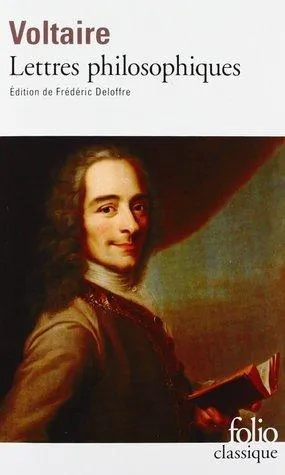
But in his Philosophical Letters (1734), Voltaire offers another viewpoint. He observes that in England, commerce fosters religious tolerance, which is an essential component of civil peace and thus happiness. He writes these letters to criticize the religious wars in France, fueled by an absolute and intrusive political power. This represents the first radical critique of the Ancien Régime.
What constitutes the happiness of an individual or a nation for Voltaire is a regime in which people live in peace with one another, in a certain material comfort. That's why a society is all the more free and happy as it is founded on commerce in the sense of economic exchange.
Three points are to be considered according to Voltaire:
- The happiness of a nation requires an easy material life that fosters the arts.
- Luxury and commerce are guarantees of freedoms.
- Finally, commerce is good because it promotes civilized and thus peaceful relations among people.
The more commerce is valued, the more prejudices fade in the face of economic interests. Despite their confessional differences, men who trade all have the same object at the center of their concerns: profit. The common pursuit of profit leads to cooperation and respect for the opinions of others, especially their religious beliefs. In the Sixth Letter, "On the Presbyterians", Voltaire provides the example of the London Stock Exchange. In this pinnacle of international commerce, "the Jew, the Muslim, and the Christian" do business together, "as if they were of the same Religion". They reserve "the name of infidels only for those who go bankrupt".
The passage is worth quoting in its entirety because it is so famous:
Enter the London Stock Exchange, a place more respectable than many courts; there you see delegates from all nations gathered for the utility of mankind. There, the Jew, the Muslim, and the Christian deal with one another as if they were of the same religion, and only call those who go bankrupt infidels; there, the Presbyterian trusts the Anabaptist, and the Anglican accepts the promise of the Quaker. After leaving these peaceful and free assemblies, some go to the synagogue, others go to drink; one goes to be baptized in a large tub in the name of the Father by the Son in the Holy Spirit; another has his son's foreskin cut and mumbles Hebrew words over the child that he does not understand; others go to their church to await the inspiration of God, their hats on their heads, and all are content.
Commerce, therefore, unites men around a "same religion", profit. And it allows individuals to overlook religious or class differences, which are the origins of conflicts. In England, profit is thus a peaceful religion. But what about in France?
In the Tenth Letter, "On Commerce", Voltaire describes the French mindset as follows: "the merchant often hears his profession spoken of with contempt, to the point that he is foolish enough to be ashamed of it." In contrast, in England, the merchant feels a "just pride", and compares himself "not without some reason, to a Roman citizen". Voltaire pays tribute to the English middle class, their commerce, and their peaceful society.
Truth Requires Freedom
Yet France was not lacking in great minds. It is little known but Anne Robert Jacques Turgot, Baron de Laulne was first and foremost a leading thinker before becoming the Controller General of Finances under Louis XVI. He was the author of a masterful treatise on political economy, Reflections on the Formation and Distribution of Wealth (1766), predating The Wealth of Nations by Adam Smith (1776).
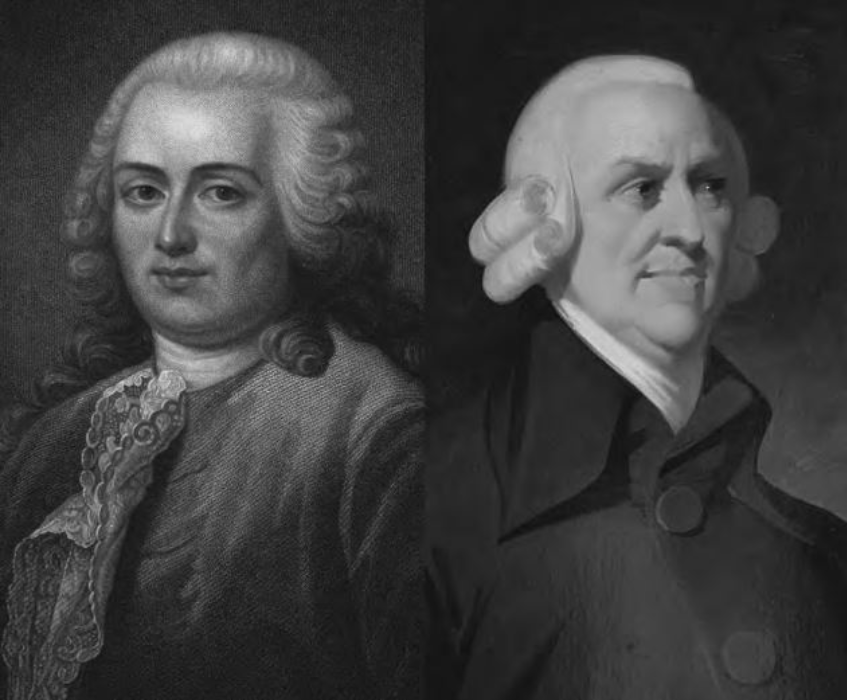 His early writings reflect his commitment to the philosophy of the Enlightenment.
In 1754, he published his Letters on Civil Tolerance and in 1757,
several articles written for The Encyclopédie by Diderot and d'Alembert.
In his letters, Turgot presents a definition of tolerance. To tolerate means
to refuse to use violence against error. In other words, tolerance is not the
acceptance of error. One can fight against it but with the weapons of conviction
and reason, not with violence.
His early writings reflect his commitment to the philosophy of the Enlightenment.
In 1754, he published his Letters on Civil Tolerance and in 1757,
several articles written for The Encyclopédie by Diderot and d'Alembert.
In his letters, Turgot presents a definition of tolerance. To tolerate means
to refuse to use violence against error. In other words, tolerance is not the
acceptance of error. One can fight against it but with the weapons of conviction
and reason, not with violence.
Subsequently, Turgot endeavored to have Louis XVI remove the phrase: "I swear to suppress heresy" from the oath taken on the day of coronation. In Memoir to the King on Tolerance (1775), he writes:
Will the defenders of intolerance say that the prince has the right to command when his religion is true and that one must then obey him? No, even then, one cannot and should not obey him; for if one must follow the religion he prescribes, it is not because he commands it, but because it is true; and it is not, nor can it be, because the prince prescribes it that it is true. There is no man foolish enough to believe a religion true for such a reason. Therefore, he who submits to it in good faith does not obey the prince, he obeys only his conscience; and the prince's order adds no weight to the obligation that this conscience imposes on him. Whether the prince believes or does not believe a religion, whether he commands or does not command to follow it, it is neither more nor less what it is, true or false. The prince's opinion is therefore absolutely foreign to the truth of a religion, and consequently to the obligation to follow it: the prince, therefore, as a prince, has no right to judge, no right to command in this respect; his incompetence is absolute on matters of this order, which are not within his purview, and in which the conscience of each individual can and must have only God as its sole judge.
In other words, being tolerant does not mean being hostile to religion. It means considering that religious belief does not fall under political power but under the conscience of each individual. Truth requires freedom; it must never be imposed under penalty of becoming corrupted.
- Ideas should be exchanged, just like goods
Plea for Economic Freedom
23fbb745-4fd1-5322-8fba-3ff2e998c7e2 Economic liberalism is often associated with an Anglo-Saxon tradition stemming from Adam Smith, contrasted with "political liberalism," which is said to originate from the continental Enlightenment, particularly in France. This view is incorrect.
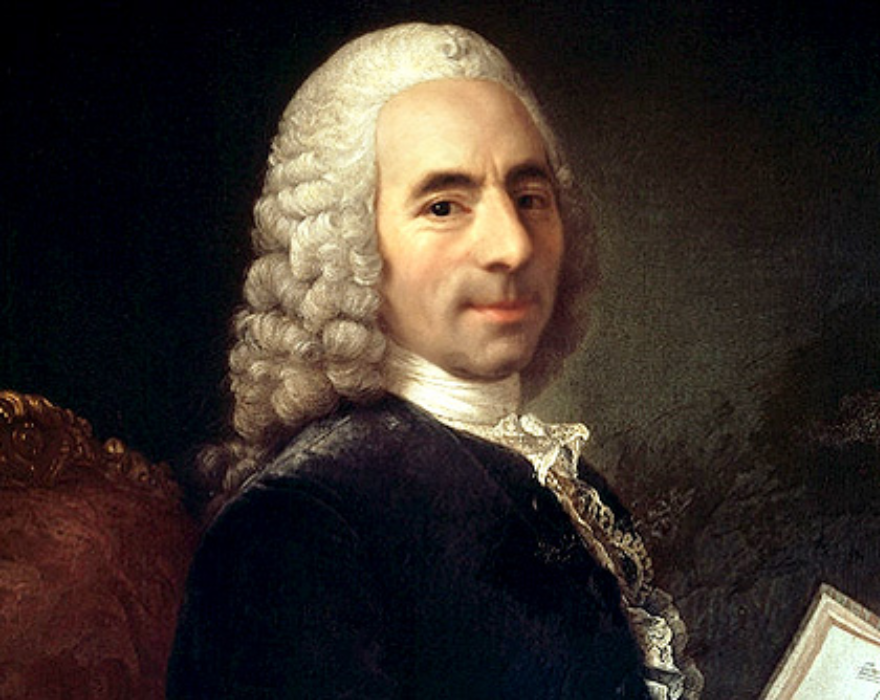
It was in reaction to mercantilism and, more broadly, to the ideas of the Ancien Régime that economic science was born in France. With the Enlightenment came a period in which philosophers began to call themselves "economists," these were the physiocrats.
They laid the foundations of liberal economics. The main representatives of the physiocratic school are François Quesnay, the Marquis de Mirabeau, Lemercier de la Rivière, Abbé Nicolas Baudeau, Louis-Paul Abeille, and Pierre-Samuel Dupont de Nemours.
Political economy, Dupont de Nemours summarizes, is the science of natural law applied to civilized societies. (Correspondence with J.-B. Say).
They advocated for "Laissez-faire," which recommends that the state should not intervene in the economy.
From this point, two very different conceptions began to emerge within the Enlightenment:
- On one hand, there are those who believe that this social harmony must be artificially achieved and through the constraint of the State; these are the theories of the contract.
- On the other hand, there are those who believe that governance can be achieved through interests, meaning allowing individual interests to harmonize themselves within the framework of rules of the game that are known and accepted by all: these are the market theories.
Against Colbertism
This phrase appeared when Jean-Baptiste Colbert, the principal advisor to Louis XIV, asked merchants one day: "What can I do for you?" One of them, named François Legendre, replied: "Let us do!"
The phrase was adopted by the Physiocrats, François Quesnay, the Marquis d'Argenson, and then by Vincent de Gournay: "Laissez-faire, laissez passer." It became their motto.
Referring to natural law (the term comes from phusis, nature, and cratos, power or rule), the physiocrats believed that there are economic laws, which do not depend on political or religious power but on the very nature of man and societies. The economic order is the natural order of societies. Political power must submit to it. The Physiocrats set out to demonstrate that mercantilism, the economic policy in France as well as in England, was not only inefficient but also immoral. Colbert was one of the first modern statists. He was convinced that governmental regulation could generate national prosperity. The State acted as banker, merchant, and provider. It controlled the currency, directed trade, and redistributed wealth. According to Colbert, the goal was to seek "an increase in wealth by encouraging industry." And he also added: "France can only enrich itself at the expense of England and Holland."
On the contrary, for the Physiocrats, free trade was the only good economic policy because it was a positive-sum game and the economy was governed by natural laws that should not be disturbed by arbitrary laws.
The Benefits of the Free Market
Until the French Revolution, society lived in an aristocratic economy based on gift and privilege. Arbitrary actions and vexations made market access difficult for ordinary citizens.
However, since the Middle Ages, as we have seen, the market economy developed. Merchants became wealthier and gained more and more economic freedom.
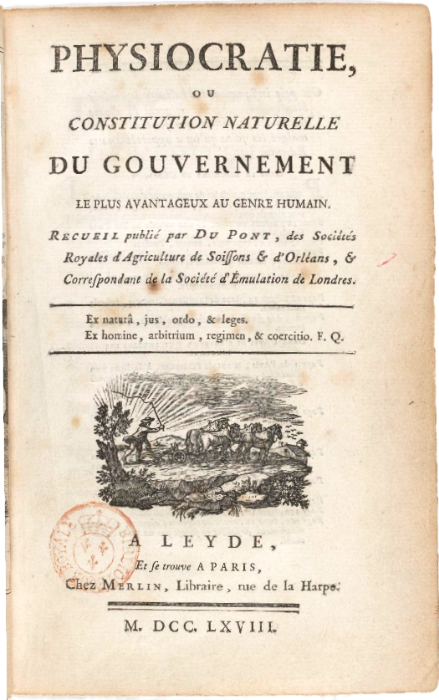
The market is about voluntary exchange at a negotiated price. The market improves the material, intellectual, and political condition of everyone because it allows for the acquisition of spaces of autonomy and initiative.
Indeed, humans naturally want to improve their own condition and that of their loved ones, through the exchange of goods and services. Hence the desire of these new philosophers, the "economists," to enable the people to procure for themselves a sufficient income and thus to achieve what Kant calls in his pamphlet What is Enlightenment? their "majority," their autonomy of decision and action.
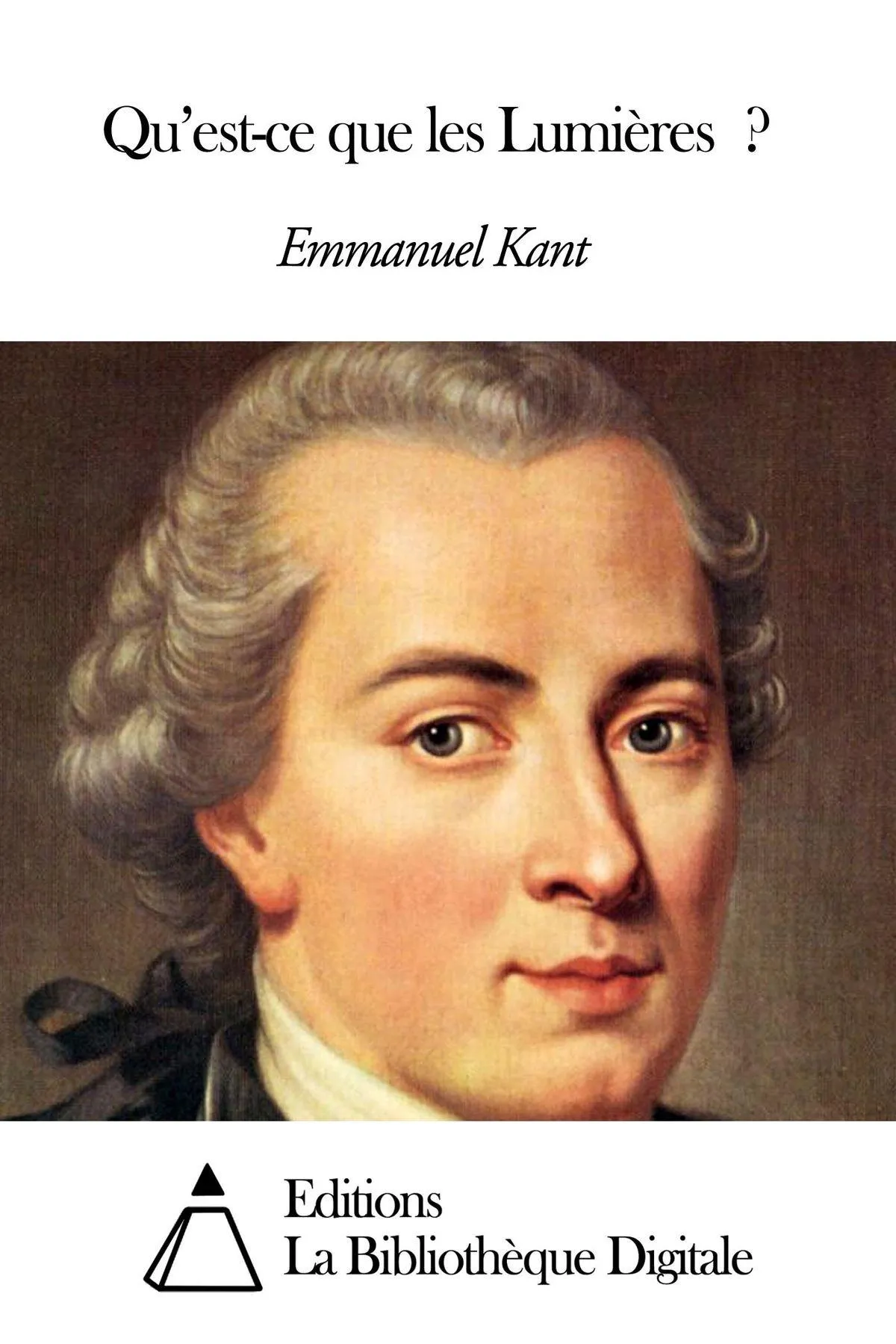
For the Physiocrats, freedom does not divide. Fighting political privileges and combating economic rents are one and the same. The great novelty of modern economists, at the dawn of the 18th century, was that they focused on each individual with the intention of restoring their capacity for action while thinking about how to contain passions and interests through the free market.
Indeed, how to make coexist men with divergent interests? What to do if men enter into conflict, if they make mistakes, if they are greedy and selfish?
The Physiocrats answered in three stages:
It is the freedom of contracts that allows for the resolution of conflicts of interest, not the social contract, which is a pseudo-contract since it cannot be broken. Analyzing social problems in terms of market and exchange enables us to view relationships between individuals and between nations as a positive-sum game and addresses both the issues of institution and regulation of society by asserting that need and interest alone govern the relationships between people.
Natural freedom is the right to dispose of oneself and one's possessions. Therefore, the harmony of interests is possible on the basis of respect for legitimate property, which is acquired through labor and stems from the use of our faculties. And it is this freedom based on property that is the key to the social problem, not the constraint of law.
The role of the State is to enforce contracts and guarantee the security of people and property. This is the famous "Laissez faire," the motto of the physiocrats. The State governs better when it governs less and allows individuals the freedom to take initiatives and assume their responsibility.
In short, if everyone can freely pursue their private interest in respect of natural law, the peace and prosperity of all will be better ensured than by a political organization that would define the general interest from above and impose it through the constraint of law. Political freedom is a useful thing but it is not enough to give individuals the autonomy of decision and action they need. Such is the lesson of the physiocrats. The French liberal school of the 19th century, with Say, Constant, Dunoyer, Bastiat, and Molinari, will remember this and brilliantly defend this heritage against the emerging socialism.
A Key Year for the Free World: 1776
1776 is a year that often goes unnoticed in history textbooks. But in three countries, France, Scotland, and North America, several events will leave an indelible mark on the history of freedom.
The Disgrace of Turgot
During his short tenure as Minister of Finance (Controller General), from August 1774 to May 1776, Ann-Robert Jacques Turgot attempted major reforms to put an end to lavish spending, numerous local monopolies, and to return to free trade. He even went so far as to admonish King Louis XVI in these terms:
You must, Sire, arm yourself against your kindness, with your kindness itself, considering whence comes the money that you can distribute to your courtiers. In 1774, he published his Six Edicts to abolish the guilds and masteries (corporations that had become monopolies and barriers to entry in the labor market), abolish internal customs duties on the grain trade, abolish forced labor (corvée), and establish tolerance towards Protestants.
Unfortunately, the soaring wheat prices, following a poor harvest, cast doubt on his reforms. Turgot wrote in his defense:
When in the provinces there would still be famines, it should not be taken as an objection against freedom; it should only be concluded that freedom has not been established long enough to have produced all its effects.
However, he mainly encountered the wrath of the nobles, who attempted to defend their privileges. Faced with a cabal mounted by the Prince of Conti, he preferred to resign in May 1776 rather than yield on what he regarded as the salvation of the monarchy and France. His fall ended the first experiment in France with a free-market economy (For further reading, see Edgar Faure, La disgrâce de Turgot).
Turgot's major work, Reflections on the Formation and Distribution of Wealth (1766), owes much to the doctrine of the Physiocrats. Turgot revisits and extends the free-market model proposed by Quesnay and before him by Boisguilbert against the mercantilists. But his ideas are at least equally influenced by his friend Jacques Vincent de Gournay, appointed intendant of commerce in 1751. Turgot traveled with him throughout the country during his inspection tours.
Turgot is an apostle of natural law, which he also calls the "system of liberty." He often emphasizes that competition in a free market naturally regulates prices and prevents abuses. Moreover, he makes the merchant the cornerstone of the market mechanism. Indeed, state agents are less motivated and especially less well-informed than merchants. Therefore, it is more efficient to leave commerce in the hands of private interests. It is unnecessary to prove that each individual is the sole judge of the most advantageous use of their mind and arms. They alone possess the local knowledge without which the most enlightened man can only reason blindly. They alone have an experience all the more reliable as it is limited to a single object. They learn through their repeated trials, their successes, their losses, and acquire a tact whose finesse, sharpened by the feeling of need, far surpasses all the theory of the indifferent speculator. (Praise of Vincent de Gournay).
Here, Turgot largely anticipates the argument of Mises and Hayek on the impossibility of any economic calculation in a socialist economic system.
Dedicating a chapter to "The Brilliance of Turgot," Murray Rothbard in his economic history from an Austrian perspective, emphasizes that "Turgot's influence on subsequent economic thought was seriously restricted (...) by the following myth that Adam Smith was the founder of political economy." And he adds, "it was on the Frenchman J.B. Say, officially a follower of Smith, that Turgot ultimately had the most influence, particularly his theory of utility value."
The Masterpiece of Condillac
In 1776, the philosopher Étienne Bonnot de Condillac published Commerce and Government, arguably one of the most magnificent pleas of that era in favor of free trade and individual liberty.
Commerce and Government contains what would later be called a theory of the subjectivity of value, which earned him all the praises of the Austrian economists, starting with Menger. Following Turgot, but with greater clarity, Condillac asserts that value resides not in labor but in the fact that everyone finds an interest in the exchange:
The value of things, he writes, is based on their utility, or, which amounts to the same thing, on the need we have for them; or, which again amounts to the same thing, on the use we can make of them. And he adds: "A thing does not have value because it costs, as is supposed; but it costs, because it has a value.
Thus, value does not reside inside the thing in the form of a quantity of labor that would have had to be produced (the labor value thesis that would be that of Adam Smith and Ricardo) but outside the thing, in other words, in the intensity of the desire that the buyer experiences. It is also a treatise on philosophy in that it demonstrates how free and voluntary exchange is a tool of emancipation more just than state intervention because it is egalitarian and anti-hierarchical. It is capable of establishing mature and responsible citizens and is the answer to the tyrannical drifts of the Ancien Régime. Indeed, if the excesses of individualism can be regulated by the market, nothing can regulate the abuses of central power. This is why Condillac invites the power to free commerce from any hindrance and to renounce any intervention in the economic sphere.
A Manifesto for Freedom in America
In 1776, an Englishman named Thomas Paine published in America a virulent pamphlet criticizing the English monarchy and advocating for the independence of the American colonists: Common Sense.
Paine argues that:
- Civil society exists before the government
- The monarchy is an outdated and despotic political system.
- America suffers under British domination.
- The American Revolution is a universal cause that defends the values of freedom, equality, and responsibility.
- America must separate from England and establish a republic to embody these values.
The author takes care to distinguish between civil society and the State:
Society is the result of our needs, the government is that of our wickedness. […] The social state is a good under all hypotheses. The government, even in its perfection, is but a necessary evil; in its imperfection, it is an unbearable evil.
The success of the book is immense. It sold some 100,000 copies in a few months, in a country of three million inhabitants and it contributes to galvanizing the American sentiment of independence.
Thomas Paine, through his pamphlet, played a crucial role in the American Revolution and in inspiring the ideals of liberty and democracy. He directly influenced the American Declaration of Independence adopted a few months later.
The Philadelphia Congress
On July 4, 1776, in Philadelphia, where they are gathered in congress (in English, "Convention"), the representatives of the Thirteen English Colonies of North America adopt a resolution stating that the "United States are, and of right ought to be, free and independent States". The resolution is supported by John Adams, (one of the inspirers of the Tea Party) and Benjamin Franklin, delegates from Massachusetts. The Declaration of Independence will be drafted by Thomas Jefferson, delegate from Virginia.
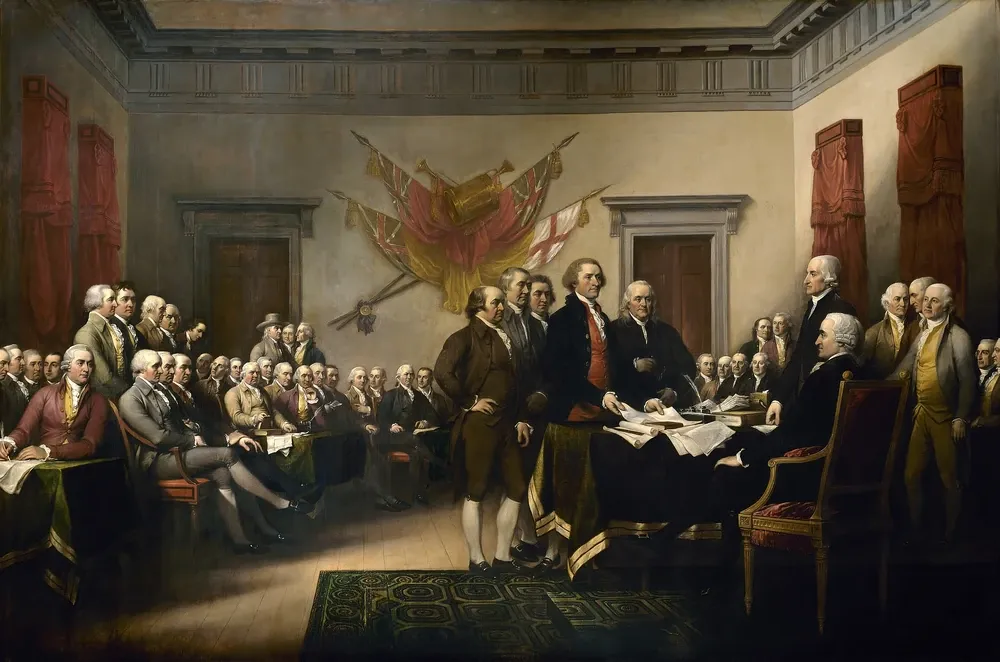 Over the years that followed, the Frenchmen La Fayette, Rochambeau, Admiral de
Grasse, Count d'Estaing, General Duportail, Marquis de la Rouerie, Commander
Pierre L'Enfant, writer Beaumarchais, and many others fought alongside the Insurgents
to free them from the yoke of the King of England.
Over the years that followed, the Frenchmen La Fayette, Rochambeau, Admiral de
Grasse, Count d'Estaing, General Duportail, Marquis de la Rouerie, Commander
Pierre L'Enfant, writer Beaumarchais, and many others fought alongside the Insurgents
to free them from the yoke of the King of England. 
141 years later, on July 4, 1917, in the midst of the World War, a ceremony was organized for the first soldiers of the AEF who arrived in Paris at the Picpus Cemetery on the tomb of La Fayette, the "hero of the two worlds." On this occasion, Captain Charles E. Stanton from General Pershing's staff delivered a famous speech:
I regret that I cannot address the French population in the beautiful language of its loyal country. It cannot be forgotten that your nation was our friend when America fought for its existence, when a handful of brave and patriotic men were determined to defend the rights their Creator had given them -- that France, in the person of Lafayette, came to our aid in words and deeds. It would be ungrateful not to remember this, and America will not fail in its obligations...
Therefore, it is with great pride that we embrace the colors in tribute of respect towards this citizen of your great Republic, and here and now in the shadow of the illustrious dead we assure him of our heart and our honor to give this war a favorable outcome.
Lafayette, we are here!
In 1789, it was again La Fayette, with Jefferson, who laid the first foundations of the Declaration of the Rights of Man of 1789.
The Wealth of Nations
Adam Smith published in 1776 An Inquiry into the Nature and Causes of the Wealth of Nations. A prolific work that often categorizes him as an economist even though he taught moral philosophy at the University of Glasgow. In a caricatured way, he is remembered as the father of modern economics.
In reality, Smith owed much to the economists Quesnay and Turgot whom he met during a journey of more than a year in France. In this book, he notably describes a "simple system of natural liberty" in which individuals, pursuing their own interests, are led "by an invisible hand" to promote the well-being of society as a whole.
Here is the most famous passage: By favoring the success of the national industry over that of foreign industries, he only thinks of giving himself greater security; and by directing this industry so that its product is of the highest possible value, he only thinks of his own gain; in this, as in many other cases, he is led by an invisible hand to achieve an end that is not at all part of his intentions; and it is not always the worst thing for society that this end is not part of his intentions. (The Wealth of Nations)
This famous invisible hand illustrates the idea that free competition in a free market leads to an efficient allocation of resources and a maximization of general well-being.
Smith's most important contribution to freedom was to clarify the idea of spontaneous order. Indeed, Smith argues that individuals, in seeking to satisfy their own needs and desires, are encouraged to produce and exchange goods and services in a way that meets the needs of society more effectively than central planning could.
This idea of spontaneous order would become a key concept in the work of Friedrich Hayek, who would acknowledge his debt to the Scottish Enlightenment and to Adam Smith in particular.
The Age of Revolutions
The great novelty of this modern period in Western history is the emergence of a society that organizes itself outside of religious dependency. This does not mean the disappearance of religious belief or the death of God. But God becomes a private matter, no longer mixed with political affairs. There is no disappearance of religion but a dethroning of its guiding role. It becomes a system of individual beliefs.
This secularization of the Western world did not happen overnight. It was prepared by ideas. As often, philosophy is at the forefront of major cultural changes.
Since Machiavelli and Hobbes, man is understood as a being of passions, animated by contradictory tendencies. It was therefore necessary to find regulatory principles for these passions to avoid the conflicts and violence they lead to.
We have talked about economists and their advocacy for the free market. But for many philosophers, the solution to the problem rather presupposes the establishment of a sovereign power through a legal contract.
Until the 18th century, the main political problem for these philosophers is therefore that of sovereignty. It is primarily a question of justice: who can legitimately exercise sovereignty?
Popular Sovereignty
The idea was inspired by Locke in the 17th century and then taken up by
Rousseau. Sovereign power must not only come from the free will of the
people but also reside in it. This is the Rousseauist theory of the
sovereignty of the general will, what we call today democracy. 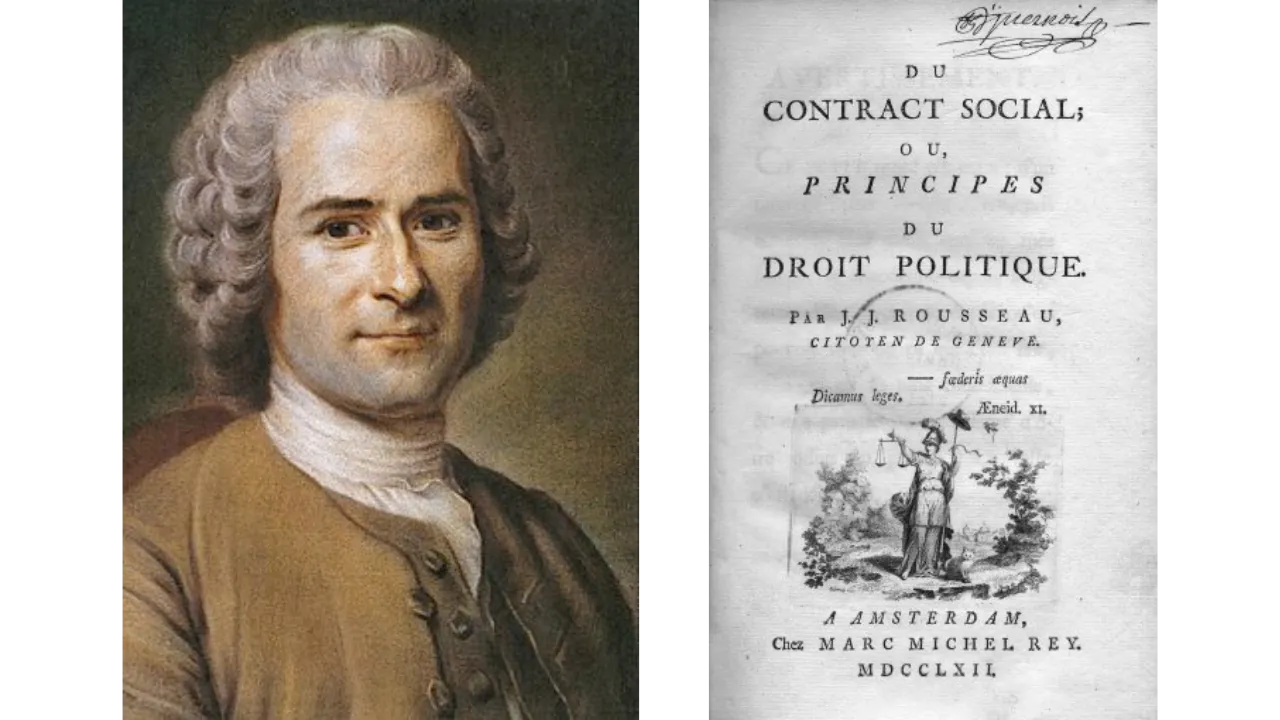
Rousseau conceives of the people as an autonomous individual capable of subjecting themselves to the laws they establish. The free will of the people constitutes the only just foundation of sovereignty. Rousseau would develop this legal humanism, characteristic of Modernity, to its ultimate consequences by conceiving of the people as an individual capable of freely self-determining or as a general will. Thus, the contract involves submission to laws that man as the general will gives to himself as a particular will. The theory of the general will or of the sovereignty of the people thus allows for the reconciliation of freedom and submission. The self-institution of the law or political autonomy has indeed been an essential component of democracy since Rousseau.
But the question of the origin of sovereignty is not the only one. Reflection can take a new direction, that of the mode of exercise of sovereignty. Is the general will always just? And above all, is it authorized to intervene in civil society and within what limits?
The theory of limited power
One of the Enlightenment philosophers whose influence was very strong in France and America is John Locke. He was the inspiration behind the Founding Fathers of the United States but also of the Declaration of the Rights of Man and of the Citizen in 1789
All previous systems had considered that freedoms are only privileges granted by power by virtue of an authorization that can be revoked at any time. For Locke, a man's life is his own by virtue of a natural right (meaning: by virtue of a moral principle inherent in human nature) and that the only moral purpose of a government is the protection of individual rights.
Locke assigns to the state the mission of defending individual property, meaning "life, liberty, and estate":
The great and chief end, therefore, which men unite into commonwealths, and put themselves under government, is the preservation of their property. (Two Treatises of Government, § 87).
Thomas Jefferson inscribed Locke's theory of inalienable rights in the Declaration of Independence: We hold these truths to be self-evident, that all men are created equal, that they are endowed by their Creator with certain unalienable rights, among these, life, liberty, and the pursuit of happiness.
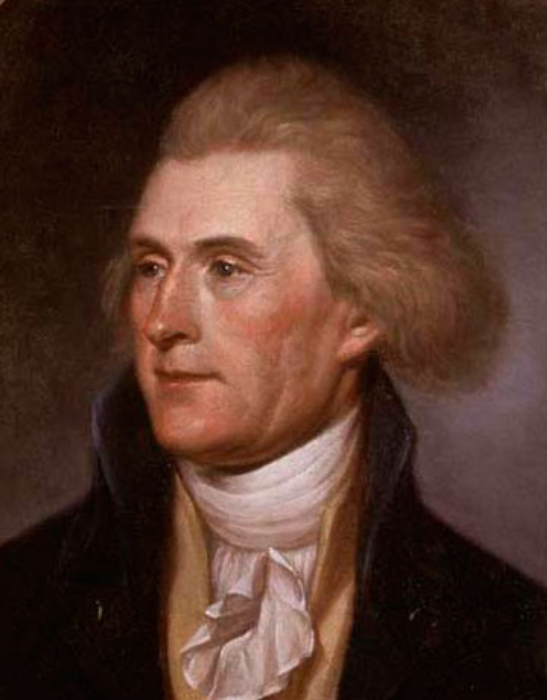
Furthermore, Article 2 of the French Declaration of the Rights of 1789 also draws inspiration from this Lockean tradition of natural law:
The goal of any political association is the preservation of the natural and imprescriptible rights of man. These rights are liberty, property, security, and resistance to oppression.
Two Revolutions Compared
The American Revolution was led by men who spoke of fundamental inalienable rights. It led to the formation of a decentralized and limited rule of law state. On the other side of the Atlantic, another political experiment took place: the French Revolution, which began as a courageous revolt of the people, ended in a series of massacres, bloody internal conflicts, and paved the way for the military dictatorship of Napoleon Bonaparte. Why such a difference?
In the 19th century, Alexis de Tocqueville, a French political philosopher, attempted to pinpoint these differences between the two sister revolutions. He attributes the success of the American Revolution to several factors.
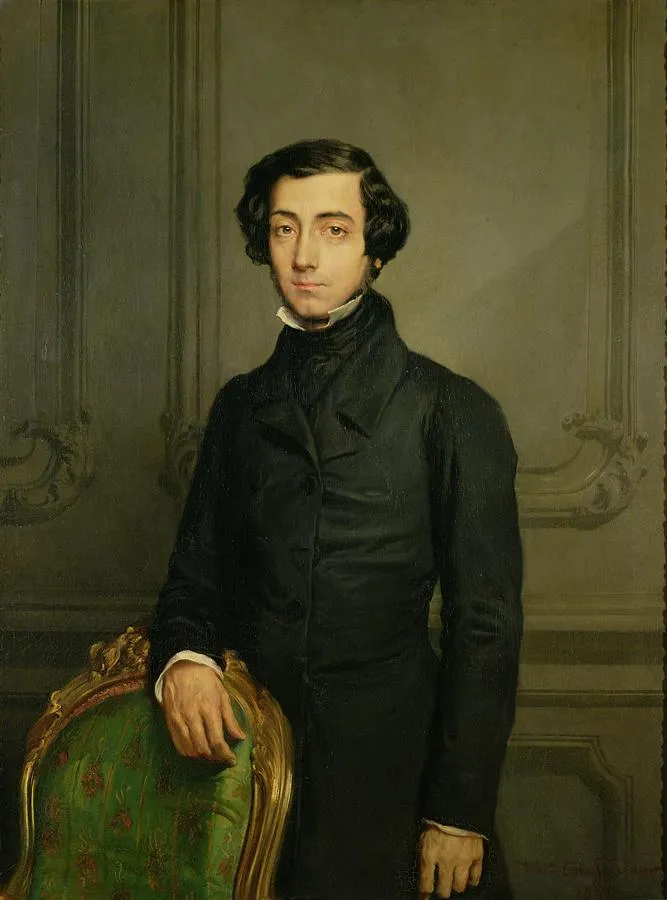
Firstly, in the way of defining the republic. The French Republic is one and indivisible. The American Republic is composed of sovereign states, each possessing its own jurisdiction and local interests. Federalism is considered treason in France. In America, treason would consist of wanting to impose unity. Until the American Civil War at least, the Union in the diversity of States was the strength of the Federation.
He also argues that America's faith in a higher law played a decisive role. The Declaration of Independence proclaims all men are created equal, that they are endowed with certain inalienable rights (life, liberty, property, and the pursuit of happiness) and that the purpose of a government is solely to secure these rights. It was about restoring principles and ideals that were trampled underfoot by the British crown.
The First Amendment of the American Constitution, drafted in 1789, states: Congress shall make no law respecting an establishment of religion, or prohibiting the free exercise thereof; or abridging the freedom of speech, or of the press; or the right of the people peaceably to assemble, and to petition the Government for a redress of grievances.
This formulation explicitly protects against the tyranny of the majority. However, the French Revolution was quite different. The French wanted to completely break away from the past. The age-old principles of the Christian heritage no longer met the expectations of revolutionaries like Robespierre.
From the Revolt of the Third Estate to the Jacobin Terror
Abbé Sieyès (1748-1836) is considered the father of the French Revolution. He is the author of What is the Third Estate?, in January 1789
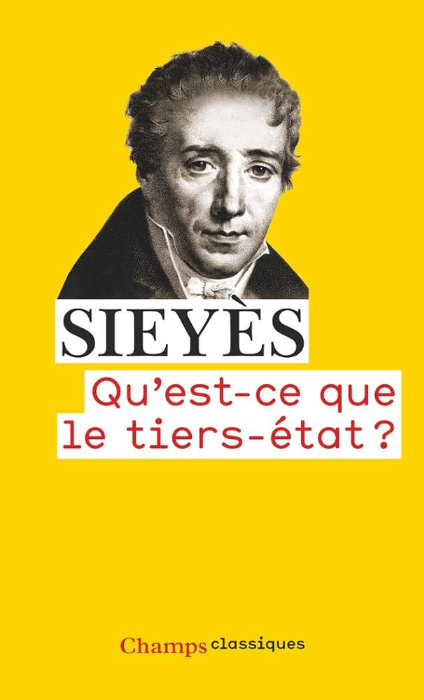
The Third Estate comprised all those not belonging to the clergy or the nobility. From the very first lines of his famous pamphlet, Abbé Sieyès praised individual liberties and free competition:
Is not the effect of monopoly known? If it discourages those it excludes, is it not known that it makes those it favors less skilled? Is it not known that any work from which free competition is removed will be done more expensively and in a worse manner?
The night of August 4, 1789, is the foundational event of the French Revolution, even more so than July 14, which was chosen as the national holiday. Indeed, during the session that was held then, the Constituent Assembly put an end to the feudal system. Privileges were abolished, those of the nobles and those of the clergy. In March 1791, after several months of a sort of legal limbo, guilds were also abolished, and complete freedom of labor was established. The Revolution ratified the work of Turgot. But not for long...
In France, by the end of 1791, famine exacerbated popular unrest. Riots paralyzed the grain trade, and bread was scarce. A vast movement demanded the agrarian law, that is, the distribution by the State of wheat production. The Assembly, however, resisted this attempt at collectivization. Initially, it voted for the confiscation of Church properties and, in a second step, the Civil Constitution of the Clergy.
The confiscation of Church properties aimed to avert the financial crisis;
it was intended to serve as collateral for the Assignats, meaning a massive
issuance of paper money. Furthermore, as Dupont de Nemours had predicted,
the issuance of counterfeit currency only worsened the crisis, causing
widespread inflation and a sharp decline in the value of the Assignats. In
August 1792, the hunger riots in turn led to the insurrection of Paris, the
execution of Louis XVI in January 1793, and then the Reign of Terror. 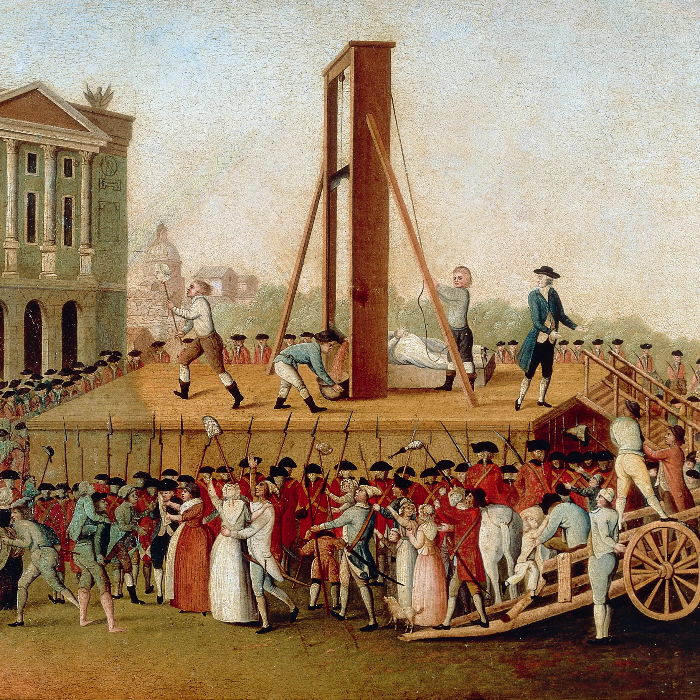
In 1795, five years after the first issuance, the paper money had lost 99% of its value. The French Revolution continued under the Directory until 1799, when Napoleon seized power through a coup d'état. He became the First Consul of the French Republic before being crowned Emperor in 1804. This was one of the first glaring contradictions with the Declaration of the Rights of Man, which proclaimed that private property was inviolable.
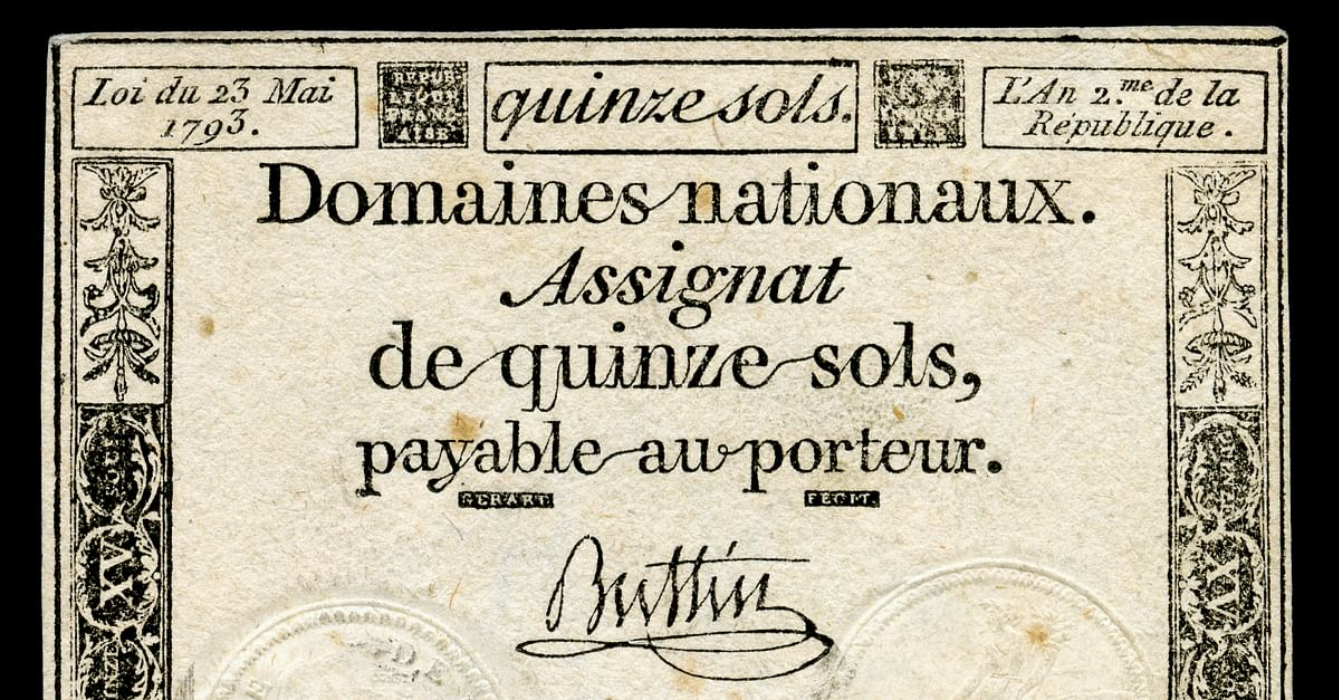
In America, there was no economic dirigisme, nor a monetary bankruptcy like that of the Assignats. And above all, there were no proscriptions, no mass emigrations, no guillotine, no massacres, and no Reign of Terror. Immediately, one can see the difference in the means of action that separates the American Revolution from the French Revolution.
With Rousseau and Robespierre, the French wanted to believe that the Nation or the general will had unlimited power and justified everything. From the fact that the people governed, it was concluded that they had all rights. There was clearly a contradiction between the great principles of the Revolution and the means employed to make them triumph.
This is, moreover, the meaning of the remark by Friedrich Hayek in his book The Constitution of Liberty:
The decisive factor that rendered vain the efforts of the Revolution in favor of the promotion of individual liberty was that it created the illusion that, insofar as all power had been handed over to the people, all precautions against the abuse of this power had become unnecessary.
Apogee and Decline: From the 19th to the 20th Century
The Liberty of the Moderns
According to Benjamin Constant, liberty, in our modern societies, can no longer be understood in the manner of the societies of Antiquity as direct participation in the affairs of the city.
Liberty in Private Life
In ancient times, the individual was sovereign in public affairs but enslaved in all their private relations. The sacrifice of individual freedom was compensated by the use of political rights: the right to directly exercise various parts of sovereignty, to deliberate in the public square, to vote on laws, to pronounce judgments, to evaluate and judge magistrates. It is a political and collective freedom:
The freedom of the Ancients consisted of active and constant participation in collective power. Our freedom, on the other hand, must consist of the peaceful enjoyment of private independence; it follows that we must be much more attached than the ancients to our individual independence. (On the Liberty of the Ancients Compared with that of the Moderns (1819))
Modern freedom is civil liberty, which includes economic freedom and is based on the right to privacy. It is the right not to be subjected to any arbitrariness, the right to expression, assembly, movement, worship, and industry. There is no freedom without the possibility of choosing one's lifestyle and values, thus no freedom without the possibility of withdrawing from the community and consequently no freedom without a limitation of the State to allow the existence of this private space. It is a freedom that corresponds to what Americans call civil rights.
This definition of freedom is found in John Stuart Mill:
The only freedom which deserves the name, is that of pursuing our own good in our own way, so long as we do not attempt to deprive others of theirs or impede their efforts to obtain it. (...) Humanity gains more by letting each person live as they see fit than by compelling them to live as seems good to others. (On Liberty, 1859)
Mill outlines the limits of state sovereignty: it stops where the sovereignty of the individual begins. If an individual action has no harmful consequences for others, then the individual is completely free to perform it. The State must regulate interindividual relations, but it cannot go further, by interfering in the private lives of individuals. If the individual harms themselves, the State can do nothing but "remonstrate" or try to "reason" or "persuade" them: it cannot coerce or punish. For Mill adds: "The only legitimate reason for which a state may use force against one of its members, against their will, is to prevent harm from being done to others." The political power corresponding to the freedom of the Moderns is therefore a limited power: "Let the authority limit itself to being just, we will take care of our happiness," proclaims Benjamin Constant. It is not up to the State to tell us how to be happy.
The Rousseauist Confusion
According to Constant, "the confusion of these two types of freedoms has been, among us, during too famous epochs of our revolution, the cause of much evil." Jean-Jacques Rousseau, by conceiving freedom solely as the collective participation of citizens in political action, encouraged Robespierre to constrain citizens through terror. The missteps of the Revolution are thus the result of the modern application of political principles valid among the ancients.
But this does not mean sacrificing political freedom, participation in power. Constant specifies that if modern freedom differs from ancient freedom, it is threatened by a danger of a different kind. The danger of the freedom of the ancients was arbitrariness. The danger of the freedom of the Moderns would be to renounce the political guarantees of this freedom through a sort of indifference to the public good. In other words, it is up to the citizens to exercise permanent vigilance over their representatives.
Indeed, in his Principles of Politics, Benjamin Constant asserts:
The sovereignty of the people is not unlimited, it is circumscribed within the bounds traced by justice and the rights of individuals. The will of an entire people cannot make just what is unjust.
This is a new critique of Rousseau and the Social Contract: even a general will is subject to limits, and it cannot change what falls under natural law. There exists a right anterior and superior to political authority: it is natural law. This right sets the bounds of political power and limits individual freedoms.
To say that all legitimate power must be founded on the general will does not mean that everything the general will decides is legitimate. Constant thus aligns himself with the Declaration of the Rights of Man of 1789, Article II, which stipulates that the State is instituted only to preserve natural rights, that is, freedom, responsibility, and property. There are therefore areas in which political power has no influence: morality and religion, but also the sciences which fall under the authority of knowledge and finally industry, adds Constant.
Political Freedom and Economic Freedom
Political freedom without other freedoms is merely an illusion according to Benjamin Constant. Political freedom is the liberty to participate in the exercise of power. However, the power of the people or the masses can be destructive of freedoms because it grants the voting majority the right to impose its will on the whole society, including its whims or its ideology of the moment: confiscatory taxes without compensation, enforcement of a single thought, censorship, repression, and intellectual terrorism. That's why there can be no true freedom without civil liberties, including religious freedom and economic freedom. Benjamin Constant does not separate political liberalism from economic liberalism:
For forty years, I have defended the same principle, freedom in everything, in religion, in philosophy, in literature, in industry, in politics: and by freedom, I mean the triumph of individuality, both over the authority that would govern by despotism and over the masses that claim the right to enslave the minority to the majority. Despotism has no right. The majority has the right to compel the minority to respect order: but everything that does not disturb the order, everything that is only internal, like opinion; everything that, in the expression of opinion, does not harm others, either by provoking material violence or by opposing a contrary expression; everything that, in terms of industry, allows rival industry to operate freely, is individual, and cannot be legitimately subjected to social power.
In other words, in a free society, it is necessary to establish a strict boundary between the public sphere and the private sphere. The principle of this boundary lies in not harming others, that is, not infringing on their property.
Strengths and Weaknesses of Democracy
Alexis de Tocqueville was a keen observer of democracy and a critic of democratic individualism.
Tocqueville's analysis of democracy essentially extends the distinction made by Constant between the freedom of the Ancients and that of the Moderns. In an 1836 article (Social and Political State of France Before and Since 1789), Tocqueville methodically compares aristocratic freedom with democratic freedom. The former is defined as "The enjoyment of a privilege," and Tocqueville cites the example of the Roman citizen who derives his freedom not from nature but from his belonging to Rome. The second concept, which is "the correct notion of freedom," consists in an "equal and inalienable right to live independently from one's peers." This modern notion of freedom is thus not like the first a political notion; it is based on natural law and it is "correct" because it extends equally to every man. It is written:
According to the modern notion, the democratic notion, and I dare say the correct notion of freedom, every man, being presumed to have received from nature the necessary enlightenment to conduct himself, brings at birth an equal and inalienable right to live independently from his peers, in all that relates only to himself, and to regulate as he sees fit his own destiny.
Tocqueville is careful to identify all the political and cultural effects of this new way of being, typically modern. An admirer of Pascal, he aims to depict the grandeur and miseries of democracy.
In 1841 in Democracy in America, he analyzes this democratic principle that asserts itself in the equalization of conditions against the hierarchy of classes and the authority of traditions. And he observes that this process logically accompanies the dissolution of social influences, the ties of dependency, and atomizes the social bond, thus threatening the very exercise of freedom and political responsibility of the citizen. Moreover, the loss of great ancient ideals (virtue, the common good) leads to the impoverishment of the meaning of life, "to small and vulgar pleasures," to boredom and unease.
Indeed, the equality of condition, which characterizes democracy, means that each person tends to withdraw into themselves, without a link that attaches them to others. The individual independence that this new freedom consecrates makes the exercise of civic virtues difficult by fostering indifference to the public good. As a result, modern democracies expose themselves to the "soft and regular" despotism of statism, this new form of servitude made possible by the growing disinterest of the people in political life. Democracy thus tends symmetrically towards two excesses that feed each other:
On one hand, individualism, that is, the "disinterest in public affairs" and "the love of material pleasures." Tocqueville defines individualism precisely as a feeling of self-sufficiency that leads the citizen to isolate themselves from others and to withdraw into themselves. This is hedonistic narcissism.
And on the other hand, statism, which destroys individuals by keeping them in a state of childhood. The State "willingly works for their happiness but it wants to be the sole agent." Indeed, equalization is accompanied by a greater fragility of individuals who become isolated and separated from one another. To avoid anarchy and protect their possessions, they rely on a unique and central power to which they delegate all their rights. Therefore, according to Tocqueville, it is necessary to develop civil associations and "local democracy" to maintain counter-powers and thereby fight against both individualism and despotism, both of which are freedom-killing.
The author of Democracy in America warns us:
Indeed, there is a noble and legitimate passion for equality that excites men to want to be all strong and esteemed. This passion tends to raise the small to the rank of the great; but there is also in the human heart a depraved taste for equality, which leads the weak to want to bring the strong down to their level, and which reduces men to prefer equality in servitude to inequality in freedom. (...) Nations of our days cannot make it so that conditions within them are not equal; but it is up to them whether equality leads them to servitude or to freedom, to enlightenment or to barbarism, to prosperity or to misery.
For Tocqueville, man is much more attracted to equality than to freedom. And he sees this as a major danger for democracy. Why does man prefer the passion for equality between the two? Because freedom produces directly visible costs, and its benefits are more distant, inscribed in the long term (freedom does not provide content, only the capacity to seek happiness according to one's own judgment). Conversely, equality brings immediately visible positive results and its faults only reveal themselves in the long term.
The Right to Work
The right to work is a good example of the drifts of democratic egalitarianism. In a speech to the Constituent Assembly in 1848, Tocqueville took a stand against the right to work in the draft constitution. If the State undertakes to provide work for all workers, he argued, or if it ensures that they always find it in the job market, as the socialists want, it will be led to become "the great and unique organizer of labor."
In this speech, Tocqueville compares socialism to the Ancien Régime, for whom "its subjects are infirm and weak beings who must always be held by the hand, lest they fall or hurt themselves." Socialism is thus "a new form of servitude" for three reasons:
Morally, socialism promotes irresponsibility through its directive and collectivist state control. It is always characterized by "a profound contempt for the individual as such."
Politically, it is despotic because, in the name of happiness, it seeks to become "the master of every man, his tutor, and his educator."
Economically, it is inefficient because it eliminates competition through its regulations and its rejection of private property.
The Law and Its Abuses
What did Frédéric Bastiat think of democracy? He answered as early as 1846:
I am for democracy, if by this word you mean: To each the property of his labor, freedom for all, equality for all, justice for all, and peace among all. (Free Trade).
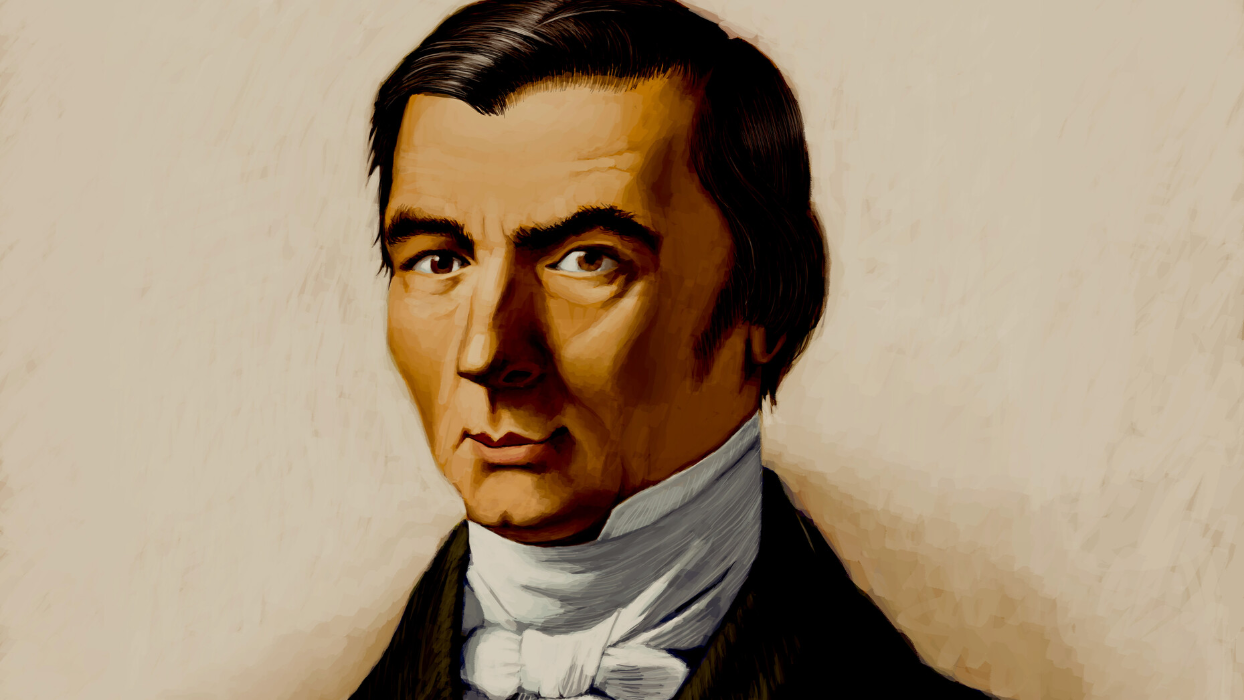
But in 1848, after the February revolution, Bastiat was elected deputy of the Landes in an assembly where the socialists made a triumphant entry. These latter only demanded one thing: that the law enshrine the principle of fraternity. In other words, to pass laws to provide work, education, and healthcare for all.
Under the reign of socialist ideas, Bastiat observed that the electoral machine was used to plunder public money, thus the citizen:
Public finances will not be long in falling into complete disarray. How could it be otherwise when the State is tasked with providing everything for everyone? The people will be crushed by taxes, borrowing will follow borrowing; after having exhausted the present, the future will be devoured. Finally, as it will be accepted in principle that the State is responsible for creating fraternity in favor of the citizens, the entire people will be transformed into petitioners. Land property, agriculture, industry, commerce, the navy, industrial companies, everything will stir to claim the favors of the State. The public treasury will literally be plundered. (Justice and Fraternity)
The State then becomes, according to Bastiat's words,
the great fiction through which everyone endeavors to live at the expense of everyone else. (The State) Bastiat also develops the idea that conflict arises when the law strays from its rightful role. In his famous pamphlet The Law, he demonstrates why and how the law has become "the battlefield of all greed," meaning a source of privileges, situational rents, and arbitrary taxation. As soon as it is admitted in principle that the law can be diverted from its true mission, that it can violate properties instead of guaranteeing them, a class struggle necessarily follows, either to defend against spoliation or to organize it for one's own benefit.
In cases where the law merely enforces the rights of each individual and guarantees "the collective organization of the individual right to legitimate defense," no one is in a position to exploit it for their own benefit at the expense of all, to such an extent that the very form of government becomes a secondary question.
It is only when the law exceeds its rightful bounds that the legislator becomes corruptible. This then leads to a fierce struggle between various categorical interests, all eager to capture the legislative apparatus in order to obtain privileges that are by definition spoliatory.
According to Bastiat, socialist democracy leads to a permanent deficit in budgets and ultimately to violence. Indeed, by tirelessly multiplying promises, and being unable to fulfill them, the electoral machine develops a bitterness that lays the groundwork for revolutions. He writes:
But if the government takes it upon itself to raise and regulate wages and cannot do it; if it takes it upon itself to assist all misfortunes and cannot do it; if it takes it upon itself to provide pensions for all workers and cannot do it... do we not see that at the end of each disappointment, alas! more than likely, there is an equally inevitable revolution? (The Law)
Bastiat's conclusion: Take a look at the globe. Which are the happiest, most moral, and most peaceful peoples? Those where the Law intervenes the least in private activity; where the government is least felt; where individuality has the most resilience and public opinion the most influence; where administrative mechanisms are the fewest and least complicated; the taxes the least burdensome and the least unequal; popular discontent the least provoked and the least justifiable; where the responsibility of individuals and classes is the most active, and where, consequently, if the morals are not perfect, they tend inexorably to correct themselves; where transactions, agreements, associations are the least hindered; where labor, capital, and population suffer the least artificial displacements (The Law)
The Marxist Critique of Capitalism
It was during the 19th century that the critique of capitalism, and in particular the Marxist critique, emerged.
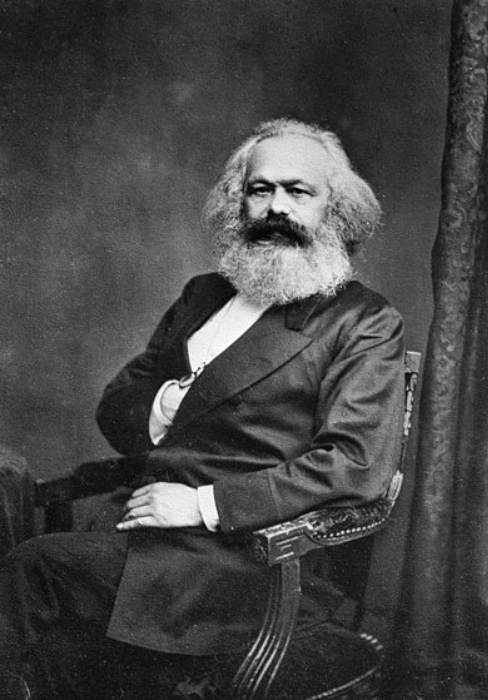
What good is the right to speak, write, and vote, Marx exclaimed, if daily life is a struggle for survival? Beyond a certain threshold, poverty equates to servitude. The social order thus benefits everyone only if the principle of a fair distribution of goods is applied. It was this critique of liberalism that led Marx to consider the necessity of a rational and planned control of the social order. Henceforth, the minimal state of the liberals must be succeeded by a strong state capable of establishing real equality, which, according to Marx, goes as far as the abolition of private property and its collectivization. In a more softened version, "social democracy," the state is asked to guarantee not only the abstract rights of man but the concrete rights of man. New rights are created, social and economic rights, guaranteed by the state: the right to work, the right to housing, the right to health (free), the right to education (free).
The Myth of the Impartial State
The fundamental critique that Marx makes of political liberalism, particularly in his early writings (Critique of Hegel's Philosophy of Right and On the Jewish Question), focuses on the separation of civil society and the state. This critique must be understood within the general framework of his interpretation of the "Bourgeois Revolution." It is this revolution that leads to the formation of a state separated from civil society, which is supposed to aim for the universal, meaning the common interest, by playing the role of an impartial arbitrator.
However, all of this is, for Marx, merely a deceptive appearance. In reality, the state is nothing but an instrument intended to serve the particular interests of the ruling class. In other words, the state is not impartial; it is not separated from civil society. In fact, the liberal state is the site of a double illusion. The illusion of the universal, as we have just seen, and consequently, the illusion of emancipation. Indeed, the Revolution emancipated the citizen by instituting popular sovereignty and equality before the law, but this freedom and equality remain purely ideal and abstract. It is false, Marx says, to think, like Rousseau or Hegel, that man fully realizes his rational nature by becoming a citizen. In reality, one can become a citizen and remain exploited, enslaved, abandoned to the whims of desires, to the anarchy of selfishness, and to the law of the strongest.
The emancipation of the citizen, according to Marx, does not at all signify the emancipation of man, as the Declaration of 1789 suggests, but rather the triumph of destructive individualism and therefore of inequality. Freedom as the power to do anything that does not harm others, a pillar of human rights, is a purely negative freedom that does not establish a relationship between men but, on the contrary, promotes their separation, their antagonism, and ultimately their servitude. The freedom of human rights is a formal freedom.
This political illusion of liberalism is the secular side of the religious illusion, Marx adds. The formula is well-known: "religion is the opium of the people." Religion is a consolation, it provides euphoria and promises emancipation in the afterlife. But it diverts man from his true emancipation here on earth. Citizenship is, in relation to the activity of the worker, like the kingdom of God in relation to miserable existence on this earth. It is never realized. This double separation constitutes a double alienation, meaning the non-fulfillment by man of his humanity or his imaginary accomplishment.
Economic Alienation
In fact, for Marx and in accordance with historical materialism, it is
economic alienation that is at the root of political alienation as well as
religious alienation. In economic alienation, a result of capitalism
(defined as the private ownership of the means of production), the worker is
forced to sell his labor power as a commodity. Moreover, he is deprived of
the product of his labor, which is owned by the employer. He is thus
alienated, meaning separated from himself because his work becomes something
foreign to him that he performs by force, to survive. Yet, work, for Marx,
is the quintessentially human act, the one through which the very essence of
man, namely freedom, is realized. This is why the liberation of labor also
means to restore man to his dignity and humanity. 
Political revolution is therefore an illusion, according to him, as long as it is not accompanied by an economic and social revolution capable of freeing man from capitalist servitude and thus achieving unity between the worker and the citizen, between society and the state, the private sphere and the public sphere. The formal freedom and equality of the citizen will thus become real, in a classless society.
The Austrian Critique of Marxism
The Austrian School of Economics, founded by Carl Menger at the end of the 19th century, opposed Karl Marx's theories from the start.
The Class Struggle
Austrian economists reject the Marxist notion of class struggle, according to which the conflict between the capitalist class and the working class would be inevitable and would be the engine of social change.
All social change is only possible through the actions of individuals and not from abstract social forces like classes.
The Austrians argue that society is not divided into two antagonistic classes, but rather composed of individuals with diverse interests and needs. They emphasize that economic relations between individuals are generally mutually beneficial, and not based on exploitation.
For example, an employer hires a worker because he needs his skills to
produce a good or service that consumers desire. The worker, in turn,
accepts the job because he needs an income to meet his needs. This
relationship is mutually beneficial, and not conflictual. Ludwig von Mises
highlights that Marx failed to distinguish between what pertains to
bourgeois ideology in human rights and what they mean in practice, the
upheavals they entail in social life. Many critical thinkers of human rights
have made the same mistake. This was also the case for
counter-revolutionaries, such as Joseph de Maistre or Louis de Bonald. 
In The Ethics of Liberty and Anatomy of the State, Murray Rothbard explained that exploitation only makes sense as an aggression against private property and that only the State obtains its revenues through aggression, that is, through taxation, debt, printing money, and thus through inflation. In reality, it is state intervention, and not class struggle, that is the source of violence and conflicts in society. The State, by appropriating resources and regulating the economy, creates distortions and injustices that lead to conflicts and repression. Ending exploitation thus requires reducing the powers of the predatory caste: the State.
On this point, see also: Marxist and Austrian Class Analysis, Hans Hermann Hoppe, Journal of Libertarian Studies, Vol IX No. 2, Fall 1990. Translation by François Guillaumat. Included as Chapter 4 of The Economics and Ethics of Private Property (Boston: Kluwer Academic Publishers, 1993).
Polylogism
The concept of class struggle can also lead to the idea that anything is permissible. Marx argued that notions of good, evil, justice, right, truth, were relative to classes. Human reason, he claimed, is congenitally incapable of finding the truth. The logical structure of the mind differs according to social classes. There is no universally valid logic.
Mises coined the term "polylogism" to explain this sophism. "Poly" means many and "logism" refers to rational discourse and logic. According to Marx, there would be several incompatible logics, that of the proletarians and that of the bourgeoisie.
Yet until the mid-19th century, no one dared to contest the fact that the logical structure of the mind was identical and common to all human beings. All human relations are based on the assumption of a uniform logical structure. People can engage in discussion because they can appeal to something common to all, namely the logical structure of reason.
Mises writes: Marx and the Marxists (...) have taught that thought is determined by the class situation of the thinker. What thought produces is not truth, but ideologies. In the context of Marxist philosophy, this word means a disguise of the selfish interest of the class to which the thinking individual belongs. That is why it is pointless to discuss anything with people from another social class. Ideologies do not need to be refuted by deductive reasoning; they must be unmasked by denouncing the class situation, the social background of their authors. Thus, Marxists do not discuss the merits of physical theories; they simply reveal the bourgeois origin of the physicists. (The Omnipotent Government).
In the eyes of the Marxists, Ricardo, Freud, Bergson, and Einstein are mistaken because they are bourgeois. Thus, Marxists claim that the logical structure of the mind would be different depending on class membership. Each class would have its own logic and therefore its own economy, mathematics, physics, and so on. The only logic and the only exact, correct, and eternal science would be those of the Marxists.
That is why Georges Sorel, the importer of Marxism into France, would say that violence is beneficial, provided it is "proletarian". Unsurprisingly, the same reasoning is found in the writings of Lenin, and then Trotsky. Since classical morality and law are inventions of the ruling class, everything is permitted.
Work and Profit
The Austrians assert that Marx's labor theory of value, according to which the value of a commodity is determined by the amount of labor necessary for its production, is mistaken. They argue that value is subjective and determined by consumer preferences, not by production costs.
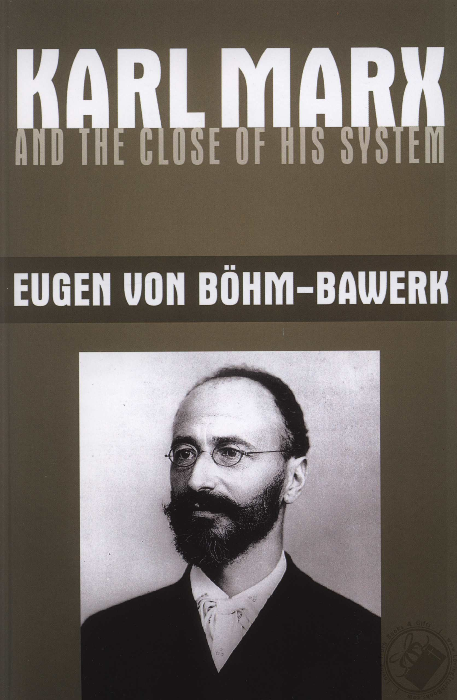
Eugen von Böhm-Bawerk, one of the early Austrian economists, criticized Marx's labor theory of value in his work Wert, Kapital und Zins (1886). Böhm-Bawerk argued that Marx's theory was based on a fundamental error, namely that all units of labor are identical. In reality, he argued, some labor is more arduous or more productive than others, and this is what determines the value of a commodity. Regarding the theory of profit, Marx argued that profit is a form of theft. It's the concept of exploitation, according to which capitalists extract an unfair surplus value from the labor of workers. The Austrians refute this idea by arguing that wages are determined by the value that workers bring to companies, and that profits are the reward for entrepreneurs who take risks and invest efficiently. Profit is thus a reward for the entrepreneur who takes risks and invests in new products and processes. Friedrich Hayek developed a theory of profit based on the concept of uncertainty, which is notably rooted in Jean-Baptiste Say's work. According to Hayek, entrepreneurs earn a profit because they are able to better predict the future needs of consumers than other economic actors.
The Impossibility of Economic Calculation
Marxists believe that socialism, an economic system in which the means of production are owned and controlled by the workers, is inevitably superior to capitalism. The Austrians, on the other hand, assert that socialism is impossible to achieve in practice, as it would require an unrealistic degree of central planning.
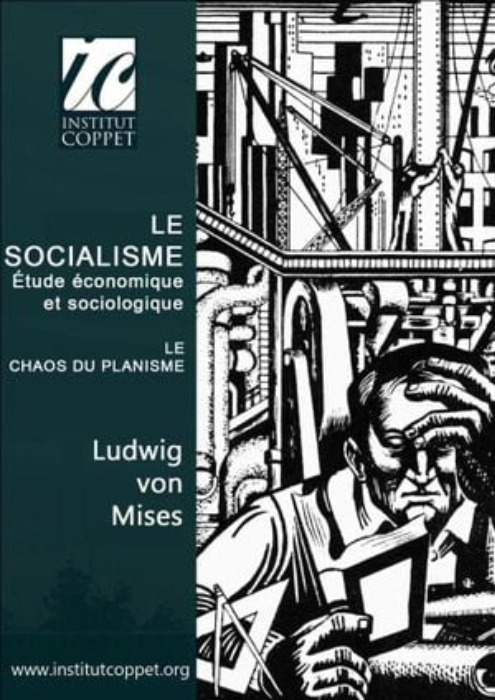
As early as 1922, in his book Socialism, Ludwig von Mises demonstrated that socialism would lead to widespread shortages, as central planners would not be able to make accurate economic calculations without the price system provided by the market.
The Road to Serfdom
Alarmed by the rise of government interventionism in the economies of Western democracies, Hayek wrote The Road to Serfdom as a philosophical critique of collectivism, whether from the right or the left. Published in several million copies, thanks to the Reader’s Digest, this book has greatly contributed to Hayek's fame in the United States.
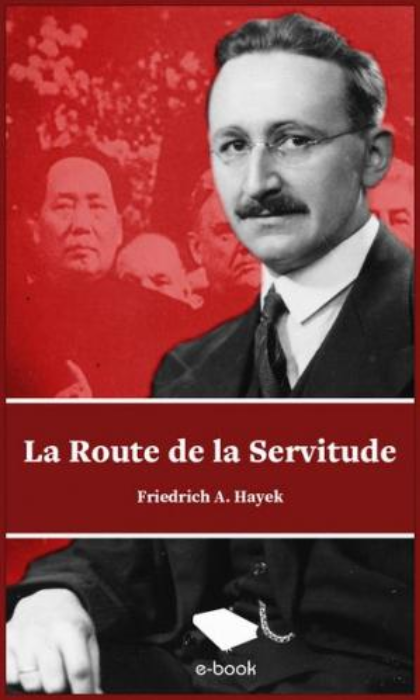
The Allure of Collectivism
Written between 1940 and 1943, this brief essay aims to provide an initial assessment of the dirigiste experiments attempted in the latter half of the 1930s: the nationalizations and the Keynesian management of demand that took hold in social-democratic Europe and New Deal America. Dedicated to "socialists of all parties," it seeks to demonstrate that "the West has gradually abandoned the principle of economic freedom without which no individual or political freedom has previously been possible." Indeed, the same process of political centralization and the same desire to replace a dirigiste organization with the traditional mechanisms of the market are found everywhere. In Great Britain as in the United States, it is asserted that the public power must plan everything and can solve everything.
As for authentic liberalism, it is concerned with justice. But Hayek reminds us that it belongs to civil society and not to the State to organize this solidarity. What differentiates liberalism and socialism are not the ends, but the means. According to Hayek,
Liberalism wants us to make the best possible use of the forces of competition as a means of coordinating human efforts; it does not want us to leave things as they are.
That's why, Hayek adds, the State has an undeniable area of activity:
To create the conditions in which competition will be as effective as possible, to replace it where it cannot be effective, to provide services that are of such a nature that profit, according to Smith's formula, cannot reimburse the cost to any group.
Conversely, the planning of the economy and society in general, the essence of socialism, is directed against competition as such. However, according to Hayek, there is an incompatibility between the ends of socialism (social justice, equality, and security) and the means envisaged by socialism to achieve them (abolition of private property, collectivization of the means of production, planned economy).
The Socialist Roots of Nazism
From the first pages, Hayek establishes a parallel between the triumph of socialist ideals in the West and the concurrent success of totalitarian utopias.
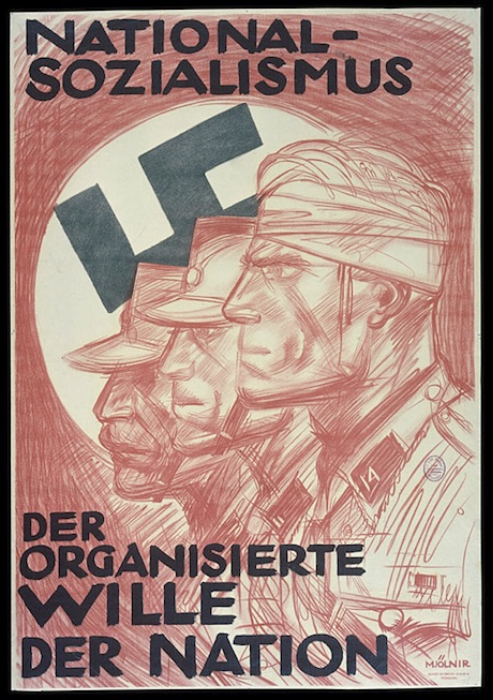
Few people, he warns in his preface, are willing to recognize that the rise of fascism and Nazism was not a reaction against the trends (...) of the previous period, but an inevitable result of these trends. This is something that most people have refused to see, even at the moment when they realized the resemblance offered by certain negative traits of the domestic regimes of Communist Russia and Nazi Germany. The result is that many people who consider themselves very much above the aberrations of Nazism and who sincerely hate all its manifestations, are at the same time working for ideals whose realization would lead directly to this abhorred tyranny. According to Hayek, socialism and Nazism share a number of fundamental commonalities, particularly the rejection of individualism and the spontaneous order of the market. Both ideologies prioritize the well-being of the group over the rights and freedoms of individuals and seek to create a homogeneous society united by common values and goals. Neither socialists nor Nazis hesitate to use force and coercion to achieve their objectives. They are willing to suppress individual liberties and repress dissent in the name of the greater good of society. In the chapter titled "The Socialist Roots of Nazism," Hayek points out that Nazism claims socialist planning (hence its name, national-socialism) of the economy as a means of establishing total control over the population.
German and Italian socialists merely paved the way for Nazism by setting up political parties that directed all activities of the individual, from birth to death, dictating their opinions on everything. It was not the fascists but the socialists who began to regiment children into political organizations, to control their private lives and their thoughts.
The Nazis merely adopted the statist, dirigiste, and interventionist discourse already popularized by the Marxists. Many fascist leaders, such as Mussolini in Italy, Laval in France, and Oswald Mosley in Great Britain, had started their political careers as left-wing activists before converting to fascism or Hitlerism, due to ideological proximity.
In conclusion, Hayek calls on his contemporaries to turn their backs on the "madness" and "contemporary obscurantism" to rid humanity of the "errors that have dominated our lives in the recent past." According to him, the best guarantee of freedom is private property. When all means of production are concentrated in the hands of a few organizers, we are subjected to total power because this economic power becomes a political instrument of control over our entire lives.
The Rise of the Welfare State in the 20th Century
The Triumph of Keynes
Capitalism is often accused of being the source of the injunction: "we must always produce more," or of the formula: "consuming is good for growth." However, these ideas do not stem from traditional capitalism but from Keynesianism, which has dominated the field of economic science and the political class since the 1930s.
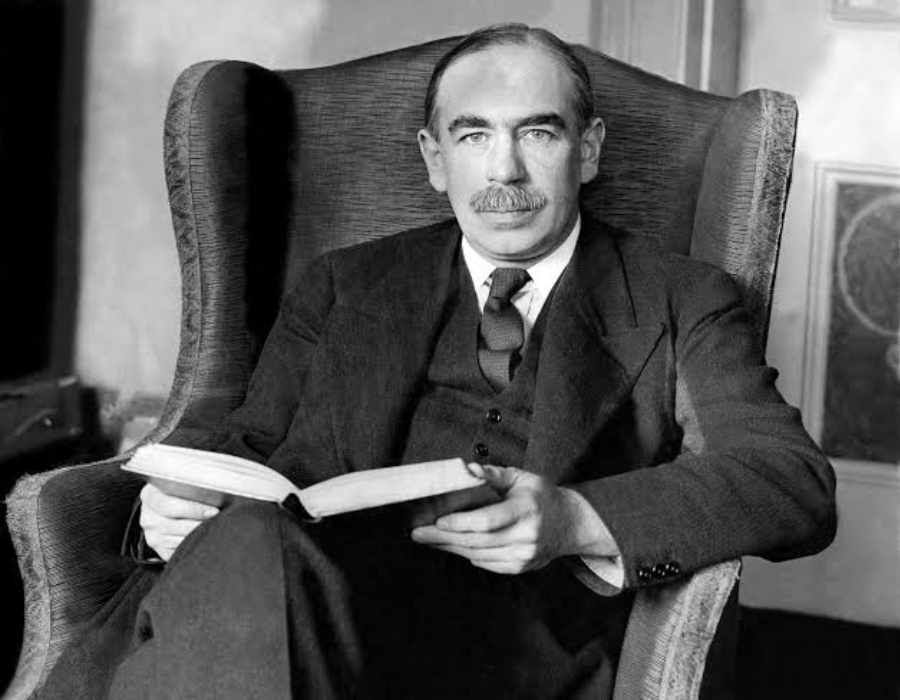
The Analysis of the 1929 Crisis
Published in 1936, the book by John Maynard Keynes: The General Theory of Employment, Interest, and Money, swept everything in its path. Questioning the causes of the Great Depression and the means to emerge from it, he describes a new economic paradigm, which would convert generations of economists and politicians.
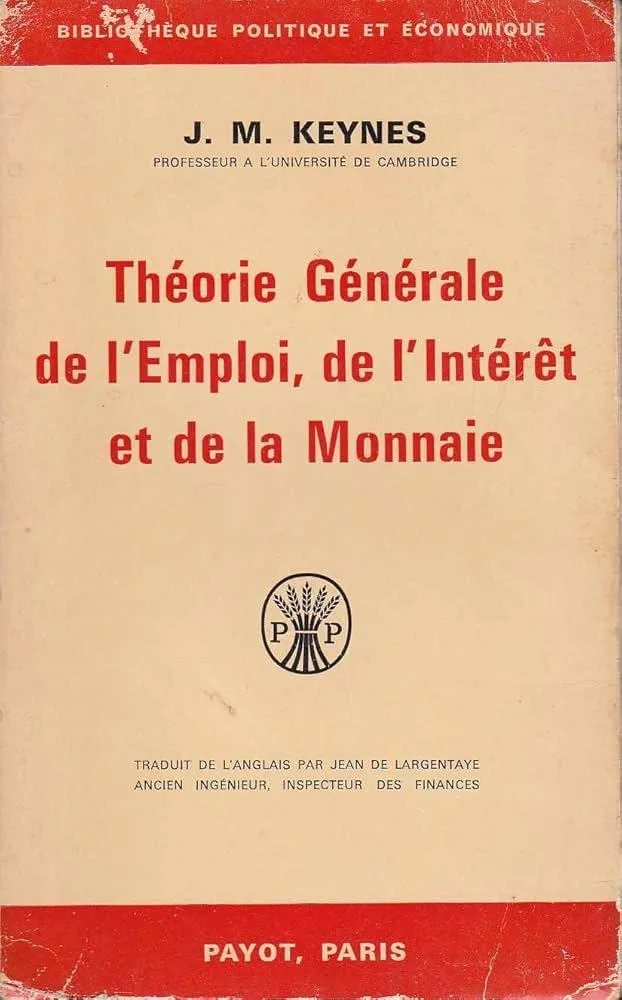
To summarize broadly, public spending produces growth and to support the budget deficit, a monetary policy of low interest rates must be implemented. Thus, initially, the discretionary increase in public spending would have a multiplier effect on economic activity, capable of limiting the recession and accelerating recovery. Then, in a second phase, money would be considered as an instrument of economic policy to be used by the public authorities for the purpose of macroeconomic stabilization.
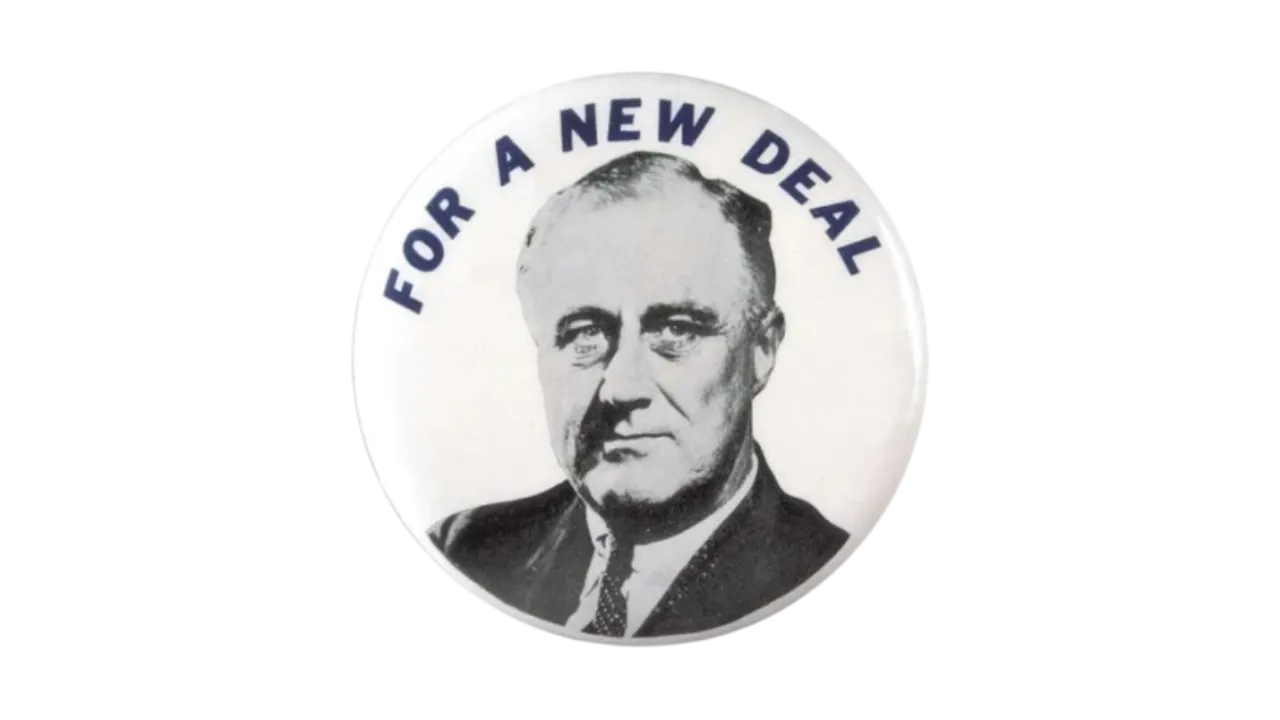
Keynesianism is therefore the claim to provide the means for strong growth and full employment through public spending and consumption. And this growth plan is based on the control of money.
Indeed, according to Keynes, long-term savings are a brake on consumption and therefore on growth. Money must therefore lose its purchasing power over time to encourage individuals to consume more and more quickly, which is a good thing for the economy. In the Keynesian logic of stimulus policies, the main enemy is savings.
According to Keynes, this enemy can be fought with low-interest liquidity. That is why central banks must monopolize and control money.
With Keynes, the 20th century became the century of trust in experts and in planning. The social engineers at the helm of government and monetary policy can pull levers that are supposed to restore prosperity, since they possess a macro-economic vision of the world.
The Controversial Legacy of Keynes
For Keynes, state intervention is necessary to stimulate demand and restart the economic engine. This doctrine has triumphed in universities and textbooks. Yet state intervention has its flaws and can exacerbate crises in the long term instead of resolving them.
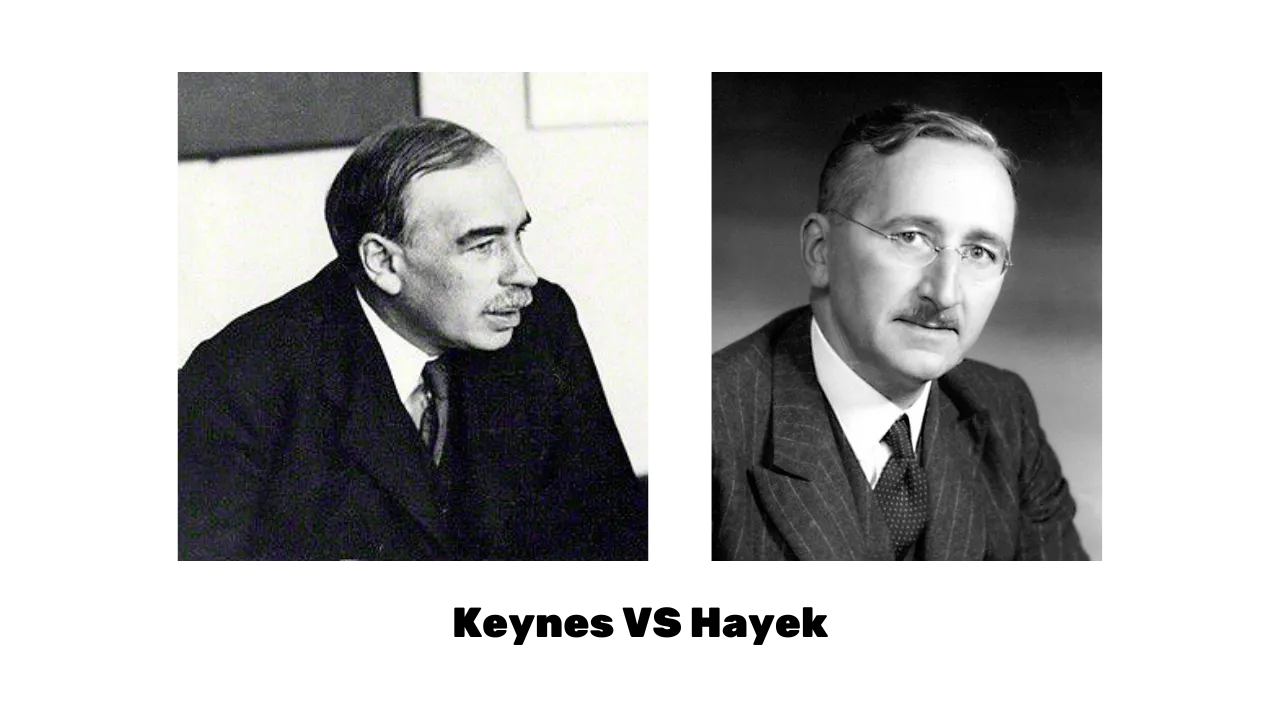
This is why some economists, in the minority, criticize Keynes for his short-termism and advocate a return to market mechanisms as a better alternative to state intervention. Thus, Friedrich Hayek explained that the continual reduction of interest rates by central banks and the artificial expansion of credit could only mislead economic actors, making them invest as if many saved resources existed (since interest rates naturally decrease in response to an increase in savings). This misallocation of resources then fuels an artificial rise in growth, a bubble, which is followed by a brutal recession. It is this contribution to the theory of cycles that earned Hayek the Nobel Prize in Economics in 1974. Along with others, he also highlighted the danger of centralizing and manipulating currency. This is notably the case with the Frenchman Jacques Rueff, also a disciple and friend of Ludwig von Mises.
Graduating from the École Polytechnique in 1919, Rueff had a career as a senior civil servant and was an economic advisor to numerous governments in the 1920s and 30s. His major work appeared in 1945: L’ordre social (The Social Order), in which he develops a powerful argument in favor of the free market, from economic, philosophical, and moral viewpoints.
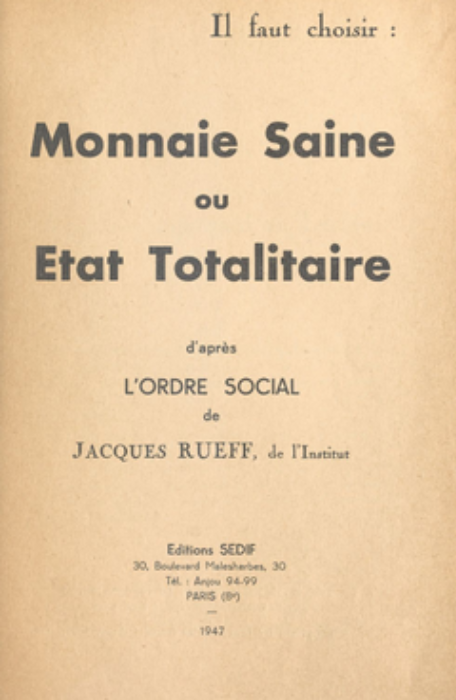
This book includes a key chapter titled: "Sound Money or Totalitarian State". In this chapter, he develops two propositions. The first: "False money breeds social disorder". The second proposition follows from the first: "Social disorder breeds social slavery". False money is paper currency, disconnected from any physical reality and manipulated by the ruling power. Social disorder is the inflation and consumerism that result from it. Social slavery is society's dependence on the state, the loss of all financial, moral, and political autonomy.
In 1947, five years after the French translation of The General Theory, he published an article titled: The Errors of the General Theory of Lord Keynes. He issued the following warnings: It is likely that the next period of depression will lead to the widespread application of the policy suggested by Lord Keynes around the world. I am not afraid to be mistaken in stating that this policy will only reduce unemployment to a small extent, but it will have profound consequences on the evolution of the countries in which it will be applied. (...) Because of Lord Keynes, the next cycle will be an opportunity for profound political changes, which some hope for, while others fear. In any case, based on a false theory, the remedies that will be implemented will have profoundly different repercussions from those they were intended to promote. Their inefficacy will be, for a large part of the public opinion, a new reason to demand the substitution of a regime which, by denying itself, will have destroyed itself. Starting from 1958, a policy to rectify the French economy, inspired by Jacques Rueff, will be conducted under the authority of General de Gaulle. It will lead to the famous "Trente Glorieuses" (Thirty Glorious Years).
In The Monetary Sin of the West, in 1971, Rueff writes:
It is through budget deficit that men lose their freedom.
He adds: "Inflation is to subsidize expenditures that yield nothing with money that does not exist." According to him: "One would think, observing the evolution of the international monetary system, that the West is applying Lenin's advice, according to which: To destroy the bourgeois regime, it suffices to corrupt its currency.
In 1976, he attacks Keynesianism one last time in an article for the newspaper Le Monde. No religion has spread across the world as quickly as that of employment. Driven by the memory of the unemployment tragedies that ravaged England and Germany during the 1920s, it has become the foremost principle, whether expressed or implied, of economic policy in almost every country in the world. Concealing its purpose beneath the clever and specious guise of the "general theory," elevated by enthusiastic and blind disciples to the status of a governmental action bible, it has masked the true face of the inflation policies it covered. Through this detour, it has given a good conscience to governments which, having exhausted their possibilities of taxes and borrowing, resorted to the deceptive delights of monetary creation. (The End of the Keynesian Era or: When the Long Run Ran Out, Euromoney, April 1976, pp.70-7.)
Abandoning the Gold Standard
Money is a tool that has allowed humans to move beyond barter, to save, and to coordinate on a large scale through the market. It has made possible the specialization of labor, comparative advantages, gains from trade, economic calculation. Without money, there is no modern civilization.
Gold as the Global Standard
And it turns out that a particular form of money gradually distinguished itself from others to become over the centuries the global standard of reference, which is gold.

Indeed, gold is a hard currency, difficult to produce, costly to counterfeit. The market has chosen gold as the most reliable, most durable, and least manipulable currency. History shows that when individuals can choose the currency they use, they tend to choose gold.
This is why, in Human Action, Ludwig von Mises writes:
The gold standard was the world standard of the capitalist era, of increasing prosperity, freedom, and democracy […] It was the international standard that international trade and the world capital markets needed […] It carried industry, capital, and Western civilization to the most remote corners of the planet, creating wealth previously unknown. But the gold standard constrains governments to fund their expenses through taxes rather than inflation, which explains a certain hostility from political and economic elites towards this system. Because linking currency to a precious metal limits the central banks' ability to finance the growth of the welfare state through the indirect tax that is inflation. That's why as early as 1923, Keynes declared:
In truth, the gold standard is already a barbarous relic. (...) The defenders of the old standard do not notice how far it is now removed from the spirit and needs of the new times. (J.M. Keynes, Monetary Reform).
The "Nixon Shock"
The Bretton Woods system, designed in 1944 and fully implemented in 1959, was based on both gold and the dollar, the only currency convertible into gold. Therefore, it was necessary to accumulate dollars to be able to obtain gold.
At that time, with the Vietnam War in particular, the increase in the U.S. government deficits led many foreign countries, including France, to want to convert their dollars into gold at the FED. On August 15, 1971, President Nixon decided to cancel the promise of dollar convertibility into gold, thus creating the first entirely paper currency in the history of the United States. From this day can be dated the moment when money completely came under the control of central banks. In an interview, Richard Nixon is said to have stated:
We are all Keynesians today.
Indeed, for many Keynesian economists, the abandonment of the gold standard gave governments the flexibility needed to respond to or prevent economic crises.
According to Alan Greenspan, former chairman of the FED, the American central bank, the gold standard is incompatible with state debt and the financing of the welfare state:
I have always harbored nostalgia for the price stability inherent in the gold standard; a stable currency was its primary goal. But I have long since conceded that the gold standard does not easily accommodate the prevailing view of the function of a government, notably the duty to ensure a social security system. […] Most Americans have tolerated inflation as the price to pay for having a modern welfare state. There are no longer any proponents of the gold standard, and I see little possibility of its return. (The Age of Turbulence). On the contrary, for people like Jacques Rueff, abandoning precious metal is a mistake that can only lead to a continuous decrease in purchasing power, accompanied by a decrease in living standards, an increase in income inequality, and growing economic instability.
In February 1965, during a televised press conference, General de Gaulle, directly inspired by Rueff, had proposed a return to the gold standard. He stated:
Gold, which does not change its nature, which has no nationality, which is held, eternally and universally, as the unalterable value par excellence.
A monetary market without State monopoly is possible
In 1976, Hayek proposed an alternative to the State's monopoly on currency creation: competition between currencies. In his book, Pour une vraie concurrence des monnaies (The Denationalization of Money), he envisioned a monetary market without State monopoly in which several private currencies would exist. The creation and management of different currencies by private entities would allow individuals to choose the most stable and reliable currency, thus encouraging competition and discipline among issuers.
He writes:
As long as we have not restored a situation in which governments (as well as other public authorities) know that if they spend too much they will be, like anyone else, unable to meet their obligations, there will be no pause in this process which, by substituting collective activity for private activity, threatens to stifle individual initiative. Under the current unlimited democracy, in which the government has the power to confer special material benefits to particular groups, it is compelled to buy the support of enough of them to constitute a majority. (Ch. XXI, The effects of finance and public spending).
For Hayek, the past instability of the market economy results from the fact that the most important regulator of market mechanisms, namely money, could not itself be the product of a market process.

Hayek believed that a free market of private currencies would lead to greater monetary stability. Nearly 50 years later, a cryptocurrency like Bitcoin embodies Hayek's competitive vision by offering a decentralized alternative to the monopolistic system of central banks. Bitcoin, with its emission limit of 21 million units, is a guarantee against inflation and the arbitrariness of regulators.
Reviews & Ratings
6759868f-749d-5fe7-bbb1-24f603e8b34e true
Conclusion: the power of ideas
50676155-c071-5bee-a14e-0c251f0375da The crisis we are going through is a crisis of civilization, that is, an intellectual crisis with moral, political, and economic consequences.
There is much talk about the crisis of politics, the decline of parliamentary democracy, representative government, and thus freedom. This crisis is somewhat easily attributed to capitalism and the "dictatorship of the markets."
This situation is actually the consequence of a radical intellectual change in ideas. Since the end of the 19th century, Europe has abandoned the ideas that had allowed it to become a prosperous and enlightened continent. For a while, its eldest daughter, America, resisted the winds of collectivism before being overwhelmed by them as well.
In 1941, George Orwell made this assessment:
It is clear that the age of free capitalism is coming to an end and that one country after another is adopting a centralized economy that can be called socialism or state capitalism, as you like. In this system, the economic freedom of the individual and to a large extent his freedom in general - freedom to act, to choose his work, to move around - disappear. It is only very recently that we have begun to glimpse the implications of this phenomenon. Previously, it had never been imagined that the disappearance of economic freedom could affect intellectual freedom. It was usually thought that socialism was a kind of liberalism augmented with a moral. The state would take charge of your economic life and free you from the fear of poverty, unemployment, etc., but it would have no need to interfere in your private intellectual life. Now the proof has been made that these views were false.
But contrary to what the prophets of doom announce, Western civilization is not doomed to disappear in the 21st century. It has not exhausted its potentialities. Freedom is yet to come.
This is what Murray Rothbard suggested in 1982: We have now experienced all the variants of statism, and they have all failed. Everywhere in the Western world at the beginning of the 20th century, business leaders, politicians, and intellectuals had started to call for a "new" mixed economy system, of state domination, in place of the relative laissez-faire of the previous century. New panaceas, attractive at first glance, such as socialism, the corporatist state, the Welfare-Warfare State, etc., were tried and all have evidently failed. The arguments in favor of socialism and state planning now appear as pleas for an aged, exhausted, and failed system. What remains to be tried if not freedom? In a certain sense, our situation is better than in the past. After the successive failures of various socialist, communist, and social-democratic experiments, we know today how to distinguish, better than yesterday, true ideas from false ones. And false ideas can be refuted and replaced with true ones. As Mises said:
Everything that happens in the global society we live in is the result of ideas. The good and the bad. What is necessary is to combat false ideas. (...) Our civilization can survive, and it must. And it will survive thanks to better ideas than those that govern the world today; and these better ideas will be developed by the rising generation.
(Economic Policy: Thoughts for Today and Tomorrow, 1979).
Final Section
Review & Rating
b972fd24-47e1-4877-b21d-6451ffdafcdd true
Final exam
3331124d-fe7c-4b73-9f92-1d3a23900fd4 true
Conclusion
594691db-1ecb-4914-bcb2-5a88f50ca0a5 true